UPSC Ethics Answer Practice: Development vs Conservation dilemma | Question and Case Study
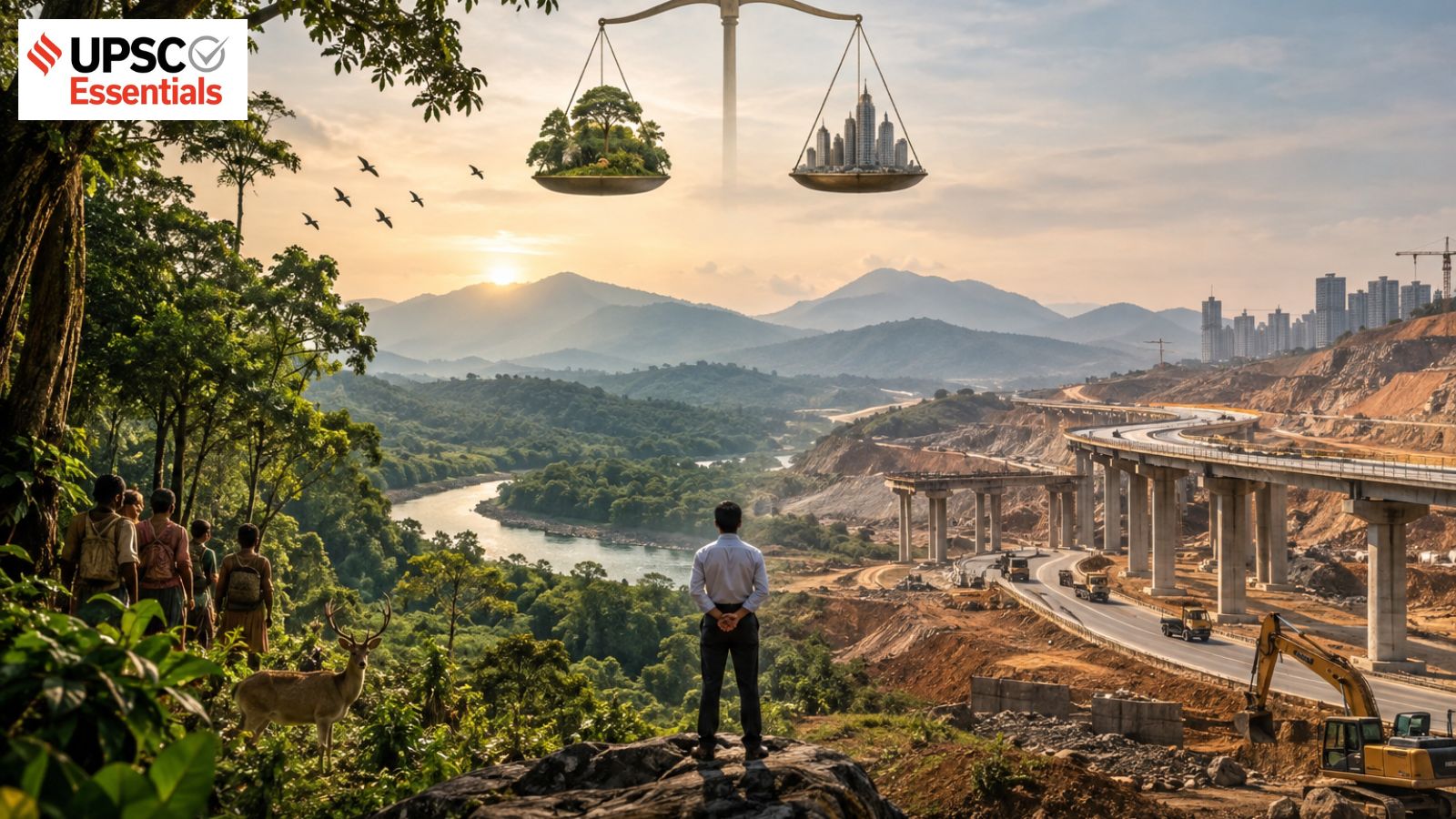
Ethical dilemmas often arise when striving for public welfare and economic growth clashes with environmental conservation and the rights of vulnerable communities. Public administrators face challenging decisions in these scenarios. The key ethical issues include balancing development with nature, ensuring fair distribution of costs and benefits, and respecting fundamental rights.
Examples include the Tana Bhagat community in Jharkhand opposing a highway project due to threats to ancestral land, forests, religious sites, agricultural livelihoods, and community spaces. Protestors argue that the project infringes upon their rights and the environment. The ethical challenge is to pursue development while minimizing environmental harm and ensuring vulnerable communities do not bear disproportionate costs.
Environmental ethics emphasize humans' responsibility towards nature and future generations. The doctrine of public trust mandates the state to protect vital natural resources (air, water, forests, coasts) for present and future generations. This raises questions about treating public resources as expendable for short-term gains.
The principle of sustainable development aims to balance development, environment, resources, and inter-generational responsibility. The precautionary principle and polluter pays principle are essential for sustainable development. The Supreme Court has recognized these principles in cases like Vellore Citizens' Welfare Forum vs Union of India.
Fundamental rights in the Constitution protect the environment, livelihood, and cultural rights. Kant's moral philosophy advocates treating humans as ends in themselves, not mere means. This suggests intrinsic value in human beings and a duty to protect the environment.
While development and conservation may seem opposing, they can coexist. The Delhi–Dehradun Economic Corridor is an example of balancing development with conservation. A 12km elevated wildlife corridor with underpasses was built to protect ecosystems and species, allowing economic transit while reducing human-wildlife conflict and preserving local biodiversity.
Written by urgent.news from The Indian Express's reporting — not their text. Machine-written — may contain errors; check the original before relying on it.