Two State Votes, One Big Question: Can Merz Survive?
Germany heads into a pivotal election weekend, with Friedrich Merz's chancellorship on the line.
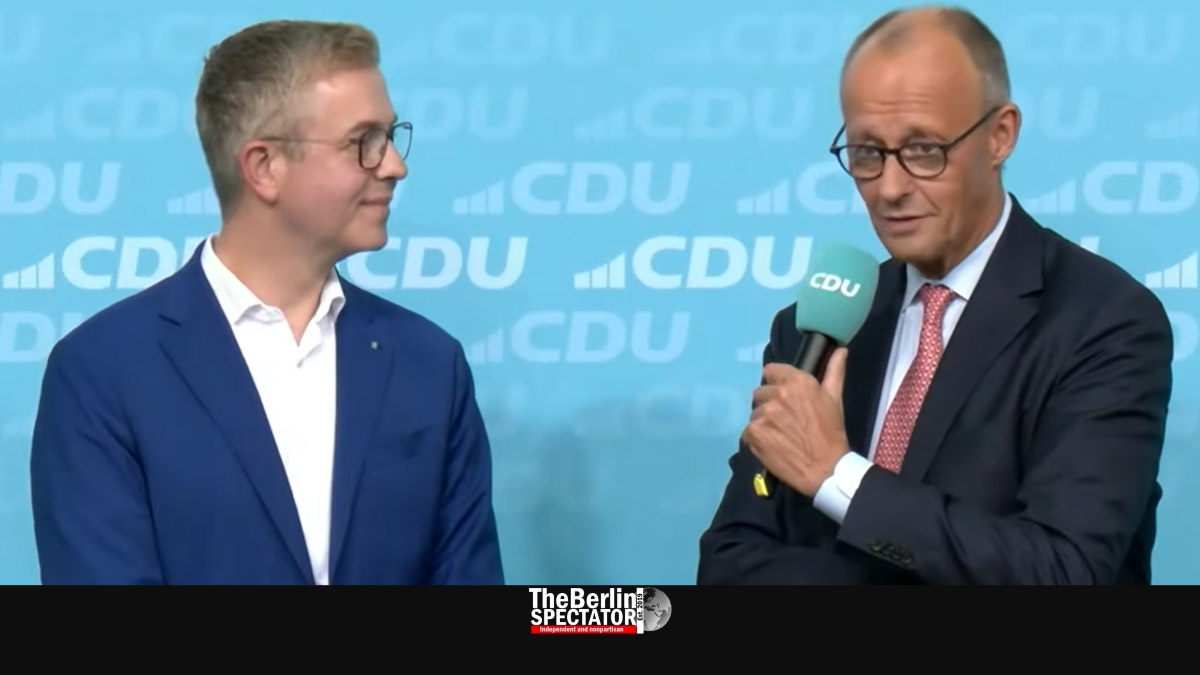
Germany is preparing for state elections in Mecklenburg-Western Pomerania and Berlin on Sunday, with the results potentially influencing Chancellor Friedrich Merz's political future. In Mecklenburg-Western Pomerania, the latest ZDF poll shows the center-left Social Democrats (SPD) led by state premier Manuela Schwesig at 37 percent, just ahead of the extremist right-wing AfD at 36 percent.
The far-left "Die Linke" has dropped to 9 percent, and the Greens and BSW hover near the 5 percent threshold needed for state parliament entry. The Christian Democrats (CDU) have suffered a significant blow, with their support dropping to just 6 percent in the state, potentially leading the CDU to exit the state parliament altogether, the worst result since their founding.
In Berlin, the Left party led by Elif Eralp is ahead with 22 percent, followed by the CDU's Stefan Evers at 20 percent. None of the possible two-party coalitions can form a majority, making a three-way alliance the most likely outcome. For Merz, the stakes are high as recent polls indicate that 56 percent of respondents consider it unlikely he could remain chancellor if the CDU fails to clear the 5 percent hurdle in the north.
Only 25 percent believe he could hold onto the position. Merz has called a formal meeting of the party's executive board and canceled a trip to the United Nations General Assembly, signaling the seriousness of the party's concerns. If the CDU performs poorly, pressure on Merz is likely to increase. Possible successors include Hendrik Wüst and Markus Söder, with Hesse's Boris Rhein mentioned as a fallback option.
Written by urgent.news from The Berlin Spectator's reporting — not their text. Machine-written — may contain errors; check the original before relying on it.