Tamil Nadu Stands Firm On Two-Language Policy, Refuses Land For Navodaya Schools After SC Remarks
Tamil Nadu has reaffirmed its commitment to the Tamil-English two-language policy and refused to allot land for Jawahar Navodaya Vidyalayas (JNVs), despite the Supreme Court urging the state to reconsider its position on Hindi. The dispute centres on the three-language formula followed by Navodaya schools and the state's concerns over language policy and educational autonomy. Supreme Court urges…
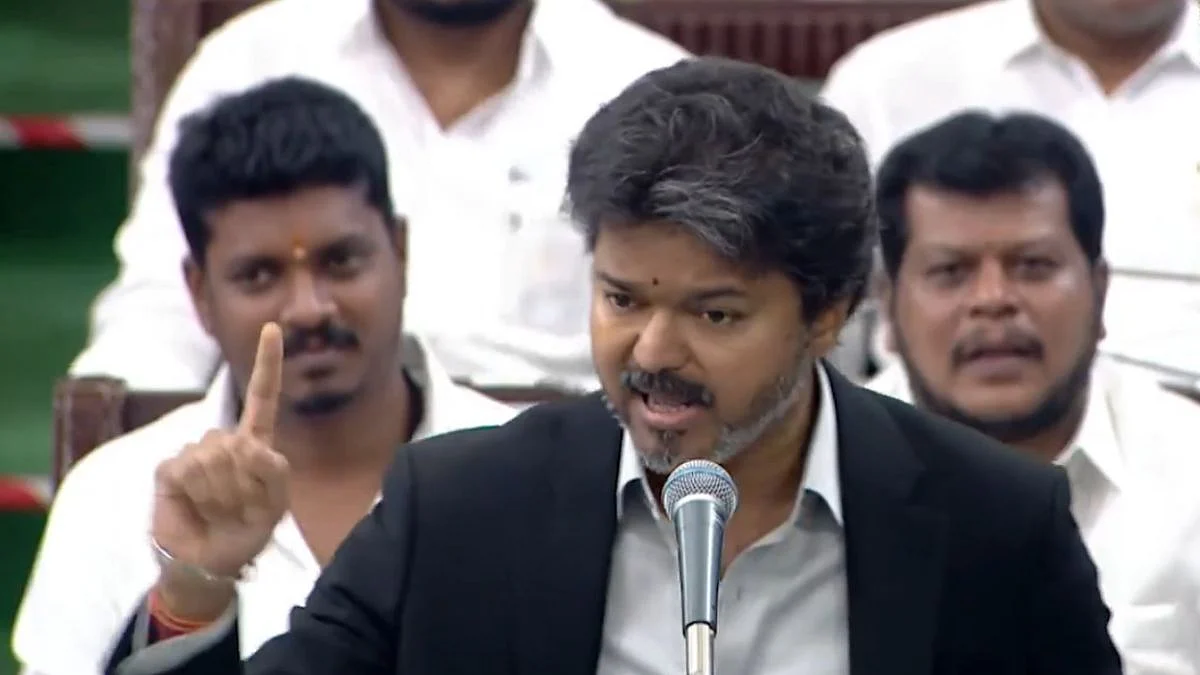
On September 18, 2026, the Tamil Nadu government firmly reaffirmed its adherence to the Tamil-English two-language policy, declining to allocate land for Jawahar Navodaya Vidyalayas (JNVs) despite the Supreme Court's recent remarks urging reconsideration of its stance on Hindi. The impasse centers around the three-language formula integrated into Navodaya schools and the state's concerns surrounding language policy and educational autonomy.
On September 17, the Supreme Court encouraged the Tamil Nadu government to reinterpret its approach towards Hindi, while deliberating a case pertaining to the establishment of these CBSE-syllabus, centrally funded schools across every district of the state. The bench of Justices B.V. Nagarathna and A.G. Masih highlighted that individual states could not function like separate countries, cautioning against the outright alienation between the state and the Centre over language and education policy differences.
Tamil Nadu's School Education Minister Rajmohan Arumugam responded on the same day, reaffirming the state's steadfast commitment to its two-language policy of Tamil and English, declaring that there would be no alteration in this stance. He added that the government was not opposed to Hindi or any other language but emphasized the preservation of Tamil's significance and the state's existing educational approach.
Historically, Tamil Nadu has resisted the establishment of JNVs primarily due to their adherence to the three-language formula, which includes Hindi. The state's two-language policy emerged from anti-Hindi protests in 1968, formalized through an Assembly resolution under Chief Minister C.N. Annadurai. Successive Tamil Nadu governments have consistently maintained that language education should remain a choice, preserving the state's authority over its educational policies.
The government's main concern is that implementing the Navodaya school model could erode its current language framework, indirectly imposing Hindi.
Jawahar Navodaya Vidyalayas are centrally funded, co-educational residential institutions administered by the Navodaya Vidyalaya Samiti under the Union Ministry of Education. Aimed at providing educational opportunities, especially to talented rural students, these schools have become a point of contention between Tamil Nadu and the Centre, owing to their unique language framework and objections to the state’s three-language formula.
Written by urgent.news from Free Press Journal's reporting — not their text. Machine-written — may contain errors; check the original before relying on it.