South Korea wants free ‘AI for All’. Is society ready for it?
In Silicon Valley and beyond, the architects of artificial intelligence are increasingly warning about the risks it poses to humanity. Anthropic CEO Dario Amodei wants the industry to slow down. A former engineer at his company, who also worked at its rival OpenAI, told reporters after quitting earlier this month that he was “genuinely frightened” unchecked AI development might mean “we could all…
In the world of artificial intelligence, concerns about the technology's potential risks to humanity are growing. Industry leaders like Anthropic CEO Dario Amodei are advocating for a slower pace of development, while former engineers from AI rivals have expressed genuine fear over unchecked AI progress potentially leading to catastrophic consequences.
The Nobel Prize-winning computer scientist Geoffrey Hinton, known as the "godfather of AI," has also warned about the existential threat posed by the technology should it escape human control.
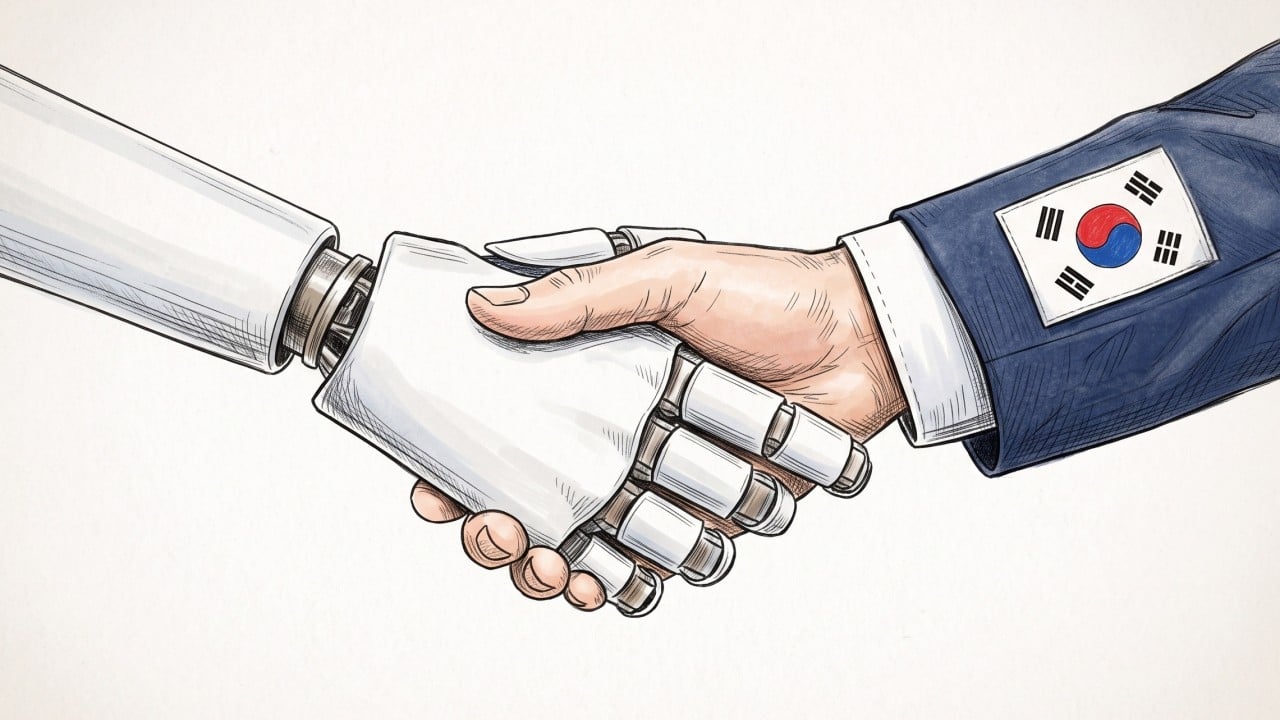
South Korea, acutely aware of these concerns, is taking bold steps to harness the power of AI for all citizens. Under President Lee Jae Myung's "AI for All" initiative, the government aims to provide every citizen with free access to AI, integrating it into various aspects of daily life, such as hospitals, schools, and government offices. The government has allocated a 10 trillion won (US$7.3 billion) AI budget for the current financial year, with an additional 250 billion won reserved for the rollout through 2027.
A beta version of the free, unlimited-access general-purpose chatbots and AI agents is set to launch later this month, developed by three consortiums led by telecommunications giants SK Telecom, KT, and Kakao. The bots and agents will be powered by hundreds of state-of-the-art Nvidia B200 graphics processing units provided by the government.
Officials envision this temporary trial becoming a permanent, taxpayer-funded public utility that connects to government systems, allowing citizens to access various services such as booking doctor's appointments, house hunting, and getting tax advice through AI intermediaries.
To mitigate the risks associated with this ambitious AI rollout, South Korea relies on its landmark AI Basic Act, which came into force in January. The act ensures human-in-the-loop oversight, mandatory impact assessments, and clear watermarking of synthetic content. Additionally, a state-funded AI Safety Institute has been established to serve as a technical watchdog, evaluating the pitfalls of public AI utilities and ensuring their trustworthiness, security, and accountability to citizens.
The ICT ministry plans to establish an autonomous reliability-assurance system based on the seven "AI Ethics Principles" it outlined last month, including accountability, human-centredness, privacy protection, and fairness.
While the government's "AI for All" push aims to make South Korea one of the world's three leading AI powers alongside the United States and China, society is grappling with the consequences of widespread AI integration. Workers are worried about automation eliminating jobs, police struggle to combat a surge in deepfake crimes, and educators notice a decline in reading scores among the younger generation.
Moreover, sovereignty is a concern, as a large portion of South Korea's AI users rely on foreign platforms like OpenAI's ChatGPT, Google's Gemini, and Anthropic's Claude. However, access to these platforms cannot be guaranteed, as foreign AI services can be limited at any time by foreign governments or companies, as noted by the Korean government.
Written by urgent.news from South China Morning Post's reporting — not their text. Machine-written — may contain errors; check the original before relying on it.