Now Hong Kong must turn its international edge into national impact
Hong Kong’s first five-year plan marks a new chapter for the city and will prompt discussion about individual priorities and initiatives. But there is another question worth asking: what can Hong Kong bring to the national journey over the next five years? As China begins its 15th five-year plan, Hong Kong has an opportunity to think more deliberately about its distinctive contribution to…
Hong Kong's inaugural five-year plan signifies a turning point for the metropolis and will elicit discourse on individual objectives and undertakings. However, another query merits contemplation: how can Hong Kong contribute to the national trajectory over the ensuing five years? As China commences its 15th five-year plan, Hong Kong possesses an opportunity to deliberate more purposefully on its unique contribution to national advancement.
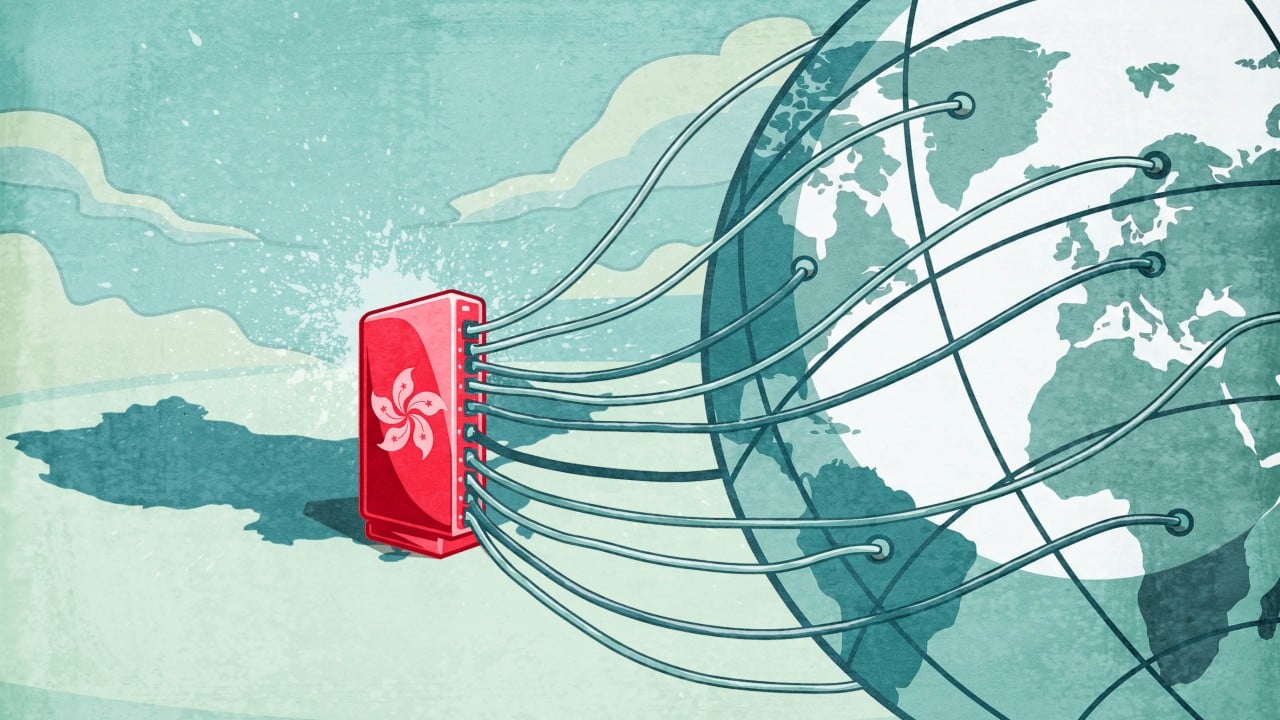
The notion of Hong Kong as a "superconnector" remains relevant, yet its role is transforming. The city's worth emanates not solely from its position between China and the world; rather, it stems from its capacity to facilitate the movement of businesses, capital, talent, and ideas across various markets and systems. This skill has been honed over generations.
Hong Kong's assets—deep connections with the mainland, an international financial system, common law heritage, professional expertise, and extensive global business networks—hold particular significance as geopolitical tensions, technological advancements, and shifting supply chains render cross-border commerce increasingly intricate.
For the majority of Hong Kong's economic era, its intermediary role primarily involved bringing the world to China. Global corporations utilized the city to comprehend, invest in, and engage with the mainland. While this function persists, a progressively substantial flow is in the opposite direction, as mainland entities seek new markets and prospects abroad.
Recent statistics exemplify this reciprocal role. Last year, InvestHK facilitated the establishment or expansion of an unprecedented 560 non-local companies in Hong Kong, a metropolis hosting a record 11,070 enterprises with non-local parent entities. Of the 560 non-local firms, 298 were from the mainland, and most were either intending to leverage Hong Kong for global expansion or were already doing so.
This underscores a crucial prospect for Hong Kong in the forthcoming five years. The city can persist as a conduit for international companies seeking opportunities in China while evolving into an even more efficacious launchpad for mainland enterprises venturing overseas. Realizing this entails more than merely linking companies with markets.
A mainland enterprise aiming to expand globally may necessitate capital acquisition, comprehension of unfamiliar legal frameworks and regulations, risk management, intellectual property protection, brand construction, and identification of reliable collaborators. International companies entering China also necessitate local insight, professional counsel, and reliable networks.
Hong Kong has amassed decades of expertise in numerous of these domains. The Task Force on Supporting Mainland Enterprises in Going Global (GoGlobal Task Force) exemplifies how these competencies are being consolidated, leveraging expertise in finance, law, accounting, marketing, logistics, technology, and other professional services.
This is where Hong Kong can actualize its "super value-adder" role. Its contribution should not be confined to serving as a connecting point. Instead, it should leverage its international experience and professional capabilities to enhance cross-border connections and generate enhanced value from them. Consequently, there should be no conflict between Hong Kong becoming increasingly integrated with national development and preserving its international essence.
The greater Hong Kong remains internationally linked, the greater its potential to contribute to a China that is progressively engaged with the world. Moreover, deeper engagement in national development can augment Hong Kong's ability to connect international businesses, investors, and talent with opportunities throughout the country.
Being bolstered by China and connected to the world are complementary strengths. However, realizing these advantages cannot be solely a government undertaking. This aligns with the approach outlined for the next five years. Chief Executive John Lee Ka-chiu has emphasized that while the government will lead, coordinate resources, and establish policies, achieving optimal outcomes will necessitate everyone's involvement.
This broader participation is crucial because much of what renders Hong Kong internationally pertinent resides within society—the city's businesses with global market experience, professionals accustomed to working across jurisdictions, universities with international networks, entrepreneurs seeking opportunities beyond familiar markets, and individuals capable of navigating multiple languages and cultures.
Businesses and institutions should therefore assess how their strengths can bolster Hong Kong's role over the next five years. Companies can invest and forge partnerships across the mainland and overseas. Professional services can assist businesses in navigating an increasingly complex international landscape. Universities can deepen collaboration with institutions on the mainland and worldwide, fortifying the flow of knowledge, research, and talent.
Hong Kong must also persist in adopting an outward-looking stance. The city's prosperity has been underpinned by people, capital, businesses, and ideas from diverse parts of the world converging in Hong Kong. Sustaining this openness while participating more deeply in national development strengthens rather than erodes Hong Kong's distinctive contribution.
Ultimately, the benefits must transcend businesses and economic metrics. A competitive, affluent, and internationally relevant Hong Kong should furnish improved prospects for the next generation and instill confidence in young individuals that they can forge their futures within the city. The decisions made over these five years will shape the city they inherit.
China's 15th five-year plan offers a broader national framework, whereas Hong Kong's first five-year plan provides direction within it. Transforming this direction into progress necessitates the government, business, and society working in unison. Hong Kong is an international city backed by China and connected to the world. Over the next five years, this unique position could catalyze significant progress for both nations.
Written by urgent.news from South China Morning Post - Hong Kong's reporting — not their text. Machine-written — may contain errors; check the original before relying on it.
This story
This is one outlet's version. Read the fullest account.
- In Pictures: Hong Kong sex work exhibition explores violence and bodily autonomy in an underground industry hongkongfp.com
- Mid-Autumn Festival 2026: Best things to do to celebrate in Hong Kong timeout.com
- Now Hong Kong must turn its international edge into national impact scmp.com
- US Congress probes F-35 parts shipment to Hong Kong english.ajel.sa