MIT robot built a working laser cavity in under 30 minutes
Massachusetts Institute of Technology researchers developed a robotic optics laboratory. This system autonomously assembles and aligns laser cavities with precision. The robot can also correct experimental setups after they are disturbed. This technology could accelerate testing for various optical devices and materials. Future applications envision remote interaction with these automated…
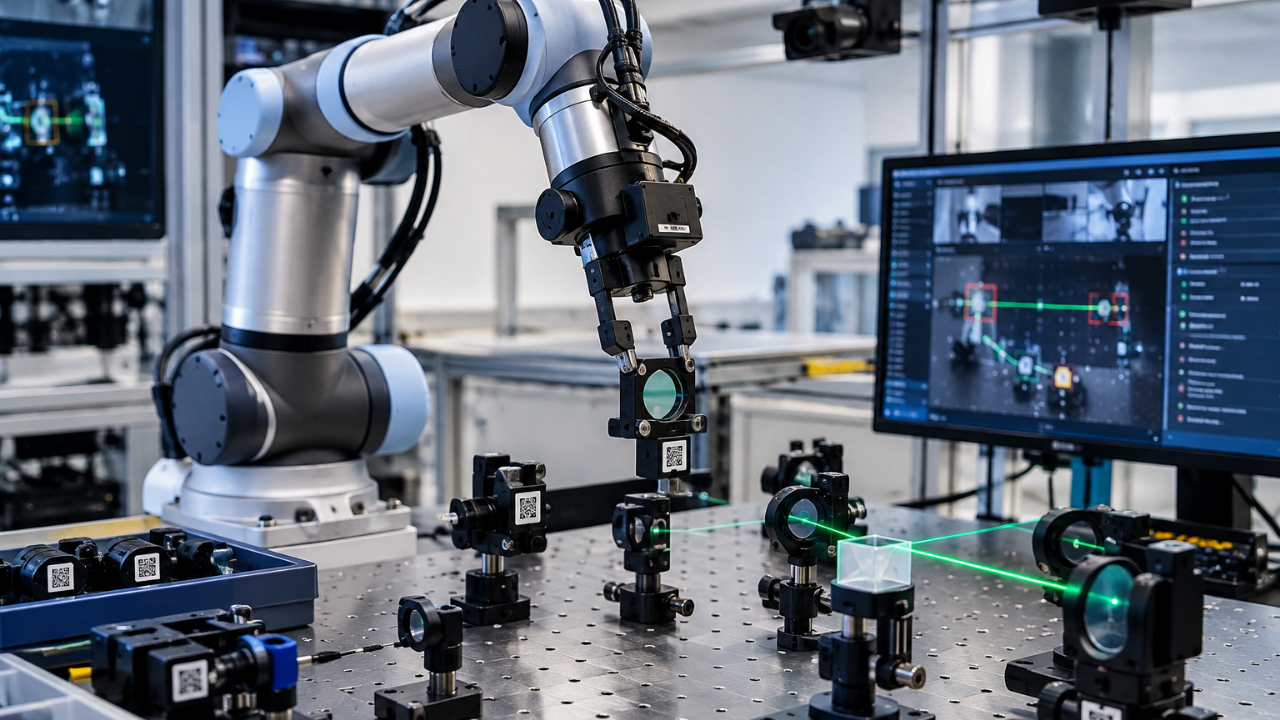
Researchers at the Massachusetts Institute of Technology (MIT) have developed a robotic system capable of building a functional tabletop laser cavity in under 30 minutes. This autonomous laboratory can precisely align mirrors, lenses, and other optical components, a task typically done manually by researchers. The robot handles the entire process, from randomly placing components on a tabletop to fine-tuning and correcting the setup, even if disturbed.
The system uses a seven-jointed robotic arm, 3D-printed mounts with QR-coded information, and magnetic bases to securely hold optical components. Wireless fine-adjustment tools enable the robot to make precise corrections to mirrors or other components. Two cameras provide a bird's-eye view of the setup, and the system's software coordinates the steps, including recognising components and avoiding collisions.
The robot successfully assembled the laser cavity after 50 autonomous manoeuvres, demonstrating its ability to maintain the laser's intensity even when components were deliberately moved. This self-correction feature could prove valuable in maintaining experiments under varying environmental conditions. MIT researchers envision the system becoming part of a broader automated research environment, with the potential to operate remote optical experiments and free researchers to focus on theory and new ideas.
Written by urgent.news from Times of India's reporting — not their text. Machine-written — may contain errors; check the original before relying on it.