Migration: Asylrechtsreform – Mehrheit kommt jetzt ins Schnellverfahren
Die neuen EU-Asylregeln bringen beschleunigte Verfahren für viele Antragsteller. Wer abgelehnt wird und dagegen klagt, kann schon abgeschoben werden, bevor das Gericht entschieden hat.
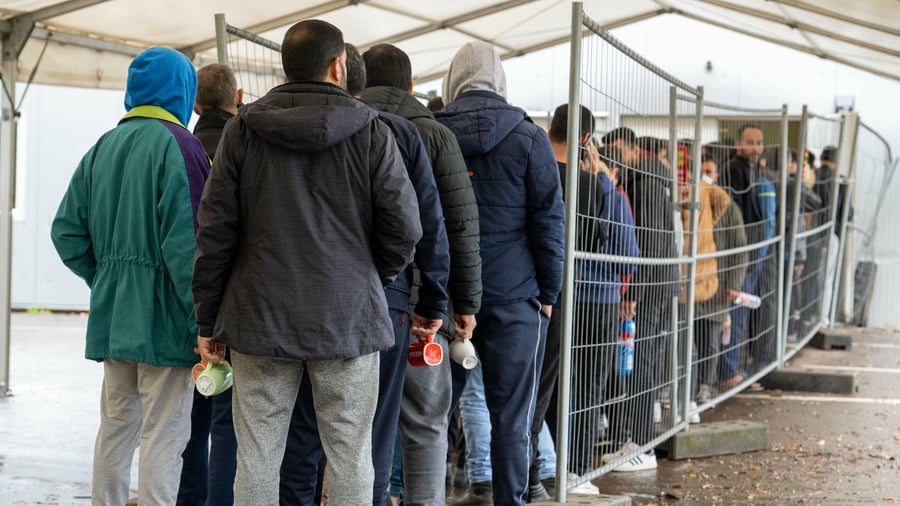
In the wake of the EU's new asylum rules, the majority of protection requests in Germany are now decided through fast-track procedures. According to the federal government's response to a parliamentary inquiry from the left-wing faction, between the reform's implementation on June 12 and the end of July, 2,093 expedited asylum processes and 1,561 regular asylum procedures were initiated.
An additional 2,013 procedures merely sought to determine which other EU country might be responsible for the applicant. The expedited procedures must be concluded within three months according to the Common European Asylum System (CEAS) reform. The new EU asylum procedure regulation allows for expedited procedures for people from safe countries of origin or countries whose EU-wide recognition rate is at most 20 percent.
Those denied in the fast-track procedure can also be deported even if their appeal against the refusal is still pending in court. Escaping deportation in such cases is only possible if a last-minute request for interim legal protection is successful in court. The three-month timeframe cannot be extended. The BAMF, however, may transfer a case to the regular procedure if it determines that the review of the application involves complex legal or factual issues that cannot be fully resolved in the expedited process.
Those classified as coming from safe countries are generally subject to an employment ban in the expedited procedure. The left-wing faction's spokesperson for refugee rights, Clara Bünger, anticipates that "due to the brevity of time, more mistakes will likely occur." The Flüchtlingsrechte organization Pro Asyl criticizes, "The federal government is rigorously and comprehensively implementing the new European standards."
Countries with a particularly high protection rate among the first half-year of this year included Myanmar, Eritrea, Afghanistan, and Palestinian Territories. Border procedures at EU external borders are rare in Germany; they only apply to airports and seaports. Those who falsely present their identity, foreigners posing a threat, and people from countries with a EU-wide average protection rate of at most 20 percent for their asylum application are placed in facilities from which they can only leave for departure purposes during the ongoing procedure.
Unaccompanied minors, unless they pose a security risk, are exempt from the border procedure. Four locations for border procedures in Germany are currently in operation: 200 places in Frankfurt am Main, 27 in Munich, 40 near Berlin/Brandenburg Airport, and 15 temporarily in Pforzheim for arrivals at Stuttgart Airport until a different location is found.
Four border procedures were completed between June 12 and August 21, concerning five Brazilian nationals and four Georgians. Twenty-two protection applications were denied. According to the government, four people from Ghana, Senegal, Colombia, and Morocco were denied entry due to a border procedure in the first weeks. It can be assumed that the number of border procedures in states such as Poland, Greece, Spain, and Italy is significantly higher.
However, reliable figures for border procedures in these countries since June 12 cannot be reliably determined based on the published statistics. Federal Interior Minister Alexander Dobrindt (CSU) has repeatedly emphasized that the functioning of procedures at EU external borders is a prerequisite for the prospect of ending intensified internal border controls in Germany.
Written by urgent.news from Handelsblatt's reporting — not their text. Machine-written — may contain errors; check the original before relying on it.