Urgent.News

What's breaking now, across thousands of outlets.

AI

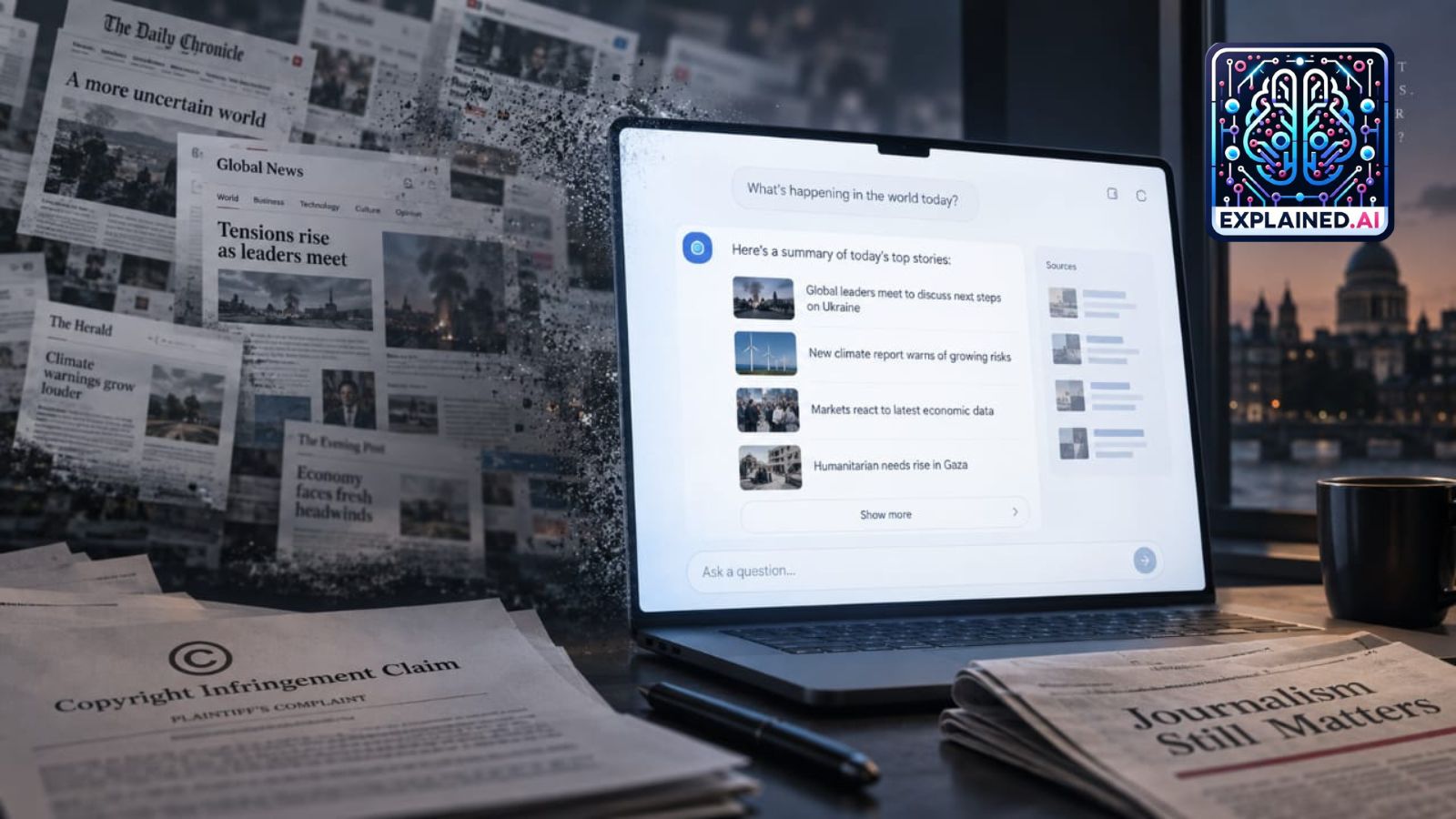
‘Largest theft of labour’: What new NYT filings reveal about its case against OpenAI, Microsoft
‘Largest theft of labour’: What new NYT filings reveal about its case against OpenAI, Microsoft

Newly unsealed court documents reveal concerns from Microsoft and OpenAI about OpenAI's use of millions of news articles to develop AI systems. The documents include internal assessments, with Microsoft director of applied science Brent Hecht describing the use as an "astonishing theft of unprecedented proportions" and perhaps the "largest theft of labor in human history".

OpenAI executives discussed how products like ChatGPT could substitute for visits to publishers' websites. This case is part of The New York Times lawsuit against OpenAI and Microsoft, alleging the use of copyrighted articles without permission to train AI models. Microsoft and OpenAI are both defendants due to their close partnership, with Microsoft providing computing infrastructure and data access to OpenAI.

The dispute centers on whether training AI on copyrighted material qualifies as fair use under US copyright law, considering factors such as the purpose and character of the use, the nature of the copyrighted work, the amount used, and the impact on the market for the original work.

Written by urgent.news from The Indian Express's reporting — not their text. Machine-written — may contain errors; check the original before relying on it.

Read the original at indianexpress.com →

More in AI

Stage 3 of enterprise AI adoption: agents that can read

This is part 3 of a series that started with the full reference diagram in part 0 , covered identity and the gateway in part 1 , and covered data and retrieval in part 2 .

  • Stage 3 of enterprise AI adoption introduces autonomous agents
  • Agent runtime enables independent task execution with containment
  • Read connectors grant role-specific access to internal systems

The More Powerful the AI, the More the Architecture Matters

The boundaries I designed, the gaps I haven't solved, and why the difference matters Part 14 findings of an experiment: building an LLM-powered support agent with deterministic boundaries.

  • AI architecture crucial for effectiveness, as shown in experiment
  • Deterministic boundaries, allowlist, and gate prevent unexpected dependencies
  • Gate ensures low-risk tasks handled by AI, high-risk tasks require human oversight

Build and Test an AI Agent Skill with SKILL.md and Python

AI agents are good at interpreting intent, but they are not a reliable place to hide every rule in a workflow. If an agent must count characters, parse a file, or refuse to overwrite an existing…

  • Create skill structure with SKILL.md and scripts directory
  • Implement deterministic script to validate Conventional Commit messages
  • Test script thoroughly covering various message scenarios

More from Saturday 19 September →