India’s cities: Where luxury meets hardship
India continues to be a country of wonder allowing travelers to experience the exploration of its bustling cities, where luxury and poverty coexist, showcasing a complex yet beautiful narrative of resilience and ambition in the face of stark contrasts.
India's cities are a harmonious blend of opulence and adversity. In Johannesburg, navigating the bustling CBD resembles a daunting challenge, akin to a game of chicken with countless vehicles. However, venturing into the heart of New Delhi and Mumbai reveals a different kind of chaos. Scooters, laden with entire families, weave through traffic with expert precision while honking cars, tuk-tuks, e-hailing services, and massive trucks coexist in this urban ballet.
Remarkably, amidst this chaos, drivers and pedestrians share the roads in a surprising display of harmony, rarely emitting the honks or hostility often associated with urban environments. The serene atmosphere is a testament to the unique fabric of Indian cities.
My journey commenced with a bus ride to the iconic Taj Mahal in Agra, a UNESCO World Heritage Site. The route was a whirlwind of vehicles competing for space but offered an exhilarating glimpse into the city's pulse. The Taj Mahal itself, built in the 17th century by Mughal Emperor Shah Jahan as an eternal tribute to his wife Mumtaz Mahal, stands as a testament to love and artistry. Its architectural marvel is a seamless fusion of Indian, Persian, and Islamic styles, a serene oasis amidst the urban sprawl.
Beyond the historical landmarks, the cities transform into dynamic urban landscapes. India is a work in progress, where traditional slums coexist with towering skyscrapers. Each corner reveals new construction projects, reflecting the nation's relentless pursuit of development. Once distant areas like Gurgaon have rapidly evolved into bustling hubs of progress within a decade.
Notable developments such as the Jewar International Airport and Dholera, India's first smart greenfield city, highlight the country's commitment to infrastructure and sustainability.
Despite the rapid development, the stark reality of poverty remains an inescapable reality in these urban landscapes. Luxurious buildings and modern infrastructure stand side by side with dilapidated structures and slums, a stark reminder of the stark socioeconomic divide. This juxtaposition is more pronounced in India than in many other parts of the world, where such inequalities are often hidden away.
The contrast between the plush surroundings of the St. Regis hotel in Mumbai and the immediate visibility of poverty is a poignant reflection of the broader societal landscape in India.
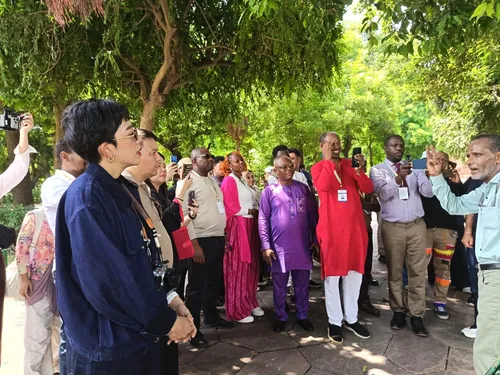
Interestingly, while many countries prioritize urbanization at the expense of environmental conservation, India is forging a new path. Both New Delhi and Mumbai boast urban forests, a testament to their commitment to sustainability. These green spaces serve multiple purposes, mitigating pollution, enhancing air quality, and promoting biodiversity.
The Miyawaki method, an innovative approach to dense urban forests, demonstrates how cities can combat climate change and foster biodiversity within their boundaries. This pioneering approach offers a blueprint for sustainable urban planning, demonstrating that progress and environmental stewardship can go hand in hand.
Written by urgent.news from IOL's reporting — not their text. Machine-written — may contain errors; check the original before relying on it.