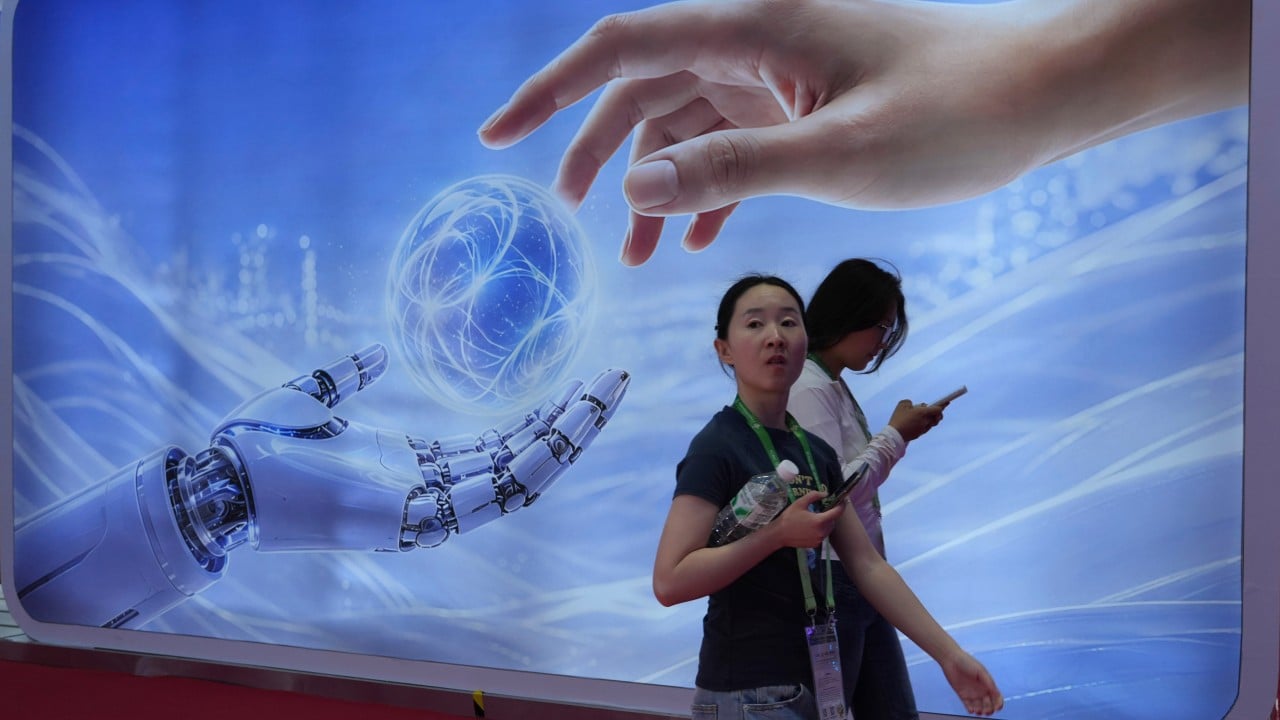
IMF tells EU ministers AI could boost growth but increase economic strains
The IMF said the benefits and costs of AI were likely to be distributed unevenly across EU countries, regions and workers.
The IMF warned EU ministers that artificial intelligence could boost productivity by roughly 1% over a five-year period, but riskier economic strains may arise. An IMF background note prepared for an EU finance ministers' informal meeting in Dublin emphasized that AI's benefits and costs are likely to be unevenly distributed across countries, regions, and workers.
The note echoed concerns raised by former European Central Bank President Mario Draghi and the European Commission regarding fragmented markets holding back investment and innovation in Europe.
Approximately 60% of workers in advanced European economies are employed in occupations highly susceptible to AI. While some could gain productivity through AI tools, others face potential displacement as routine tasks become automated, particularly in jobs where AI is more likely to replace labor than complement it. Data centres in Europe already account for about 3% of the continent's electricity consumption, and demand is expected to increase sharply as AI adoption expands.
Major technology hubs such as Frankfurt, London, Amsterdam, Paris, and Dublin are among the most exposed, with existing data-cluster clusters straining local power networks.
To alleviate this issue, the IMF suggested investing in cross-border grid infrastructure and deepening integration of the European energy market. Moreover, the paper cautioned that Europe might develop another strategic dependency due to the dominance of the US and China in AI model development. To avoid becoming reliant on foreign technology, Europe would require substantial investment in its own AI industry.
Additionally, the benefits of AI are expected to be unevenly distributed across and within the EU, with more advanced economies anticipated to gain disproportionately due to their better preparedness and higher exposure to the technology.
Written by urgent.news from Free Malaysia Today's reporting — not their text. Machine-written — may contain errors; check the original before relying on it.
Also reported by 1 other outlet
- IMF tells EU ministers AI could boost growth but increase economic strains freemalaysiatoday.com