If your protest doesn’t go viral, did it even happen?
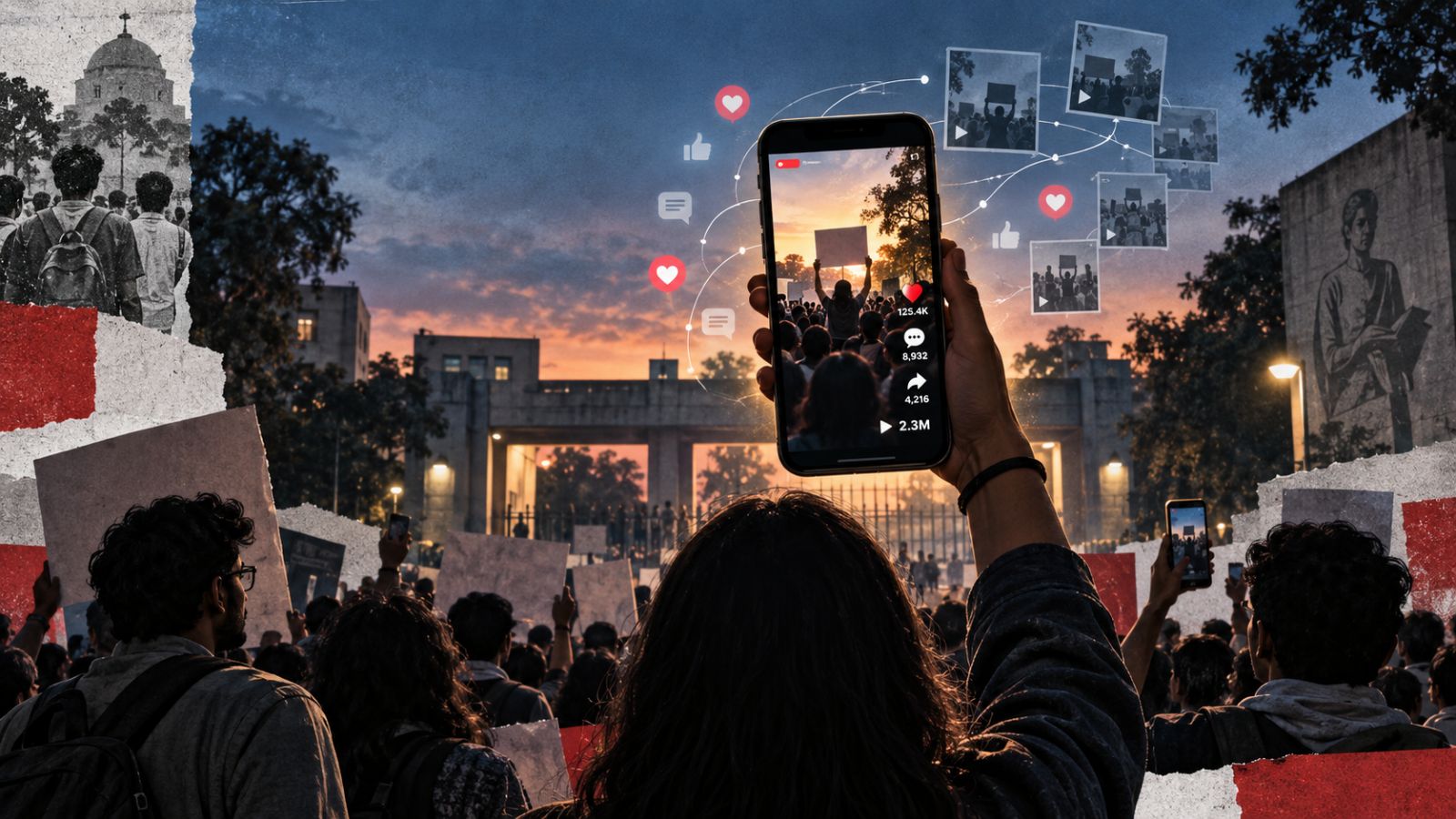
The 2019 protests at Jamia Millia Islamia and the 2016 JNU protests became memorable due to their refusal to disappear. Images from these protests transcended the campus walls and entered the country's democratic imagination, surviving long after the barricades were removed. However, every image that survives casts another shadow - it signifies a trend in student activism where protests often remain in the public consciousness primarily through the visuals captured on camera.
In this age of algorithmic audiences, the site determines who is present and who is seen. Protesters now understand that their actions are not only for the immediate crowd but also for the imagined audience who will witness their visuals tomorrow. This heightened focus on camera-consciousness alters the nature of dissent. A placard becomes a frame, a speech turns into a clip, and a crowd becomes an image waiting to spread.
The algorithm determines visibility, and in this digital era, a protest's main battle may now be with being seen. The camera has become an institution, not just a witness, and its presence alters the balance of power in protests.
Written by urgent.news from The Indian Express's reporting — not their text. Machine-written — may contain errors; check the original before relying on it.