Emergent Ventures India, 19th cohort
Asit Singh, founder of Syngi, received his grant to develop sub-angstrom optical MEMS sensors for next-generation semiconductor lithography. Rishabh received his grant to build a platform for real-time updates from Delhi courts, making judicial activity easier to track and understand. Hari and Naveen received their grant for Archgen AI, an agentic ecosystem connecting legacy EDA […] The post…
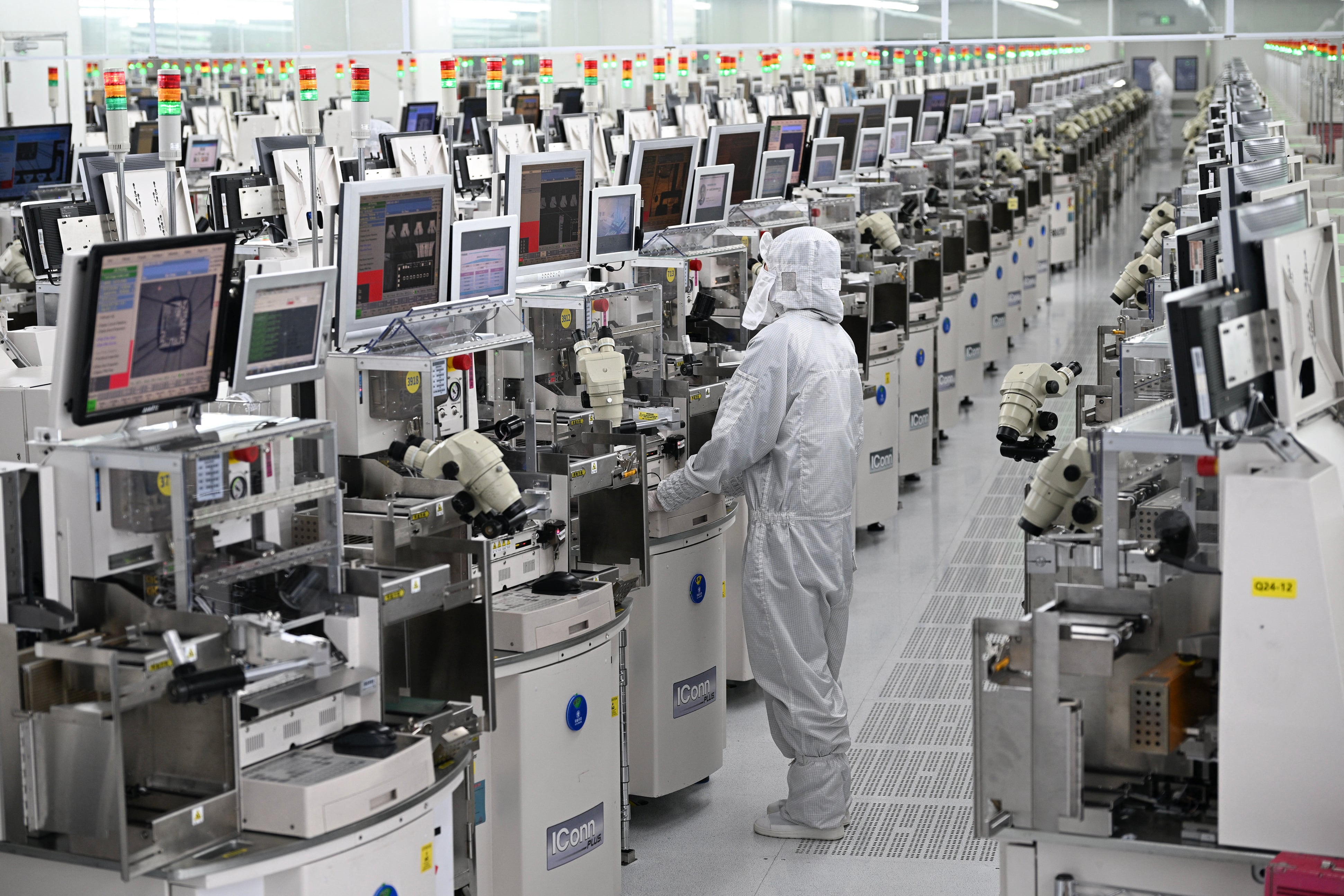
19-year-old Asit Singh of Syngi was awarded a grant to create sub-angstrom optical MEMS sensors to advance semiconductor lithography. Rishabh's grant will fund a platform for real-time updates on Delhi court proceedings, enhancing judicial transparency. Hari and Naveen received support for Archgen AI, an ecosystem that integrates legacy EDA tools with AI workflows for semiconductor chip design.
Shubh, a 18-year-old, secured funds to scale robotics using world models. Sarthak Ahuja, 19, received a grant for Hypertensight, a smartphone-based system detecting hypertensive retinopathy, already deployed in over 18 Indian villages. The project was also published in 2024's International Journal of Computer Science and Engineering.
Michaela Talwar was awarded funding for AltShows.com, an artist-run ticketing and discovery platform for India's alternative arts scene. Avyukt Jindal, 16, was granted for a nonlinear operator framework and potential research in condensed matter physics. Anirudh Anilkumar, 29, and AV Surya Vardhan, 26, got their grant for Fe-rry, developing IoT-enabled modular point-of-care diagnostics for blood testing anywhere.
Bhanvi Kumar, a Biotechnology undergraduate at IIT Kharagpur, received support to study cellular reprogramming and cancer cell-state transitions. Surya Uthkarsha, 14, received a grant for Flake AI, a platform converting websites into editable designs and tracking codebase changes. Kritarth Agrawal received a grant for Sakshya, an AI-powered document intelligence tool for India's compliance and regulatory landscape.
Tejas Pugalia, 13, was granted for his research on the Ramanujan-tau function, aiming to prepare for the International Mathematical Olympiad. Arnav, 17, from Navi Mumbai, was awarded to create a $200 diagnostic pen for an alternative to a $3,000 Parkinson's scan. Arjan Chaudhary, 15, received a grant for GGameChamps, a platform structuring competitive-gameplay data for analytics and AI.
Satadru Chakrabarty, Ph.D., was awarded for an affordable multiplexed point-of-care diagnostic using de novo antibodies for liver-function testing in rural India. Varun Bajpai received a grant for Biological Data Network (BDN-04), exploring human muscle tissue for data transmission via a bio-integrated communication architecture.
Semil Vaghasiya, 24, got a grant for sensor-free, 3D-printed hoof pads predicting equine injuries through wear-deformation analysis. Kanukant Om Gupta and Mansi Gupta's grant will make customs clearance in India simpler, more transparent, and legitimate. Parth Anand, 15, was awarded for research on temporal hallucinations in large language models.
Shadman Sakib received a grant for youth development and accessible learning in Bangladesh, reaching over 160,000 subscribers. Sk Reezaal Arafat, 16, received funds for Project SATARK, a decentralized agricultural fire-interception grid in rural West Bengal. Manan Gupta received a grant for Artemis, an AI layer enabling control of digital life via phone call.
Srijal Dutta received a grant for ZSMC Co., an independent research initiative across emerging technologies and engineering.
Written by urgent.news from Marginal Revolution's reporting — not their text. Machine-written — may contain errors; check the original before relying on it.