El mercado europeo del gas no permite tanta complacencia
Un invierno frío puede añadir 30.000 millones de metros cúbicos a la demanda y tensionar las reservas
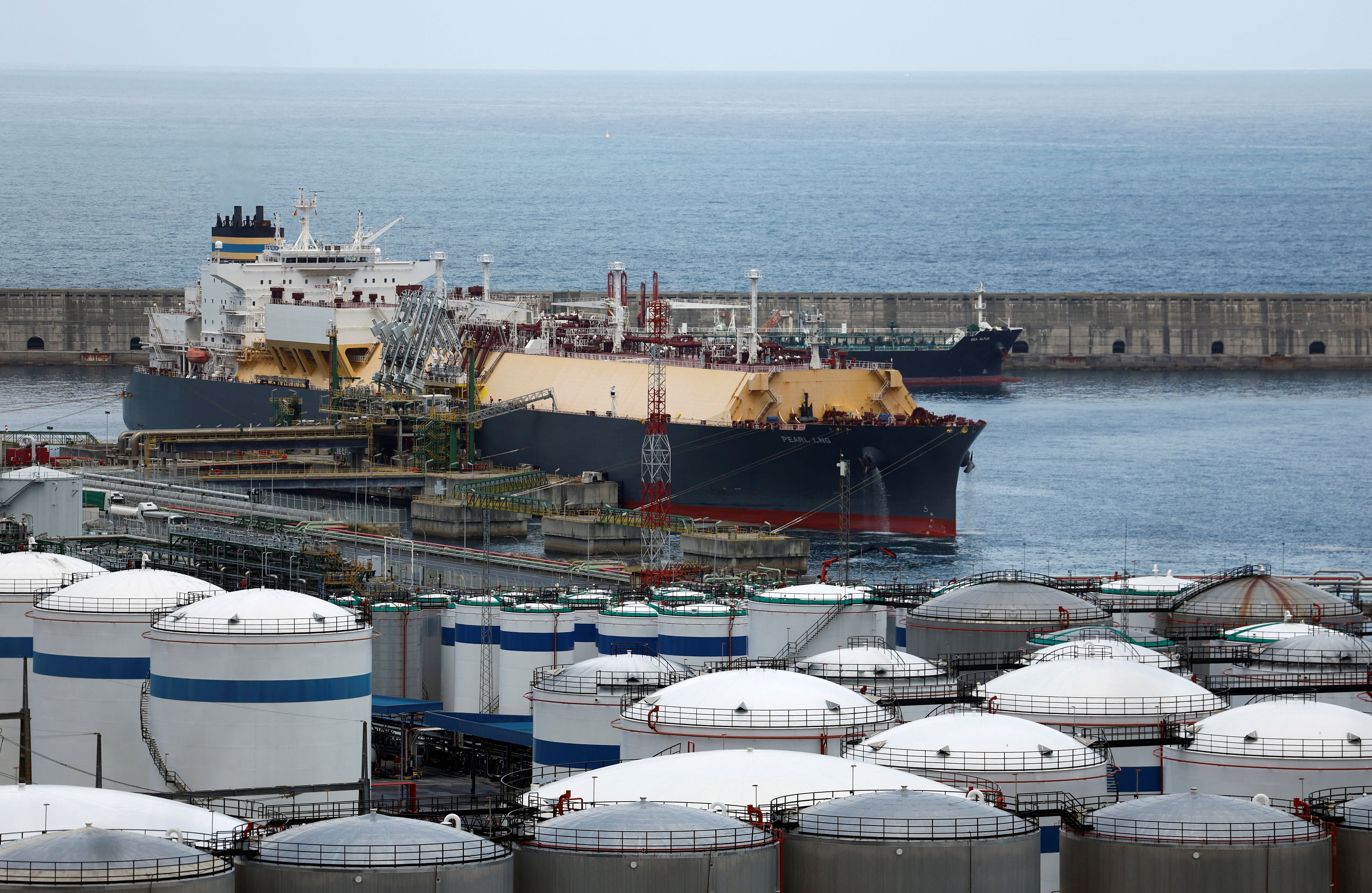
The European gas market is far from complacency despite recent developments. While European gas prices, as measured by the Title Transfer Facility (TTF) index, have risen from 30 euros per megavolt hour to 80 euros per MWh, they are still a far cry from the 300 euros reached in 2022. However, further price hikes are possible. After Russia invaded Ukraine in February 2022, European buyers rushed to natural gas liquefied (LNG) to replace Moscow's exports, which accounted for 40% of the continent's annual consumption, or 410 billion cubic meters.
The surge in US LNG imports contributed to this. Today, US LNG represents 22% of Europe's total gas demand, up from less than 5% before the war. This more stable situation has helped keep European gas prices relatively calm. About 6% of the gas Europe consumes comes from Qatar, which usually supplies a fifth of the world's LNG, but its global shipments are expected to drop more than 60% this year to 44 billion cubic meters due to the Strait of Hormuz blockade.
In normal conditions, Qatar could supply 21.5 billion cubic meters to Europe, which should recover when Hormuz shipments normalize. Europe also consumes less gas overall, down to 339 billion cubic meters in 2025. European companies are better protected from high prices: Morgan Stanley notes that Rolls-Royce, a 140 billion euro engine manufacturer, cut its energy consumption per revenue unit by about 39% between 2022 and 2025.
Plus, El Niño is expected to bring a mild and windy winter, reducing both heating demand and the need for gas-generated electricity. However, there are still concerns. Morgan Stanley now calculates that Qatari flows to Europe will not normalize until the first quarter of 2027, and even that date is uncertain. LNG ships are much harder and costlier to replace than oil tankers if damaged, making their transit riskier.
It's not prudent to rely on a benign winter either. JP Morgan finds no statistically significant relationship between intense episodes of El Niño and European winter temperatures. Additionally, the European Commission notes that a cold winter adds about 30 billion cubic meters to Europe's gas demand. Lastly, Europe seems to have lost the urgency of 2022 to fill its gas reserves, whose capacity normally hovers around 100 billion cubic meters.
Gas prices for later deliveries have been much lower than immediate delivery prices, giving operators little incentive to buy and store fuel for winter. As a result, the continent enters the cold season with reserves only about 70% full, according to JPMorgan, the lowest level ever recorded. If Qatari flows remain severely restricted, Europe could need to purchase an additional 16 billion cubic meters of LNG this year, according to the European Energy Regulatory Cooperation Council (ACER), equivalent to nearly 5% of the EU's annual gas demand.
Even with restricted Qatari flows, a cold winter could push TTF prices to 200 euros per megavolt hour, according to Morgan Stanley. While Europe may be better prepared to withstand an icy energy shock, complacency is premature.
Written by urgent.news from El Pais Economia's reporting — not their text. Machine-written — may contain errors; check the original before relying on it.