Colombia Among Countries Where Climate Hazards Affect Children’s Education
When Latin American countries begin to face the effects of the El Niño phenomenon, and particularly Colombia experiences scenarios of drought and even forest fires, UNICEF is releasing a report in which it reveals that, worldwide, in 2025, more than 171 million students (that is, one in ten) suffered disruptions to their education due to […]
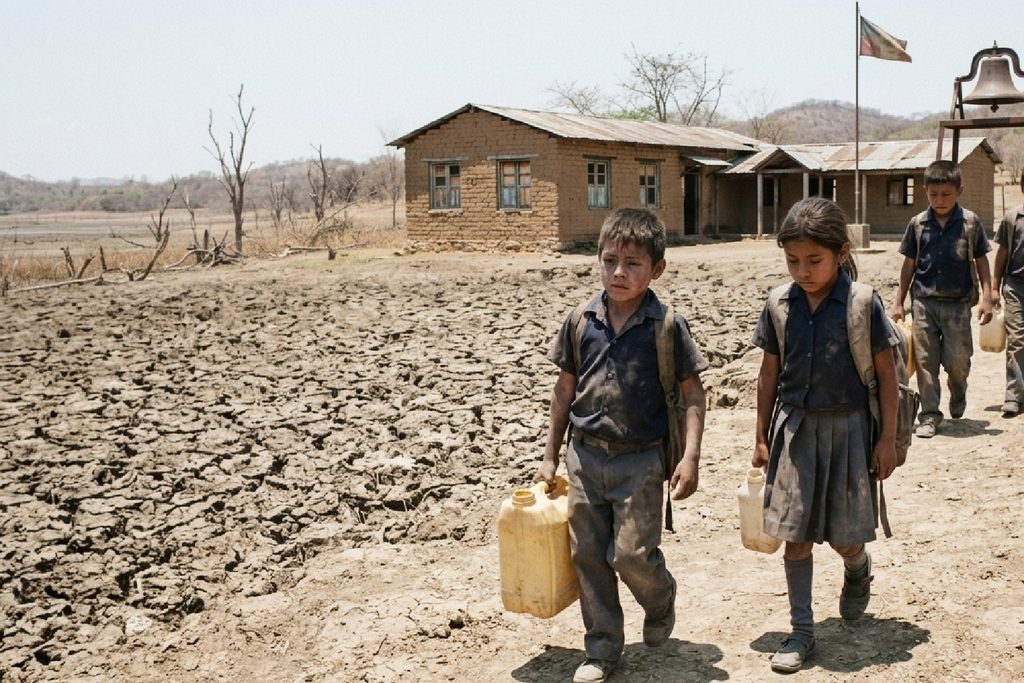
Colombia ranks among countries where climate hazards have disrupted children's education. In 2025, UNICEF found that more than 171 million students worldwide faced school disruptions due to climate hazards. Colombia experienced 374,377 student disruptions, largely due to drought, which is set to worsen with the onset of El Niño.
While water shortages, forest fires, energy crises, and food security issues are primary concerns, climate hazards impact education beyond class suspensions. They damage schools, force distance learning, reduce instructional hours, and increase dropout risks. Catherine Russell, UNICEF's executive director, emphasized that climate hazards destroy schools, displace families, and force vulnerable girls to leave school permanently.
Girls face higher dropout rates due to school damage, loss of family income, and increased responsibilities. Climate hazards also expose girls to higher risks of child marriage, hindering their return to school. The report estimates a potential loss of 200 billion dollars in income for students affected by education disruptions in 2025.
While low-income and lower-middle-income countries bear the brunt of these disruptions, students across all income levels are affected. In Colombia, droughts caused by El Niño could once again impact children's education.
Written by urgent.news from Colombia One's reporting — not their text. Machine-written — may contain errors; check the original before relying on it.