China makes progress in 3-nm chips without advanced lithography tools
Chinese researchers have made early strides in pushing semiconductor processing nodes below 3-nm using older lithography technology, as more advanced extreme ultraviolet lithography (EUV) tools from ASML remain blocked under US sanctions. The breakthrough marks the latest progress in China’s drive to chart an alternative path to advanced chipmaking amid US export restrictions. Under current…
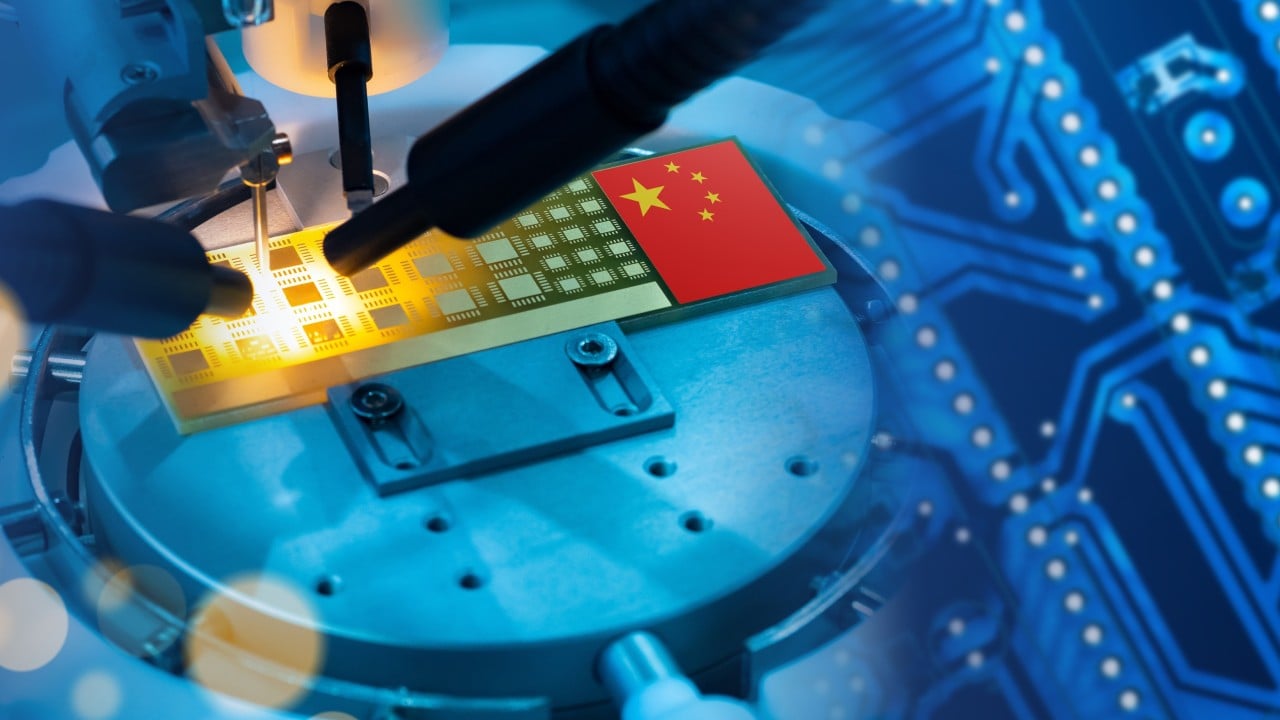
Chinese researchers have made early progress in developing semiconductor chips with nodes smaller than 3-nm, using older deep ultraviolet (DUV) lithography technology instead of the more advanced extreme ultraviolet (EUV) tools that are currently blocked by US sanctions. This breakthrough marks China's continued efforts to create an alternative path to advanced chip manufacturing despite US export restrictions.
The Dutch company ASML, which produces EUV machines, is restricted from selling its state-of-the-art tools to Chinese clients under current export control rules. State-backed Chinese Academy of Sciences (CAS) has established a preliminary gate-all-around (GAA) device development path using less advanced DUV lithography, according to a report by Taiwanese media Digitimes.
Ye Tianchun, a veteran from CAS's Institute of Microelectronics (IMECAS), revealed that the institute had completed early integration for stacked nanosheet-channel GAA CMOS transistors using DUV tools. This development represents a new early-stage MOS transistor process path for China's sub-3-nm advanced manufacturing. The breakthrough highlights how China is closely monitoring the architectural road map of global semiconductor leaders, despite lacking cutting-edge tools.
Currently, the breakthrough remains at an early stage and far from ready for mass production, as noted by Ye. CAS's latest GAA technology will need to pass future wafer validation performance on actual manufacturing lines before it can be considered for widespread use. While this breakthrough is significant, it is still far from a mass production-ready technology.
Written by urgent.news from South China Morning Post's reporting — not their text. Machine-written — may contain errors; check the original before relying on it.
This story
This is one outlet's version. Read the fullest account.