At Dastkari Haat, a decades-old collection tells stories from Kutch through motifs
A traditional block-printing technique, believed to be over 4,000 years old, is a major highlight at the exhibition "Maldhari Block Prints, You Have Not Seen Before" at Dastkari Haat Studio in South Delhi. The exhibition, which opened on September 17 and runs until September 20, was revived by artisan Dr Ismail Mohammad Khatri, 67, along with his brothers Mohd Razzakbhai and Jabbarbhai.
The nearly 45-year-old collection comprises items ranging from Rs 5,000 to Rs 25,000 and showcases the distinctive motifs of pastoral Maldhari communities from Kutch, Gujarat.
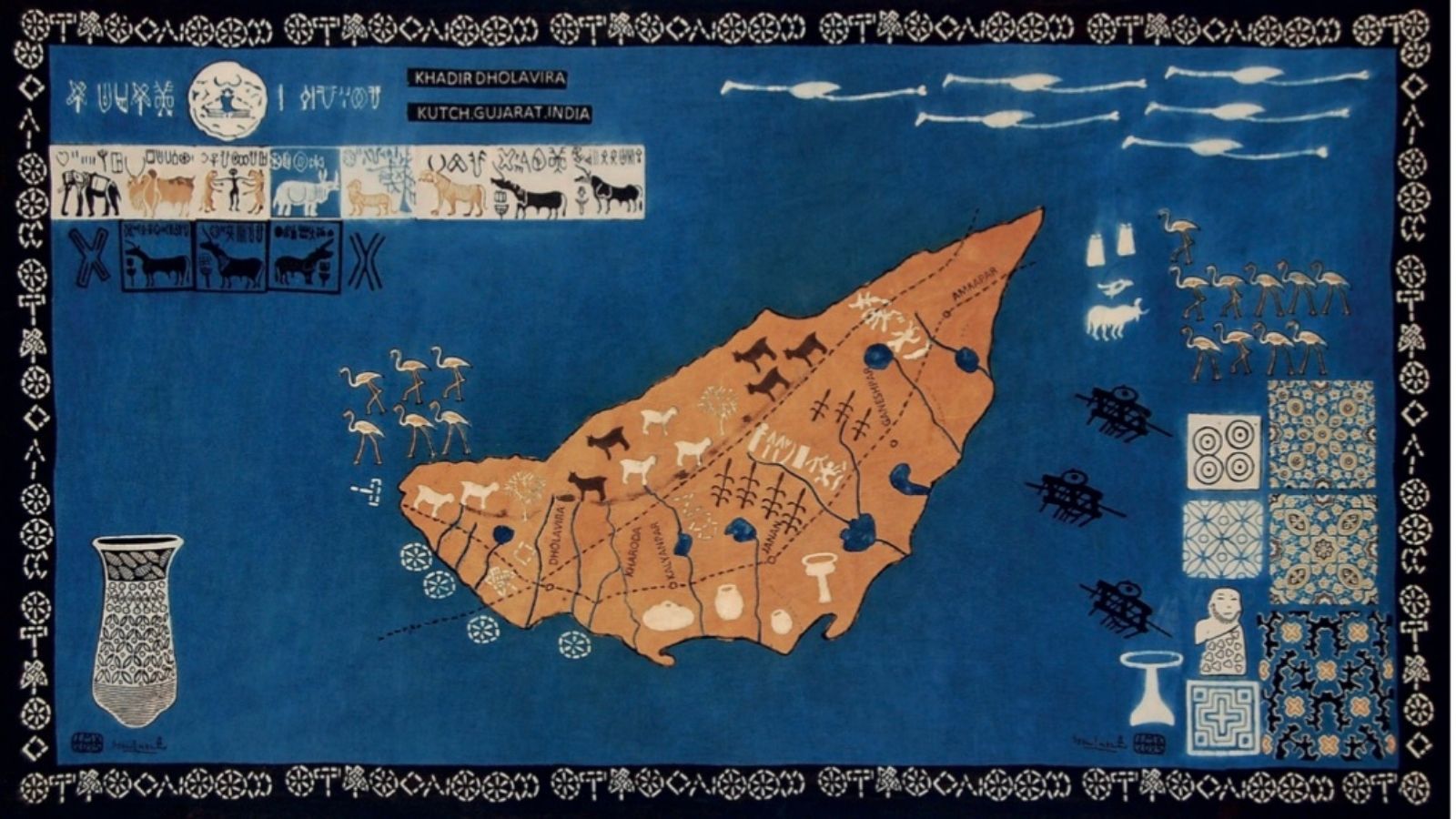
Every sari, shawl, or dupatta on display tells a story of the nomadic Maldhari people, with motifs such as stepwell designs representing the importance of water sources in their desert homes. The exhibition also draws connections to the Indus Valley Civilization and the UNESCO World Heritage Site Dholavira, where Dr Khatri created an art piece using 69 hand-carved wooden blocks.
The motifs in the collection have historical significance, such as Ladudo for rolled straw bundles, Fuldi for wind direction, Koyaro for spiders, and Pinjaro for birdcages. The Kukadaankh print, featuring a rooster's eye, was worn by elderly Muslim Maldhari women. The blue and white sari's Charkaliya motif represents the honeybee, signifying pollination essential for farmers' livelihoods.
Natural dyes, primarily red and blue, are used in the Ajrakh technique. The colors have cultural significance, with bright hues aiding desert visibility and certain colors reserved for specific communities. For example, green was used for farmers, serving as an early form of hunting and field camouflage. The legacy of the Khatri community, originally from Pakistan's Sindh, dates back to 1586 when they were invited to Kutch by Raja Bharmal I. After settling in Dhamadka village by the Saran river, they faced challenges due to river drying and the Bhuj earthquake in 2001. They eventually relocated to Ajrakhpur, named after their iconic block-printing technique.
Written by urgent.news from The Indian Express's reporting — not their text. Machine-written — may contain errors; check the original before relying on it.