Analysis: Indonesia’s disaster budget faces a cost-benefit test
Indonesia faces an unfortunate fiscal paradox: Just as the government has cut disaster-mitigation funding to the bone, disasters have struck with unforgiving regularity. President Prabowo Subianto himself has acknowledged that disasters are part and parcel of life in the archipelago. Yet his administration has slashed the National Disaster Mitigation Agency’s (BNPB) budget to just Rp 491 billion…
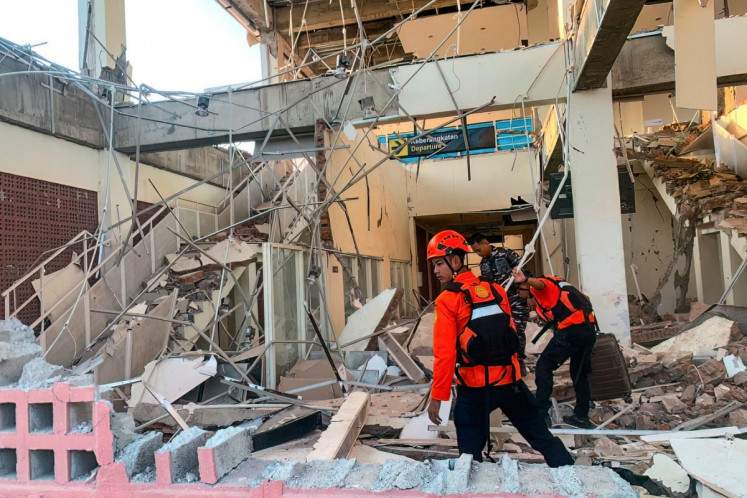
Indonesia confronts a fiscal dilemma as disaster-related funding has been drastically reduced while the frequency of catastrophes remains high. President Prabowo Subianto admitted that natural disasters are an unavoidable part of life in the archipelago, but the administration has cut the National Disaster Mitigation Agency's budget to a mere Rp 491 billion (US$28 million) this year.
This has sparked a critical question: How much can Indonesia afford to save on disaster preparation? The situation has become urgent. In August, a magnitude-7.7 earthquake struck near Nagekeo on Flores Island, followed by thousands of aftershocks, resulting in 105 deaths, 1,678 injuries, and 179,037 displaced residents. The economic impact of the disaster will extend well beyond emergency relief, with the need to rebuild roads and public facilities, restore essential services, and aid affected households and businesses.
This highlights the importance of examining the trajectory of the BNPB's budget, which saw an exceptional allocation of Rp 11.78 trillion in 2020 due to the COVID-19 pandemic. Since then, the allocation has steadily decreased, dropping to Rp 491 billion this year. While some fiscal adjustments were expected after pandemic-era spending subsided, cutting preventive spending does not eliminate disaster risk; it merely shifts the potential fiscal burden into the future, potentially leading to far greater expenses for emergency response and reconstruction.
This also raises concerns about the investment climate, as inadequate assessment of environmental and disaster risks before approving projects can create uncertainty for investors and the government. Effective disaster preparedness requires more than just physical infrastructure; it also involves better risk assessment, regulation, and planning.
Written by urgent.news from The Jakarta Post Academia's reporting — not their text. Machine-written — may contain errors; check the original before relying on it.
This story
This is one outlet's version. Read the fullest account.