AI boom could leave an e-waste trail that wraps 6 times around Earth
Report says estimates focused on GPUs miss the mountains of power, cooling, and networking gear destined for scrap
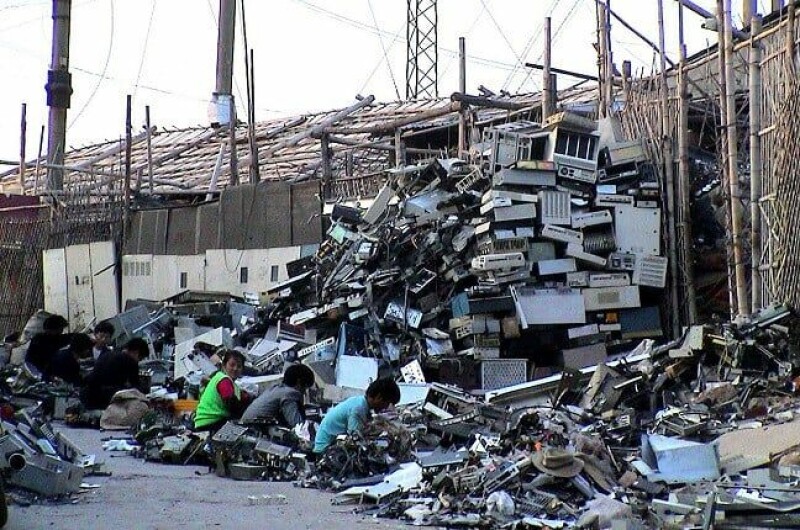
By 2050, AI infrastructure could generate enough electronic waste to wrap around Earth six times, according to a report from the Basel Action Network (BAN). The organization argues that current estimates significantly underestimate the scale of the problem. Previous projections mainly considered servers and accelerators, which make up only 13% of a data center's weight.
However, when accounting for power, networking, cooling, and other infrastructure, the total waste generated could be 40 to 60 times higher than previous estimates.
The report identifies five equipment categories: networking, power distribution, backup power systems, servers and accelerators, and cooling systems. Together, these constitute approximately 7,000 metric tons for a reference 100 MW AI facility. Much of this equipment will need to be replaced during facility upgrades. The Basel Action Network's model considers the industry's expansion plans and calculates the potential waste resulting from this growth.
It estimates between 395 million and 617 million tonnes of e-waste will be generated between 2025 and 2050, enough to fill between 15 million and 23 million shipping containers. Placing 20 million of these containers end-to-end would create a line about 244,000 km long, roughly six times the Earth's circumference.
The model assumes that AI equipment is decommissioned within years rather than decades as technology becomes obsolete. For instance, when upgrading racks from 5-15 kW to 50-140 kW for AI workloads, much of the power infrastructure must be replaced. A single 100 MW facility contains about 2,700 tonnes of copper alone in its cabling and busbars.
GPUs and other AI accelerators are replaced every two to three years, while traditional servers have a lifespan of five to seven years. The model assumes entire servers are replaced during upgrades to the latest Nvidia GPUs, while other equipment has different replacement cycles. Networking infrastructure lasts three to four years, power distribution equipment eight years, and both backup power and cooling systems five years.
Written by urgent.news from The Register Science's reporting — not their text. Machine-written — may contain errors; check the original before relying on it.
This story
This is one outlet's version. Read the fullest account.