Who decides who gets to participate in society? Galloway's banking dispute raises critical questions
In a world where financial institutions wield immense power, George Galloway's recent banking dispute ignites a vital discussion on the intersection of finance and political expression. As South Africa grapples with its own legacy of exclusion, the questions surrounding who gets access to banking services and under what conditions become increasingly urgent.
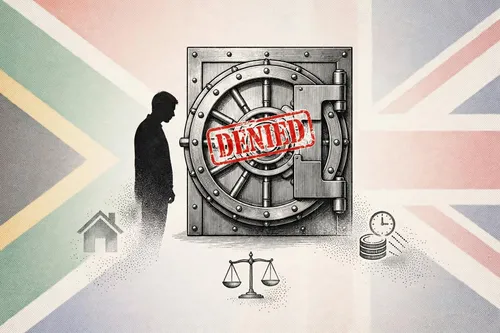
The powerful question of who decides who is financially and socially acceptable has been thrust into the spotlight following George Galloway's banking dispute. After 39 years with Bank of Scotland, Galloway was suddenly closed out of his accounts with no warning or explanation, leaving his pension and home at risk. His lawyers are now challenging Lloyds Banking Group.
While the specifics will be decided through legal processes, the broader issue at hand concerns the extent of financial institutions' power over individuals' ability to participate in economic life.
The history of institutional exclusion in South Africa provides a relevant backdrop, as banks were responsible for financing the apartheid state and denying credit to black South Africans. This legacy of exclusion still persists today, making the issue all the more significant. While financial institutions have the right to close accounts for legitimate reasons, such as fraud or money laundering, there is a concern that they might be using their power to punish lawful political activity.
The debate has gained momentum, with prominent figures like Nigel Farage and various activists and journalists experiencing similar debanking. The International Criminal Court serves as another stark example, with sanctioned judges facing cancelled credit cards and frozen assets. This raises the question of whether financial pressure can follow a decision that displeases a government, with implications that extend far beyond the individual.
In South Africa, where many rely on bank accounts for basic necessities like salaries, pensions, and paying rent, the issue becomes even more personal. Losing access to financial services can cause immense stress and hardship. The debate, therefore, transcends simple commercial matters, delving into questions of unchecked institutional power and the need for accountability.
Written by urgent.news from IOL's reporting — not their text. Machine-written — may contain errors; check the original before relying on it.