What “The Book of Genocides” Teaches Us
Dana Mashoian Walrath’s work of graphic nonfiction points to historical patterns across 10 genocides, from Germany and Turkey to Gaza.
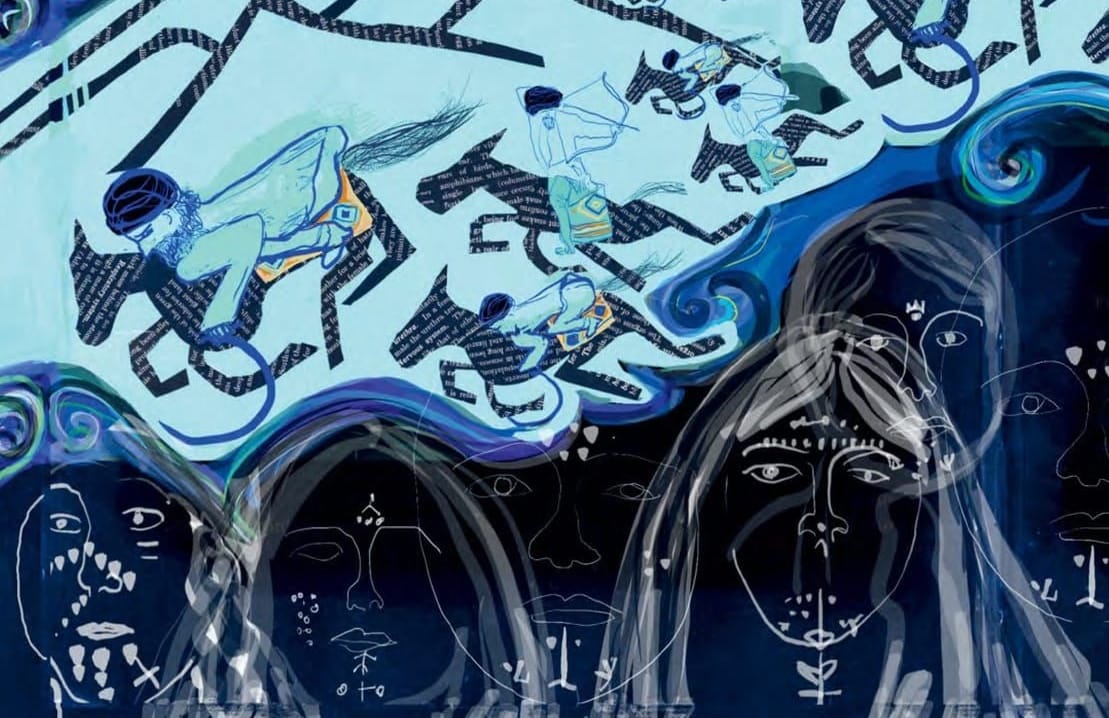
Dana Mashoian Walrath's "The Book of Genocides" (2026), published by Harvard University Press, presents a harrowing examination of ten documented genocides, spanning from the First Peoples of the Americas to the Rohingya. The graphic non-fiction book, which opens with the author's own family's experience of the Armenian Genocide, uses a raw and scratchy digital style to confront the brutal reality of these atrocities.
Each chapter begins with a red page, followed by a history illustrated with pencil drawings of human and animal victims. Accompanying these visuals are blackout poems, adding a layer of complexity to the narrative. While the book is filled with unsettling facts and thought-provoking visuals, the question remains: what is its ultimate purpose?
In her introduction, Walrath expresses her understanding of the anger and fear that can lead to violence, and her hope that dreams can be different. Unlike others who seek to punish perpetrators, the book aims for a different kind of empathy. It delves into the complex and contested history of the term "genocide," a legal concept that is often weaponized by nation-states, human rights groups, and the media.
The author cites Raphael Lemkin, the Jewish Holocaust survivor who coined the term "genocide" in 1944. However, she also reveals Lemkin's contradictions, such as his refusal to support a 1951 United Nations petition that defined lynchings, police killings, and institutionalized violence against Black Americans as genocide. This visual representation of Lemkin's face covered in blood symbolizes the shame he experienced as he escaped the same violence he had witnessed.
Ultimately, "The Book of Genocides" seeks to reimagine the troubled universalism surrounding the concept of genocide, given the current polarization and ongoing genocides in various parts of the world.
Written by urgent.news from Hyperallergic's reporting — not their text. Machine-written — may contain errors; check the original before relying on it.