What Happens When AI Agents Inherit Your Company’s Office Politics?
AI agents can turn conflicting departmental goals into automated decisions. How leaders can clarify priorities, authority and responsibility before deployment.
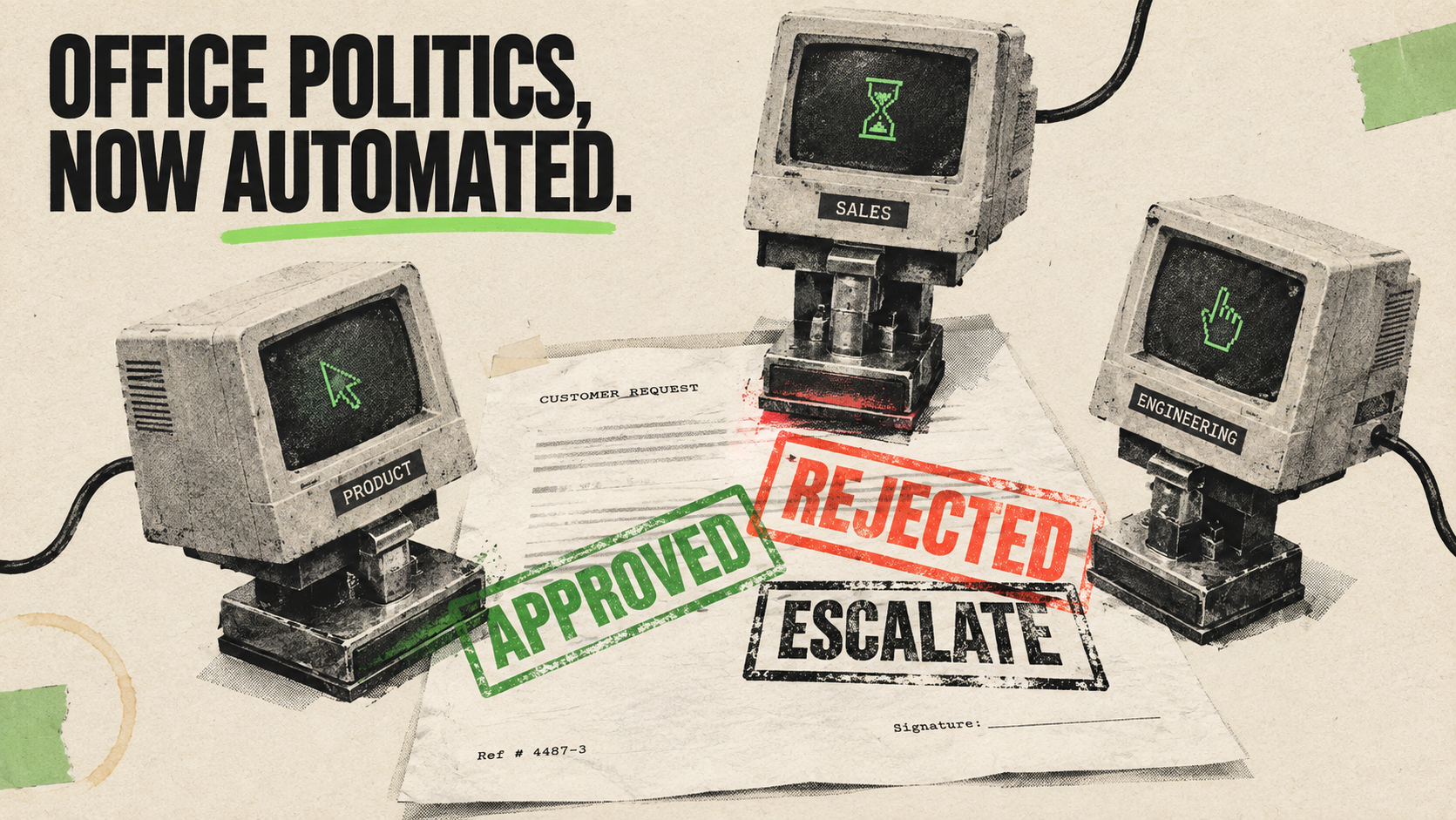
When a company assigns separate AI agents to various departments for tasks like sales, finance, and customer support, it can inadvertently introduce internal office politics into automated workflows. Each department configures its agent with specific objectives that may clash with those of other departments. For instance, sales may prioritize closing deals quickly, even if it means offering concessions that finance deems excessive.
Meanwhile, customer support may struggle to meet promises made by sales due to restrictions on delivery costs or service allowances. This creates conflicting priorities that can propagate through every transaction involving these agents. The choice of metrics to evaluate performance often leads to one approach being favored over others, potentially compromising the quality of service provided to customers.
Moreover, the delegation of decision-making authority to AI agents raises questions about who has the power to make promises that others must fulfill. Office politics can thus emerge from the very foundations of automated workflows, highlighting the need for clear guidelines and human oversight to ensure that conflicting priorities are addressed before they escalate into larger issues.
To mitigate the risk of office politics creeping into AI-driven processes, it is essential to establish explicit agreements and boundaries between departments before deploying automated systems. This includes testing various scenarios to identify potential conflicts and ensuring that each team has the authority and knowledge to resolve disputes.
By involving employees who handle complex cases in the decision-making process, companies can foster a collaborative environment where diverse perspectives are considered, and accountable individuals are empowered to negotiate and find mutually beneficial solutions. Ultimately, the success of AI implementations hinges on the organization's ability to define and communicate its values, priorities, and decision-making processes, ensuring that the technology serves as a tool to enhance human capabilities rather than replace them.
Written by urgent.news from HackerNoon's reporting — not their text. Machine-written — may contain errors; check the original before relying on it.