Vietnam urged to deepen FDI linkages with domestic businesses
Vietnam must look beyond the volume of foreign investment it attracts and focus on forging stronger links between foreign invested and domestic businesses enabling Vietnamese companies to raise localisation rates and move up global supply chains a conference has heard
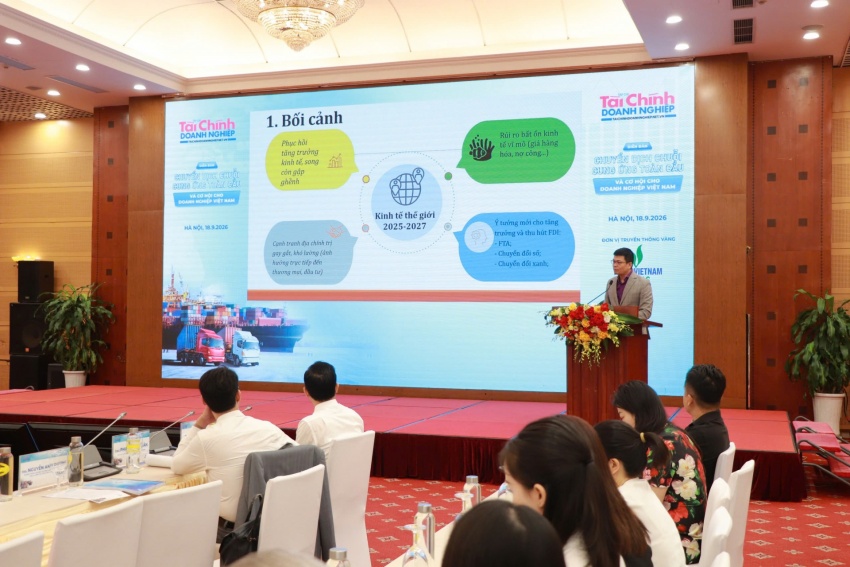
At a forum in Hanoi on September 18, Nguyen Anh Duong from the Institute for Policy and Strategy highlighted the need for Vietnam to deepen its linkages with domestic businesses amidst the flow of Foreign Direct Investment (FDI). According to Duong, Vietnam continues to attract significant FDI, with China, Singapore, and South Korea being its primary sources.
However, Duong pointed out that there is a gap in how these external funds are connected with Vietnam's domestic production capacity. He noted that despite the inflow of capital from East Asia and the Pacific, Vietnam's ability to boost growth, exports, and economic linkages remains limited.
Duong emphasized that the effectiveness of investment attraction should be gauged not only by the volume of capital but also by its spillover effects and capacity to create domestic production linkages. He also highlighted the challenges posed by the international trade environment, particularly the impact of US import tariff policies since 2025 and technical criteria tied to inputs from third economies. These factors are making origin of goods and sources of inputs increasingly important for market access.
Furthermore, Duong suggested that Vietnam should move away from a focus on the quantity of FDI to a more selective approach based on high-tech and innovation-driven projects that establish linkages with domestic businesses. This shift, he argued, should be accompanied by the development of supporting industries, improvements in logistics, digital infrastructure, and energy capacity, as well as stronger risk management in areas like rules of origin and trade defense.
Le Thi Duyen Hai, vice chairwoman and Secretary General of the Vietnam Tax Consultants Association, echoed these sentiments, stressing that tax policy should transition from merely attracting investment to upgrading the capabilities of Vietnamese businesses to become high-value links in global supply chains. She advocated for policies that promote technology, R&D, human resources, supply chains, and global markets, rather than merely reducing tax liabilities in the short term.
Hai stressed that both policy measures and business capabilities are crucial in helping Vietnam capitalize on supply chain shifts and build a resilient production ecosystem.
Written by urgent.news from Vietnam Investment Review's reporting — not their text. Machine-written — may contain errors; check the original before relying on it.