This AI toothbrush wants to find trouble before your dentist does
If you’ve ever wanted more information about what’s going on inside your mouth between dental visits, you’re in luck. Now, there’s an at-home oral-care system designed to give you exactly that. The oral-care technology company usmile just introduced an at-home AI-assisted toothbrush that lets you learn all the (dirty?) details about your mouth, teeth, and gums. The newly released D Series…
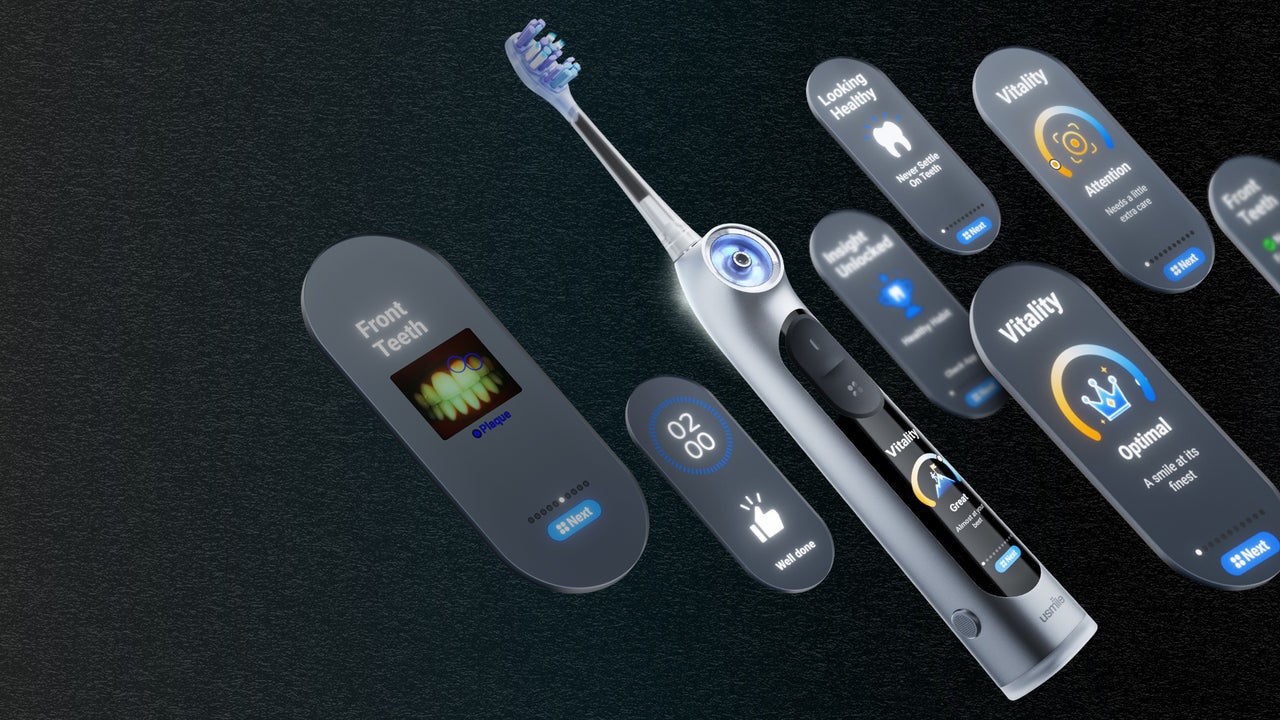
For those seeking more insight into their oral health between dental appointments, an at-home oral-care system has recently hit the market. The technology company usmile unveiled the D Series, an AI-assisted toothbrush, complete with the D50 OralCam Toothbrush and the D-lite OralCam. The D-lite system integrates with a smartphone camera to deliver a comprehensive visual review of the mouth.
Typically, the inside of the mouth is a challenging space to observe due to its wet, dark, and intricate nature. However, the D Series goes beyond mere visualization and also offers feedback, hygiene tracking, and warnings about potential problem areas.
The screen on the D50 Toothbrush provides real-time guidance, a significant upgrade from previous smart toothbrushes released in the early 2010s. According to Jason Zhang, the product director at usmile, the D Series represents a significant shift in the oral-care category. Consumers have often assumed their teeth were clean until discovering cavities and buildup during their next dental visit.
The D Series aims to prevent such issues by bringing prevention into the home and making daily care more actionable. This visual care system fosters clearer communication between consumers and dental professionals.
Regular dental check-ups typically occur every six months, but many people avoid them due to fear. Advanced at-home technology like the D Series could serve as an early indicator of potential concerns, according to Ryan Vet, managing member of Speaking Consulting Network. Such devices may help users target problem areas, preventing future decay or concern.
However, Vet cautions that providing individuals access to information previously accessible only during dental visits could lead to a false sense of security. People might believe they can skip exams as long as their teeth appear fine, potentially missing early indicators of other underlying health issues.
Written by urgent.news from Fast Company's reporting — not their text. Machine-written — may contain errors; check the original before relying on it.