The next phase of design will still be human-led
Someone can convert an idea into reality faster than ever before with the help of generative AI , and that makes the role of humans in the process even more important. “More is not always better. Faster is not always better,” said Emily Galloway, Spotify’s senior director of product design , at The New Rules of Great Design panel during the 2026 Fast Company Innovation Festival. “Human judgment…
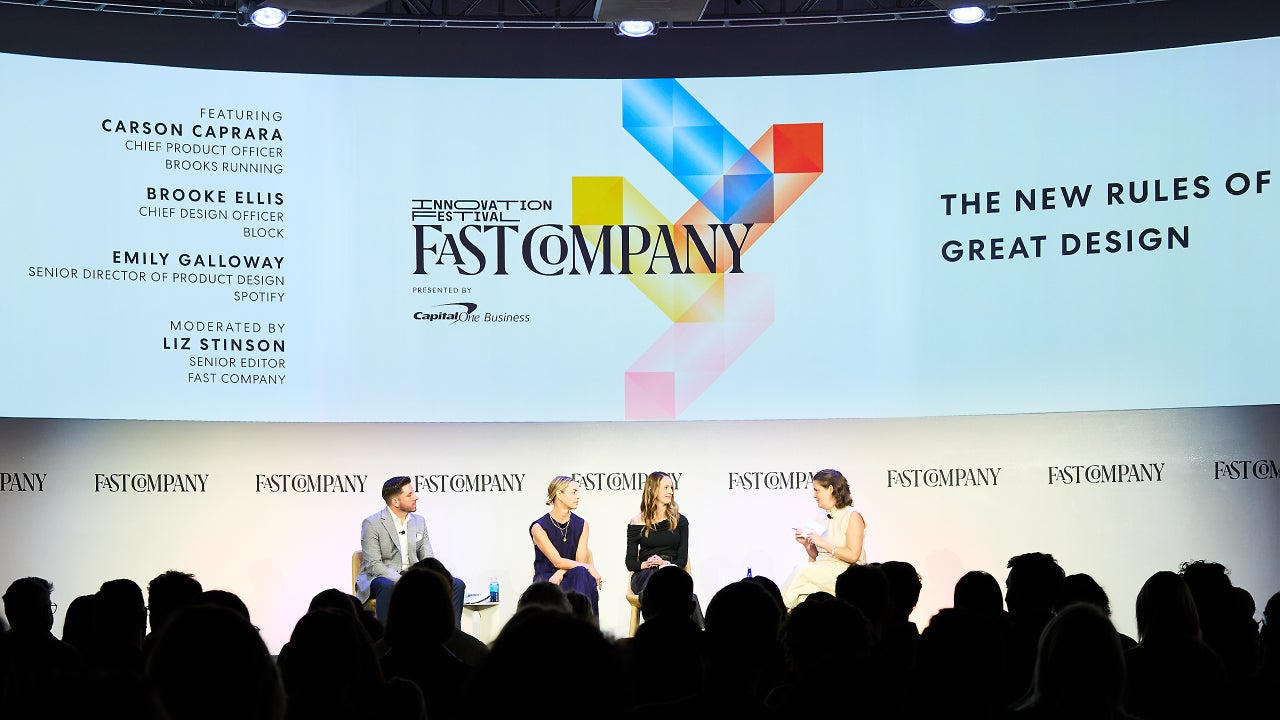
The role of humans in the design process, even with the aid of generative AI, is becoming increasingly vital, according to Emily Galloway, Spotify's senior director of product design. Galloway emphasized during the 2026 Fast Company Innovation Festival that "more is not always better. Faster is not always better," highlighting the importance of human judgment in discerning what is truly worth building. The cost of inventing something new has never been lower, so the challenge lies in identifying what truly adds value.
Brooke Ellis, chief design officer at Block, agreed that successful design launches do not always begin with a human problem that needs solving. If the product is technology-first, designers must ensure it doesn't feel cold. Spotify's AI DJ serves as a prime example. Initially designed to feel like a companion, the DJ needed a human touch to avoid appearing robotic.
Spotify achieved this by modeling the voice after Xavier Jernigan, a Spotify employee with music and curatorial experience. This infusion of human elements into the AI-driven project ensured a more engaging user experience.
Galloway emphasized that using generative AI in the design process requires a broader system design rather than prescribing every output. To achieve this, she advocated for assembling the right team of humans alongside the machines. For Spotify's AI DJ, this team included writers, culture and music experts, and engineers, working collaboratively. This interdisciplinary approach ensures that the technology serves a meaningful purpose and enhances the user experience.
While the application of AI in a music app is relatively straightforward, incorporating technology into an industry like athletic apparel presents unique challenges. Brooks Running, a century-old brand, has been exploring ways to use AI to personalize its offerings for customers. However, the company faces the dilemma of balancing technology with the ultimate human aspect of running—its connection to nature and escape from the digital world.
Despite these challenges, Brooks Running successfully used AI to analyze a runner's movement and create a custom spike shoe for a world record attempt. This achievement, which resulted in world record holder Josh Kerr, demonstrates the potential of AI to enable extraordinary feats for everyday runners.
Innovation does not always have to stem from addressing a problem. Ellis noted that the Cash App Wand, a novel and whimsical payment device, exemplifies this approach. Designed to bring "whimsy, personalization, and style" into the payment process, the Cash App Wand sold out within minutes, demonstrating its appeal. Ellis stressed that the future of good design lies in leaving space for humans to imagine and innovate, even when the solution is not immediately apparent.
Written by urgent.news from Fast Company's reporting — not their text. Machine-written — may contain errors; check the original before relying on it.