The Morbid Lesson of 10,000-Plus Sea-Lion Deaths
Animals that bridge the human world and the wild can be uniquely perilous to human health.
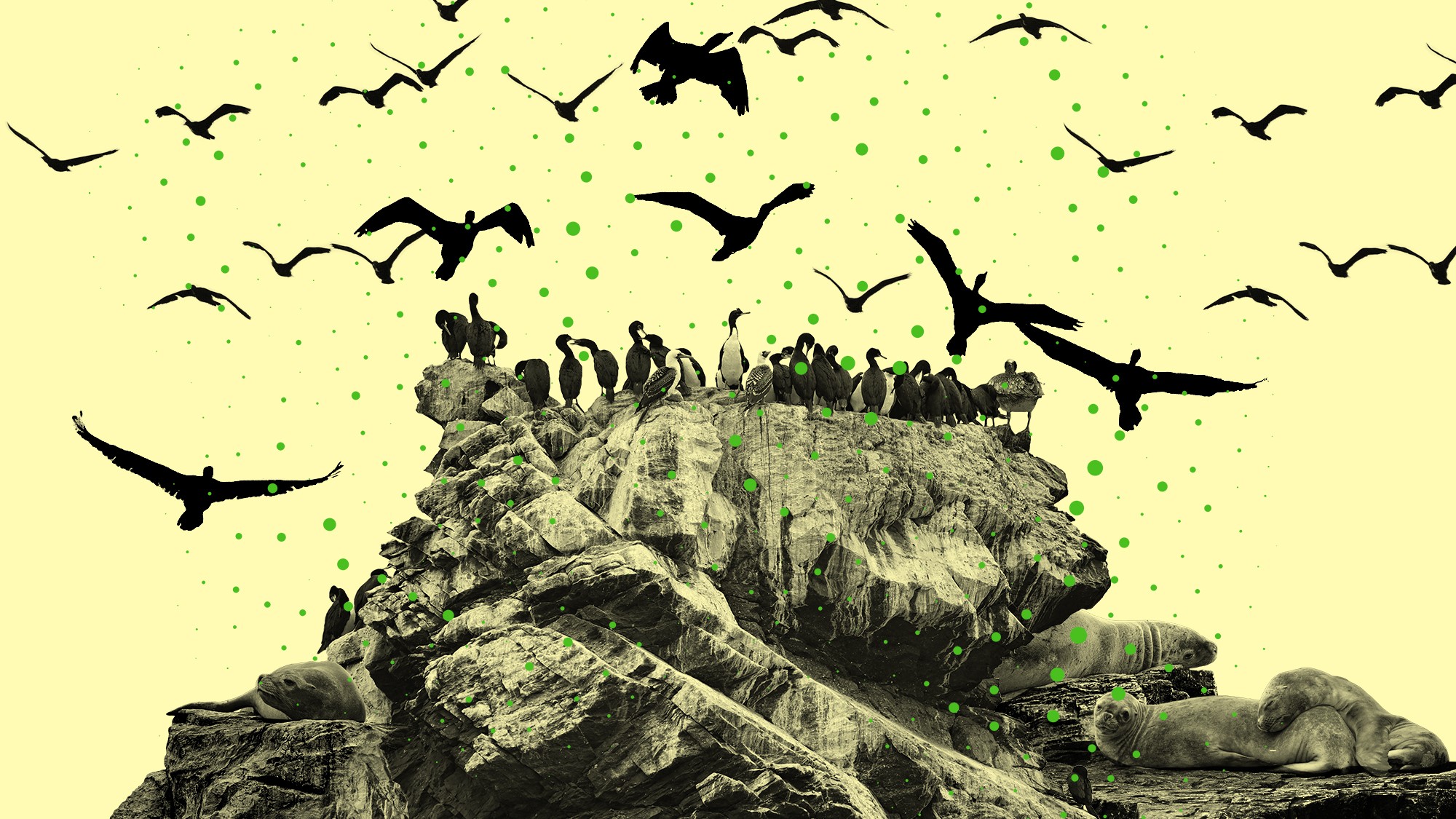
Synanthropes are creatures that have adapted to live alongside humans, forming a symbiotic relationship. These creatures can be found in urban environments, taking advantage of human settlements while avoiding their dangers. In Chile, the most conspicuous synanthrope is the South American sea lion, with about 130,000 individuals living in colonies near human activity. These sea lions have become accustomed to human contact, often seen taking food from tourists and becoming aggressive if approached.
One of the most significant health risks posed by synanthropes is the potential for novel pathogens to spread between animals and humans. This risk was demonstrated in Chile when H5N1, a deadly influenza virus, began spreading among migratory birds and then to the sea lion population. In December 2022, Chilean virologist Victor Neira discovered H5N1 in migratory birds.
By January 2023, clusters of dead seabirds had been observed, and by the following month, the first cases of H5N1 in sea lions were reported. The incidence of stranded sea lions rapidly increased, with over 4,500 dying within six months of the first H5N1 detection. This tragic mass mortality event was a direct result of the virus adapting to infect and kill both avian and mammalian hosts.
The Chilean government eventually constructed halls to store the deceased sea lions, highlighting the severity of the crisis. This incident underscores the heightened risk synanthropes pose by bringing novel viruses carried by wild and migratory animals closer to human populations. The outbreak highlights the importance of monitoring synanthropes in epidemiological research to identify and contain emerging pathogens before they lead to global pandemics.
Written by urgent.news from The Atlantic's reporting — not their text. Machine-written — may contain errors; check the original before relying on it.