Spritpreise: Preisschock an der Zapfsäule befeuert den Wahlkampf-Endspurt
Rekordpreise für Benzin und Diesel setzen die Politik vor den Wahlen in Mecklenburg-Vorpommern und Berlin unter Druck. Die Parteien diskutieren, wie Autofahrer entlastet werden sollen.
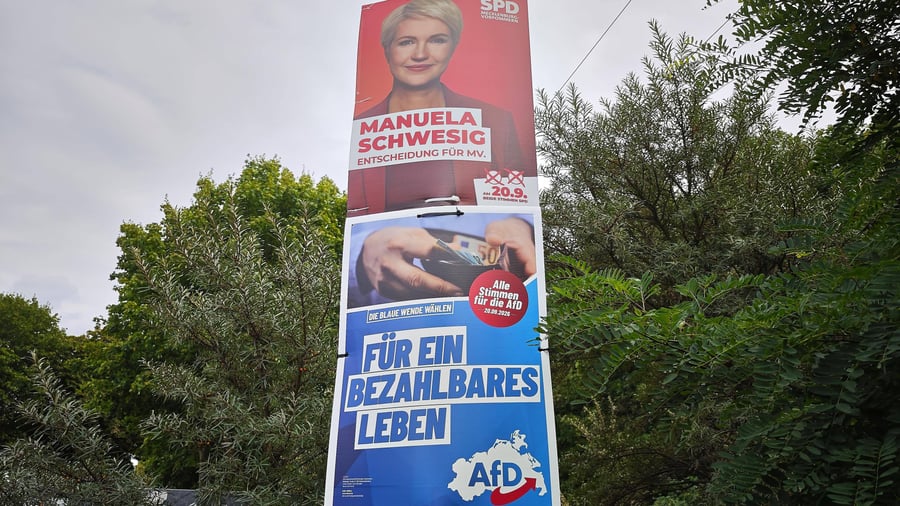
Spritpreise at record highs have fueled the final push of the election campaign in Berlin and Mecklenburg-Vorpommern. The SPD, AfD, CDU and the Left are debating possible reliefs, as the situation at gas stations continues to intensify. The crisis in the Middle East is driving up fuel prices. While gasoline is now the most expensive in Germany, diesel is also reaching unprecedented levels.
A liter of diesel cost 2.453 euros on Wednesday, surpassing the previous record from April by 0.6 cents, according to ADAC figures. Gasoline prices have been at record levels for days, reaching its fifth consecutive high at 2.314 euros per liter on Wednesday. SPD state premier Manuela Schwesig (SPD) said recently at a campaign event in Rostock: "Spritpreise knallen gerade durch die Decke."
She called for the reintroduction of the fuel price ceiling and a surcharge on excess profits for the big oil companies. Chancellor Friedrich Merz (CDU), who opposes SPD proposals, branded them "pretty sour." The debate reached a boiling point in their first TV debate, with Holm calling a government price ceiling a "plan from the SPD's cupboard."
Instead, she argued for lower energy and VAT rates. Schwesig countered that she was siding with oil companies. The North CDU also advocates for lower state burdens. CDU Spokeswoman Daniel Peters said in an NDR debate: "We would have the lowest fuel prices in Germany if there were no taxes and duties." The AfD Bundestag faction argues similarly, stating that the state artificially raises energy and fuel prices with taxes and duties to force citizens and businesses to cut CO2 emissions.
This "German special delusion" must end. Even the workers' faction of the CDU adds pressure on the federal government. Baumann cited Poland, where diesel is 50 cents per liter cheaper than in Germany. The crisis in the Middle East is partly responsible for the high prices, but Germany can do something about its own energy policy.
Citizens will show their discontent at the upcoming elections, as motorists pay more: With a typical gasoline car driving about 800 kilometers a month and using an average of eight liters per 100 kilometers, it would cost 34 euros more per month than before the Iran war. For a typical diesel car driving 1400 kilometers a month with a consumption of seven liters per 100 kilometers, the cost would be 69 euros.
Federal Finance Minister Lars Klingbeil (SPD) accuses the companies of exploiting the crisis "to fill their pockets." He calls it "abuse" and demands an excess profit tax. The goal is clear: "Spritpreise müssen runter, und gerade die Pendlerinnen und Pendler müssen entlastet werden." Federal Finance Minister Lars Klingbeil (SPD) calls the oil companies to blame for the crisis "to make their pockets fuller."
He speaks of "abuse" and calls for an excess profit tax. The aim is clear: "The fuel prices must come down, and especially the commuters must be relieved." Federal Finance Minister Lars Klingbeil (SPD) blames the companies for exploiting the crisis to "fill their pockets." He speaks of "abuse" and demands an excess profit tax. The aim is clear: "The fuel prices must come down, and especially the commuters must be relieved."
Written by urgent.news from Handelsblatt's reporting — not their text. Machine-written — may contain errors; check the original before relying on it.