Sihasak reaffirms Thailand’s UNCLOS stance: maritime borders must be settled before resource sharing
BANGKOK — 18 September 2026, Deputy Prime Minister and Foreign Minister Sihasak Phuangketkeow said Thailand remains committed to clearly demarcating its maritime boundary with Cambodia before discussing joint resource development or benefit-sharing. Speaking at 07:20 at Government House on Thursday, Sihasak said the first meeting of the Compulsory Conciliation Commission under the 1982 United…
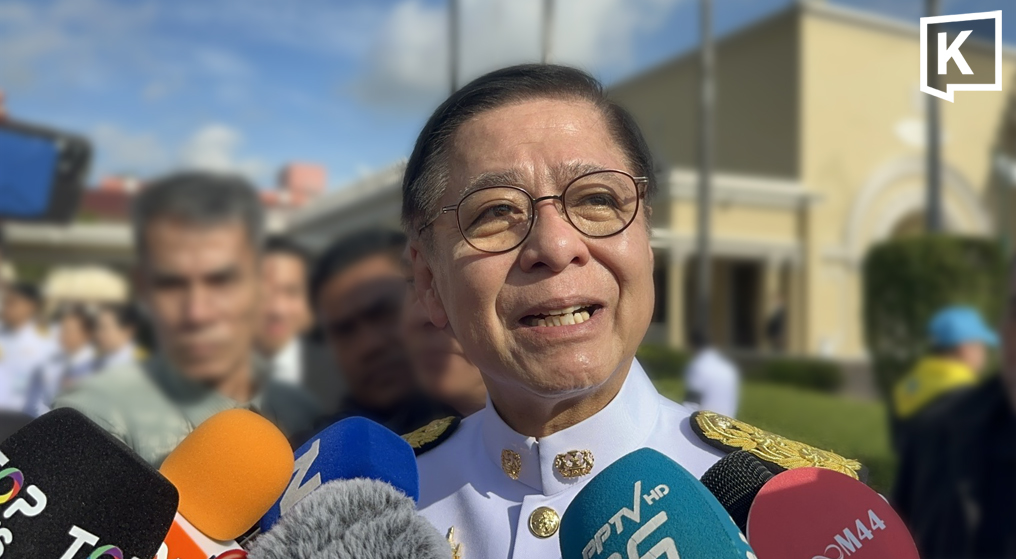
BANGKOK — 18 September 2026, Deputy Prime Minister and Foreign Minister Sihasak Phuangketkeow reiterated Thailand's commitment to resolving its maritime boundary dispute with Cambodia prior to any joint resource sharing. Speaking at Government House on Thursday, Sihasak confirmed that the initial meeting of the Compulsory Conciliation Commission under the 1982 United Nations Convention on the Law of the Sea (UNCLOS) had proceeded satisfactorily.
Thailand had shared its stance and outlined the factors leading to the conciliation, emphasizing the necessity of sincerity and a lasting resolution to bilateral concerns. According to Sihasak, a sustainable settlement for Thailand entails the explicit delineation of the maritime boundary.
When queried about Cambodia's perspective, Sihasak noted that Phnom Penh also deemed the maritime boundary delimitation crucial. However, should the process stretch out, Cambodia would be open to exploring benefit-sharing and cooperative development in the interim. Sihasak reiterated that Thailand articulated the precondition that the maritime boundary should be definitively established before engaging in discussions about joint resource development or sharing.
He opined that relations between Thailand and Cambodia were on a positive trajectory, citing Cambodia's more amicable attitude as a potential catalyst for further dialogue.
Regarding recent news of Cambodia's military constructing a new trench on the land border, which was subsequently filled, Sihasak acknowledged the incident as a signal but emphasized that it pertained to the land boundary rather than the maritime conflict. He expressed a shared desire to avoid incidents that could escalate into confrontation, affirming that any measures to prevent such outcomes were beneficial.
Written by urgent.news from Khaosod English's reporting — not their text. Machine-written — may contain errors; check the original before relying on it.