'Shooting blanks': How fertility treatment could save this native plant
In the Blue Mountains of New South Wales, an endangered shrub is struggling with fertility. A team of scientists hopes the plant equivalent of IVF can help.
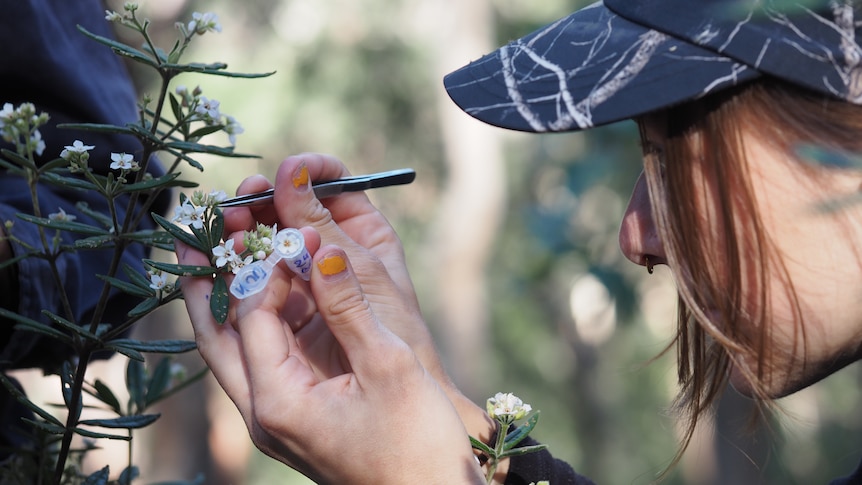
In early spring, scientists in the Blue Mountains of New South Wales are engaging in a delicate mission to save an endangered shrub called Zieria covenyi. The shrub has only two known populations worldwide, both located in the Blue Mountains National Park. While climate change poses a significant threat, fertility issues are another major concern.
Zieria covenyi flowers possess both male and female parts - the orange-coloured male anther holds pollen, while the female stigma at the centre receives pollen from other flowers. If successful, this process could result in fertile fruit and seed, creating genetically unique plants.
The team, led by UNSW's Threatened Rare Endemic Plant Research Group, seeks to understand the fertility issues of the plant in both locations. At Breakfast Creek, shrubs are up to 2 meters tall, but at Narrow Neck Peninsula, they only reach knee height. The scientists emasculate flowers by removing the male reproductive organ, collecting sperm to hand-pollinate struggling plants. The collected pollen is stored for later use.
While the shrubs primarily reproduce asexually through root suckering, their genetic diversity is low, making them vulnerable to environmental changes. Genetic rescue programs aim to increase genetic variation within a population, making it more resilient. The team's hand pollination attempts were unsuccessful, with only one seed developing in the entire Narrow Neck population. Despite this setback, the discovery of a fully developed seed offers hope for future fertility treatments.
Written by urgent.news from ABC News AU's reporting — not their text. Machine-written — may contain errors; check the original before relying on it.