Nighttime Light Exposure Linked to Thicker, Stiffer Hearts
A new study suggests that greater nighttime light exposure may contribute to structural and functional changes in the heart, potentially increasing cardiovascular risks over time. Researchers led by Professor Lu Qi at Tulane University tracked 11,071 participants from the U.K. Biobank, fitting each person with a wrist-worn light sensor for seven days to measure exactly […]
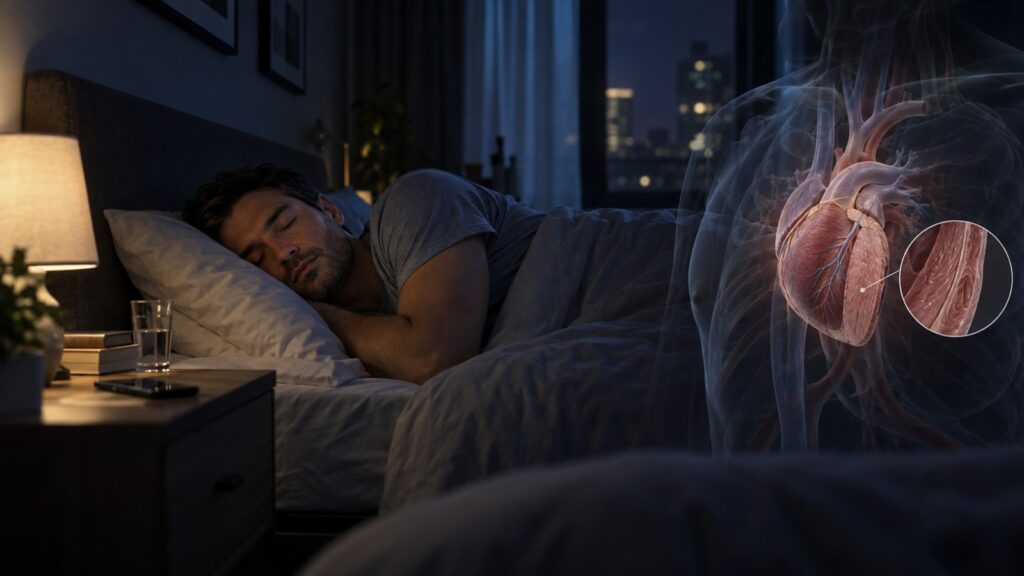
New research proposes nighttime illumination may impact heart health and elevate the likelihood of heart ailments. A cohort of 11,071 individuals from the U.K. Biobank donned wrist-worn devices capable of quantifying nighttime light exposure for seven days, with subsequent cardiac MRI scans performed three years later. Participants exposed to more than three lux, analogous to the brightness of a nightlight or streetlight seeping through curtains, exhibited signs of cardiac remodeling - alterations in the heart's structure and function.
Professor Lu Qi of Tulane University observed, "Light pollution has emerged as a new risk factor for cardiovascular disease," emphasizing that mitigating nighttime light exposure could be a viable strategy to prevent heart disease. The study detailed that heightened nighttime illumination correlated with a 2.4% increase in left ventricular mass and a 1.5% thickening of heart walls, indicative of concentric hypertrophy, where the heart's walls thicken and narrow the chamber for blood storage.
This group also experienced a 1.9% reduction in myocardial contraction fraction, reflecting diminished heart muscle efficiency during contraction. The effects weren't limited to a single heart chamber; adverse alterations were also noted in the right ventricle and left atrium, suggesting a widespread impact. Over a decade-long follow-up, study participants with the highest nighttime light exposure faced a 29% increased risk of heart failure, a 15% heightened risk of atrial fibrillation, a 24% greater risk of heart attack, a 33% elevated risk of stroke, and a 26% increased risk of cardiovascular disease-related mortality.
An accompanying editorial by Professor Thomas Munzel and colleagues posits a biological explanation: Nighttime light exposure inhibits melatonin, which typically widens blood vessels and combats inflammation, while simultaneously elevating cortisol levels and disrupting clock genes responsible for heart muscle contraction and metabolism.
This biological chain reaction may account for the consistent findings observed in night-shift workers and individuals regularly exposed to loud nighttime noise, reinforcing the study's results as a genuine physiological response rather than statistical fluke. Munzel's team urges clinicians to inquired about bedroom darkness, night-shift work, and evening screen usage when treating heart failure or irregular heartbeat patients.
Practical remedies, such as blackout curtains, warm-colored bedside lighting, and covering standby LED lights, are simple and inexpensive. On a larger scale, municipalities could adopt shielded light fixtures, warm-spectrum bulbs, and motion-activated streetlights to reduce overall nighttime illumination. The editorial concludes that this research highlights the need to consider darkness as a vital sign of cardiovascular health, akin to blood pressure or clean air.
Written by urgent.news from Colombia One's reporting — not their text. Machine-written — may contain errors; check the original before relying on it.