Meet the winner of Nikon's Small World in Motion video contest
Ning Xu of Tsinghua University captured tiny cilia beating in airways of a child with rare respiratory disorder.
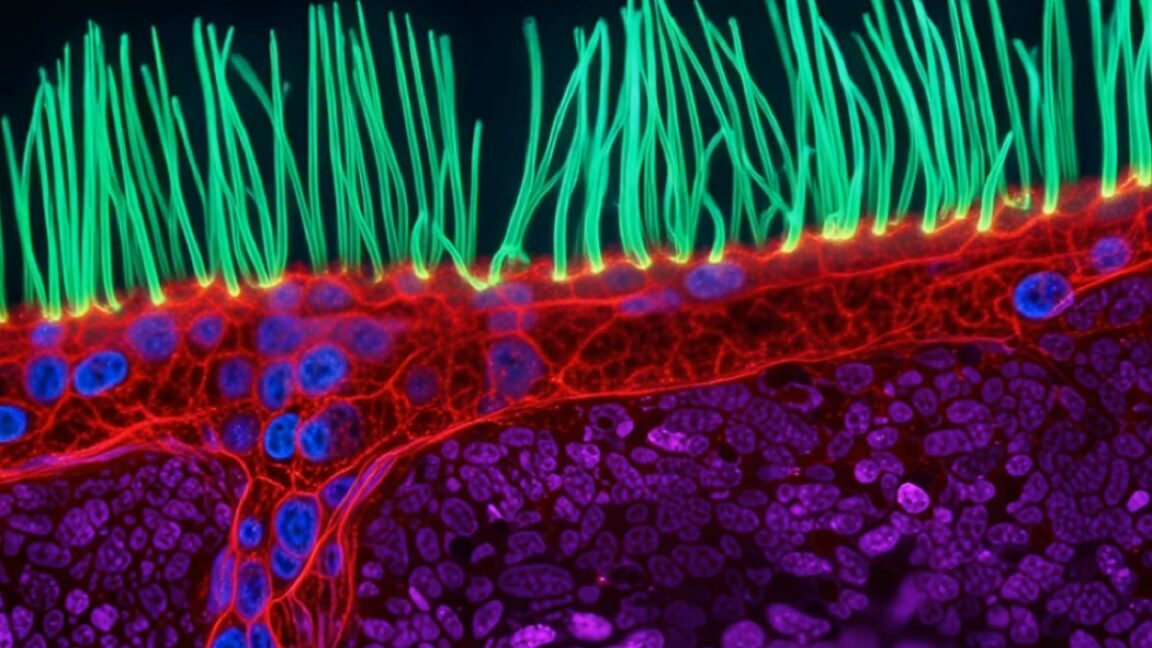
A Chinese optical engineer, Ning Xu of Tsinghua University in Beijing, has emerged victorious in this year's Nikon Small World in Motion competition. He triumphed over 346 other video entries from 40 countries with his super-resolution video showcasing the abnormal beating of cilia in the airways of a child with Primary Ciliary Dyskinesia, a rare genetic respiratory disorder.
Established in 2011, the Nikon Small World in Motion competition is a subset of Nikon's Small World Photomicrography Competition, which has been ongoing since 1974. Both competitions aim to display the intricacy and beauty of subjects observed through the light microscope - one through static images and the other through dynamic video footage, leveraging recent technological advancements that enable users to create movies or time-lapse images via microscopy.
Primary Ciliary Dyskinesia (PCD) is a genetic disorder that impacts the minute hairlike structures, known as cilia, which line the lungs, among other areas. These cilia's wavelike movement aids in the expulsion of germs, mucus, dust, and other irritants from the body via coughing or sneezing. Individuals born with PCD often have abnormalities in their cilia, such as improper size, shape, or absence, leading to improper movement or complete cessation.
This condition can result in persistent respiratory infections and other complications. The cilia may be malformed or non-functional due to this genetic disorder.
Written by urgent.news from Ars Technica Science's reporting — not their text. Machine-written — may contain errors; check the original before relying on it.
This story
This is one outlet's version. Read the fullest account.