Landtagswahlen: Wahlkampffinale in MV und Berlin - Enge Rennen an der Spitze
Die Parteien rüsten zum Wahlkampfendspurt im Nordosten und in der Hauptstadt. Neue Umfragen lassen manche hoffen, andere bangen. Für die CDU von Kanzler Merz verheißen sie in jedem Fall nichts Gutes.
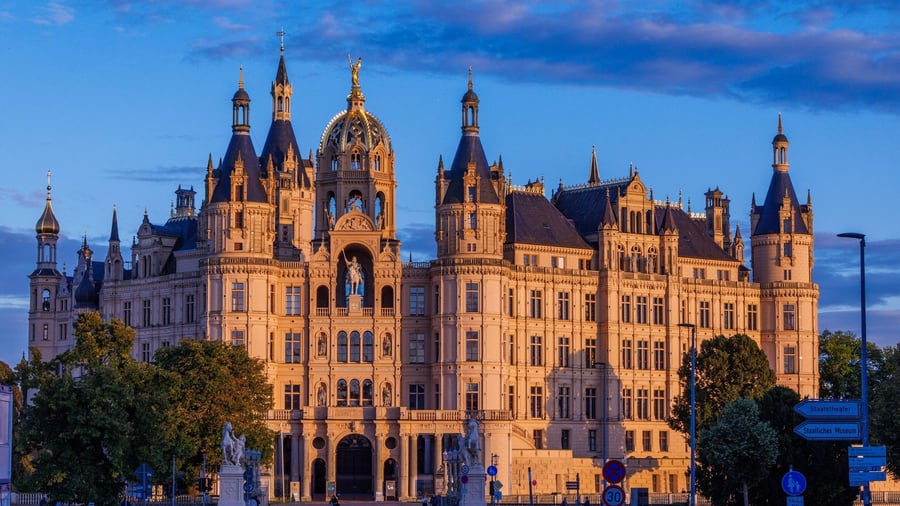
Landtag elections are set to take place in Mecklenburg-Vorpommern and Berlin on Sunday. Both parties are making their final pitches for votes this Friday. Recent polls indicate tight races at the top in both states - between SPD and AfD in Mecklenburg-Vorpommern, and between the Left and CDU in Berlin. These elections could have significant implications for Chancellor Friedrich Merz's (CDU) political future.
Speculation is rife about whether he can remain in office. According to a ZDF "Politbarometer Extra" study conducted between September 14th and 17th, the SPD has overtaken the AfD in Mecklenburg-Vorpommern, with 37 percent support, 3 percentage points higher than the previous week. The AfD, led by Leif-Erik Holm, has lost a point to 36 percent.
The CDU is dangerously close to the 5 percent threshold for entry into the Landtag, with only 6 percent. Even the SPD-led Left party loses a point to 9 percent. The Greens are in a tight spot with 5 percent, just as the BSW with 4 percent. It remains unclear if a renewed coalition between the SPD and Left parties will be enough, with the Greens potentially needing a coalition with the Greens, as they are not expected to enter the Landtag on their own.
The AfD refuses to form a coalition with any of the other parties. Chancellor Merz's influence could be lifting the SPD in the polls. The SPD in the Northeast is benefiting from Schwesig's popularity, with Amtsinhaber Schwesig leading the polls with 61 percent, far ahead of AfD leader Holm with 30 percent. Schwesig often distanced herself from federal politics during the campaign, largely avoiding support appearances by the SPD federal chairwoman.
At the final campaign event in Rostock, however, SPD state leaders Anke Rehlinger (Saarland), Dietmar Woidke (Brandenburg), Peter Tschentscher (Hamburg), and Olaf Lies (Niedersachsen) were present. The CDU avoided federal prominence at the final campaign event, while other parties did not. The AfD offered federal chairwomen Alice Weidel and Tino Chrupalla, as well as Saxon-Anhalt's election winner Ulrich Siegmund.
The Greens relied on their leadership duo Franziska Brantner and Felix Banaszak, while the Left offered faction leader Heidi Reichinnek and the "Silverlocks" trio of Dietmar Bartsch, Gregor Gysi, and Bodo Ramelow. Who will enter the Red Town Hall in Berlin? In Berlin, a head-to-head race remains at the top, with the Left led by Spokesperson Elif Eralp at 22 percent, just ahead of the CDU at 20 percent.
Following the Left, the AfD comes in third with 18 percent, the Greens with 15, and the SPD with 12 percent. The BSW hopes to enter the Bundestag with 4 percent. In Berlin, the Left and CDU are neck and neck. 25 percent named Eralp, 24 percent Evers. Green's Spokesperson Werner Graf received 12 percent. Candidates from other parties were not polled.
A coalition of three parties seems most likely, as no two-party coalition can achieve a majority, even the incumbent CDU-SPD alliance. Dreier-Koalitionen (coalitions of three parties) are more probable, either between the CDU, Greens, and SPD or the Left, Greens, and SPD. The AfD is unlikely to be part of the government formation, as the other parties refuse to cooperate with the right-wing AfD.
Even in Berlin, some parties are relying on federal prominence in the final campaign push. The Left brought in Ines Schwerdtner and Gregor Schemann, the Greens brought in Ricarda Lang, and the BSW brought in co-founder Sahra Wagenknecht. SPD star Steffen Krach held a rally with former Berlin Mayor Klaus Wowereit. Uncertainties in polling figures The ZDF "Politbarometer Extra" survey interviewed 1,395 or 1,611 eligible voters in both states between September 14th and 17th.
The margin of error for a 40 percent share is plus/minus three percentage points, and plus/minus two points for a 10 percent share. The survey is representative according to the study. Opinion polls always carry uncertainties, as declining party affiliations and the increasingly short election decision-making processes complicate the weighting of the collected data.
Essentially, polls only reflect the mindset at the time of the survey and are not predictions of the election outcome. Germany will see another election year in 2027, with five state parliaments being elected in April - Saarland, Schleswig-Holstein, and the most populous state North Rhine-Westphalia. In May and September, Bremen and Niedersachsen will follow. The federal assembly will convene to elect the Federal President by the end of January.
Written by urgent.news from Handelsblatt's reporting — not their text. Machine-written — may contain errors; check the original before relying on it.