Lagarde say ECB to decide 'meeting by meeting' on rates
European Central Bank President Christine Lagarde said today that any further interest rate increases by the ECB "will depend on the future."
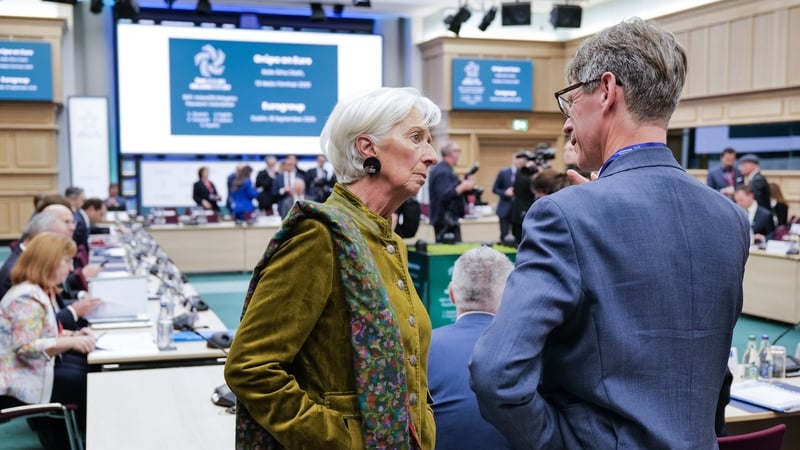
European Central Bank President Christine Lagarde stated today that decisions regarding interest rate increases will be determined on a case-by-case basis during future meetings. Speaking on RTÉ's Today with David McCullough, Lagarde emphasized that the ECB is currently navigating uncertain times. The central bank will evaluate the situation by examining three key factors - the inflation outlook, underlying inflation, and the transmission of monetary policy into the economy.
These elements, along with the projections produced from the data received, will guide the ECB's decision-making process.
Lagarde affirmed the ECB's sole confidence in its primary objective - to bring inflation down to 2% and maintain price stability for Europeans. The central bank will decide on a meeting-by-meeting basis whether to hold, increase, or cut interest rates; however, cutting rates is considered unlikely at present. She highlighted that vulnerable individuals, such as those with low incomes, are of utmost concern for the ECB decision-makers, particularly when it comes to mortgage payments.
In addition to inflation, Lagarde emphasized that the ECB also pays attention to housing costs, growth, and employment. Currently, growth projections appear more promising than initially anticipated, and employment is in a good position with low unemployment rates across most European countries. However, the rising cost of energy, primarily due to the Middle East conflict, necessitates the ECB's reaction to the risk of inflation becoming embedded in the economy.
Despite the latest interest rate increase by the ECB, Lagarde stated that Europe is well-positioned to assess the risk. The central bank cannot reopen the Strait of Hormuz or drill for fossil energy, nor can it magically install solar panels to replace energy supplies. Instead, the ECB's role is to provide price stability, which involves anticipating the consequences of energy price increases on the broader economy.
The central bank must signal its seriousness about maintaining inflation at the 2% target to all stakeholders.
Written by urgent.news from RTE News's reporting — not their text. Machine-written — may contain errors; check the original before relying on it.