Krieg am Roten Meer: Nach der Blitzoffensive – Wer sind die Huthi?
Sie kontrollieren seit Jahren Jemens Hauptstadt, schießen Raketen auf Handelsschiffe und bis nach Israel. Nun sind sie die Herren über eine der wichtigsten Wasserstraßen. Wie wurden sie so mächtig?
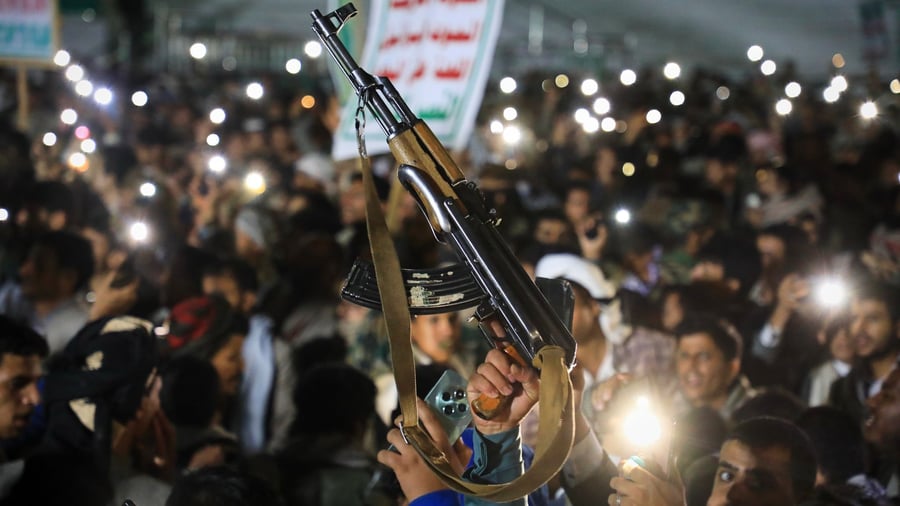
In a lightning-fast offensive, the Huthi militia secured control over the entire Red Sea coast of Yemen last week, granting them access to the Bab al-Mandab strait, a critical waterway for global trade. Initial fears that they might blockade this vital shipping lane have not yet materialized. However, the Huthi have made it clear: there is no escape.
But who are the Huthi and what do they actually want? The group's name, Ansar Allah (Helpers of God), originates from its founder, Hussein al-Huthi, who was killed in 2004. His younger brother, Abd al-Malik, now leads the movement. The influential al-Huthi family traces their lineage to Hasan ibn Ali, a descendant of the Prophet, claiming a centuries-old social privilege.
The th in Huthi is pronounced like a voiceless th in English, as in "both." Ideologically, the Ansar Allah are an Islamist movement originating from the Zaidi branch of Shia Islam, which constitute between 30 and 45 percent of Yemen's population. Traditionally, they valued rational thinking over fundamentalist dogmas, but the Huthi aim to discard this legacy and adhere strictly to their founder's interpretation.
Simultaneously, they represent a counter-movement to the fundamentalist Sunni Salafism spreading in the heartland of Yemen, supported by Saudi Arabia. Politically, the movement is heavily influenced by Iran's anti-imperialism, with Al-Huthi being a fervent admirer of Ayatollah Khomeini and the Iranian Revolution. The Huthi's ideology includes anti-American, anti-Israel, and even anti-Semitic sentiments, as seen in their battle cry: "God is the greatest, death to America, death to Israel, curse the Jews, victory to Islam."
How did the Huthi movement become so militarily powerful? According to the expert, their current strength results from a decade-long buildup process supported by Iran since 2009/2010. Since 2014, the Huthi have controlled the northern part of the country and Sanaa, the capital, including administrative and military structures. They have also learned to manufacture their own weapons using commercially procured components.
The Gaza War, where the Huthi fought alongside Hamas, helped establish them as regional actors. They now pose a significant threat to international shipping routes and global energy markets. How does the Huthi power apparatus function? Their strength relies on "intensive ideological indoctrination of the population and the establishment of a tightly organized military and surveillance state," according to the expert.
The shared resistance against external enemies maintains the system. The real challenge for them would be peace, as internal conflicts would emerge, forcing them to address their vast domestic issues. What is behind the recent offensive? The recent fighting is part of a series of escalating clashes since 2022. A ceasefire that had been in place since then was broken by the Huthi after Saudi Arabia prevented a flight from Tehran to Sanaa.
The Huthi launched rocket attacks on their neighbor and attacked its allies in Yemen. They recently captured the port city of Mukalla and gained control over the entire coast and several islands up to the Bab al-Mandab strait, which connects the Red Sea with the Gulf of Aden, the world's busiest shipping route. The Huthi see a connection to the US-Iran conflict, where control over the Bab al-Mandab becomes increasingly important for Saudi Arabia due to the blockade of the Hormuz Strait.
This gives the Huthi an additional strategic leverage. The Huthi's success primarily stems from the fact that their opponents are divided and consistently remain within their capabilities. The internationally recognized government is weak, plagued by internal power struggles, and unable to offer a credible alternative to Huthi rule.
How strong is the connection to Iran? While the Zaidites and the so-called Twelver Shia in Iran have differing beliefs, the Huthi and the Islamic Republic of Iran consider themselves Shia allies. The Huthi belong to the "Resistance Axis," through which Tehran aims to expand its regional power. The relationship is described as a win-win situation, where the Huthi receive Iranian weapons and expertise, and Iran benefits from the Huthi actions in the Red Sea.
However, the Huthi would never subordinate their own objectives to support Iran's interests, cautions the expert.
Written by urgent.news from Handelsblatt's reporting — not their text. Machine-written — may contain errors; check the original before relying on it.