India’s hydrogen train gets 40-60 riders vs 2,600 capacity; Delhi extension planned
India’s first indigenous hydrogen-powered train was launched on July 17, marking a step towards the use of next-generation clean and sustainable transportation technology.
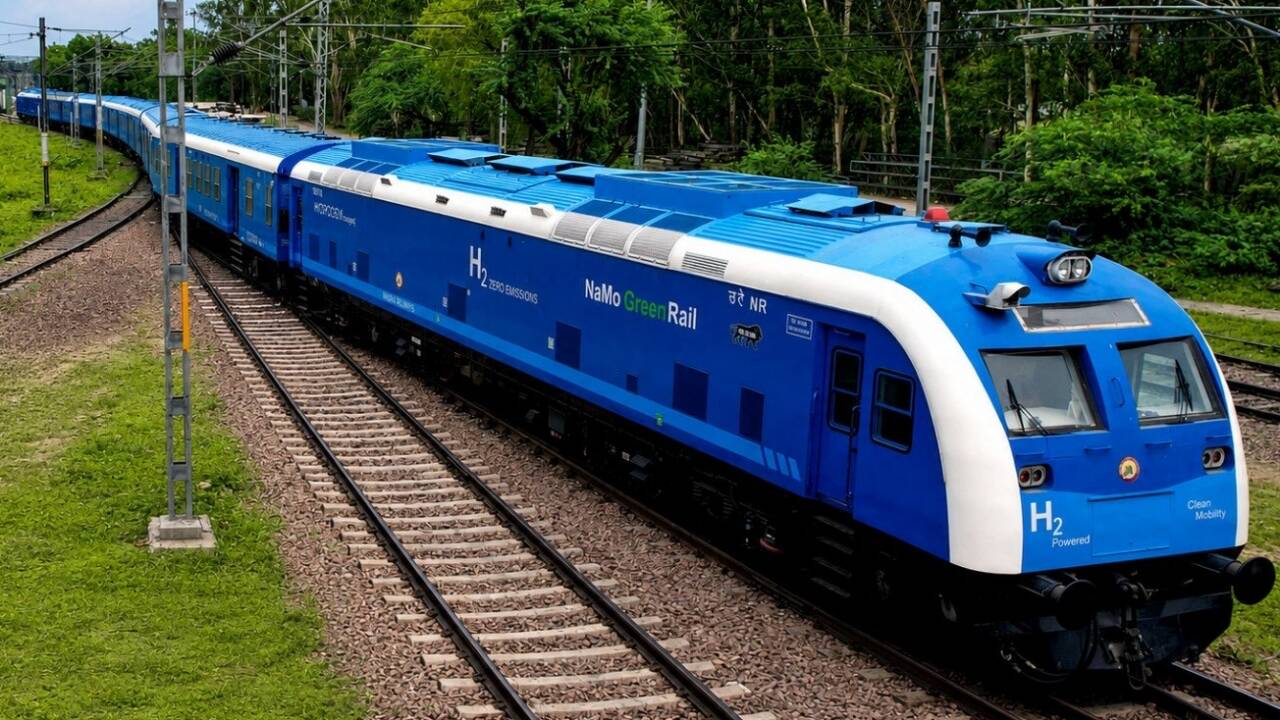
India's inaugural hydrogen train, launched two months ago, has demonstrated the country's technological prowess in running the world's longest and most powerful hydrogen train. However, the train's occupancy has been lower than expected, prompting railway officials to consider extending its route to Delhi. The 89-km Jind-Sonipat route, where the train currently operates, sees only around 40 to 60 passengers boarding the train over the entire journey, despite its maximum capacity of 2,600 passengers.
The train makes just one round trip daily, and its introduction was expected to operate two return trips between Jind and Sonipat. The hydrogen train has replaced a DEMU service that had also recorded low passenger numbers on the same route. With no significant office commuters or industrial workers between Jind and Sonipat, locals have been demanding an extension to Delhi for better utilization.
However, some experts have raised concerns about operational challenges that could arise due to the train's limited capacity and the need for more coaches to accommodate the large number of commuters on Delhi trains. The train's fuel capacity is sufficient to cover 250 km to 300 km on a full tank, and it can currently be refueled only at Jind, allowing it to travel around 150 km in one direction.
Local passengers have suggested modifying the existing route to include Panipat and Safidon, creating a circuit within Haryana, which could attract more daily commuters and improve the train's footfall.
Written by urgent.news from Times of India's reporting — not their text. Machine-written — may contain errors; check the original before relying on it.