How China’s Older Chip Machines Challenge ASML
China continues to advance its semiconductor capabilities by optimizing legacy manufacturing tools and developing domestic alternatives to Dutch supplier ASML. While these developments challenge assumptions about Western export controls, domestic manufacturers still trail the world’s leading lithography producers. Chinese manufacturers have demonstrated that older deep ultraviolet (DUV) equipment…
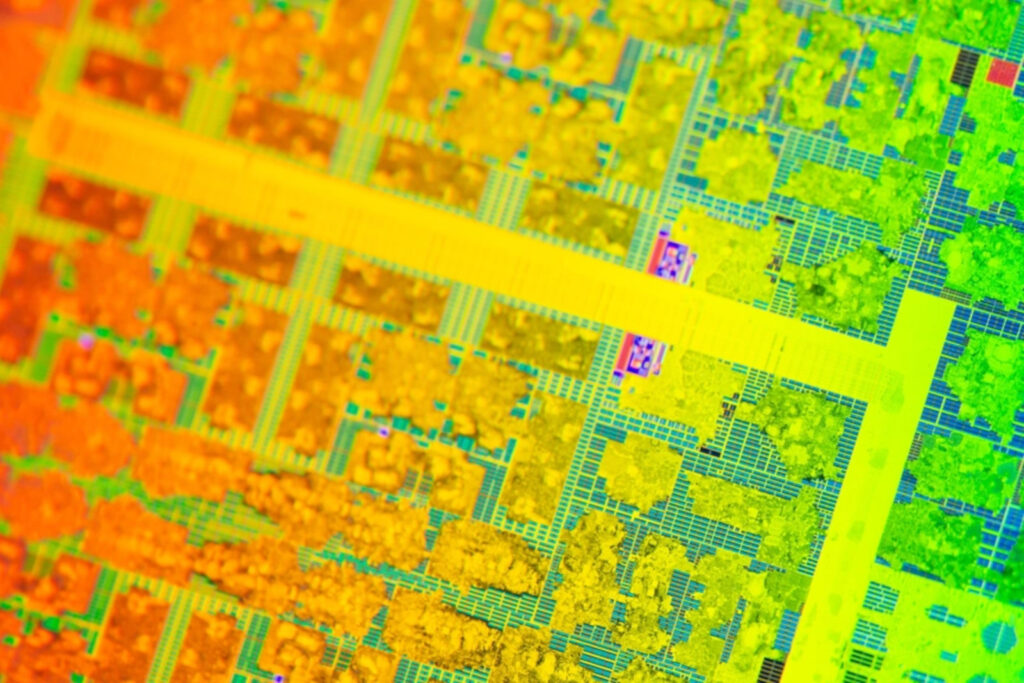
China is leveraging older lithography machines and more intricate manufacturing processes to close the technology gap with ASML, a leading supplier of advanced chipmaking equipment. Despite these efforts, Chinese manufacturers still lag behind the world's top lithography producers. Through the use of deep ultraviolet (DUV) equipment and multi-patterning techniques, Chinese companies have demonstrated that older systems can produce advanced chips.
However, China's equipment sector still lacks the necessary precision, reliability, and production capacity to challenge ASML's commercial dominance.
Lithography is the process of transferring circuit designs onto silicon wafers, using light-sensitive chemicals and pattern templates. Standard deep ultraviolet (DUV) equipment operates at 193 nanometers, while extreme ultraviolet (EUV) systems use 13.5 nanometer wavelengths, enabling the creation of smaller features with fewer exposure steps.
ASML is the sole commercial supplier of EUV technology, which is crucial for manufacturing the most advanced processors and memory chips. However, Chinese firms can still create high-performance chips using multi-patterning DUV techniques without EUV hardware.
Chinese manufacturers have adapted older ASML systems, such as the Twinscan NXT:1980i, by sourcing secondary-market components to maintain output despite international service restrictions. Despite these efforts, the Center for Strategic and International Studies notes that lithography is just one component in the semiconductor production chain.
Trade restrictions on complementary etching, deposition, and metrology equipment further complicate China's advanced-node manufacturing, preventing DUV workarounds from matching the efficiency of leading-edge EUV systems.
In response to U.S. export controls aimed at limiting China's access to advanced computing technology, the Netherlands and Japan also implemented restrictions. These measures have increased the value of homegrown alternatives, accelerating China's efforts to develop self-sufficient semiconductor capabilities. Chinese state funding, research facilities, and manufacturing infrastructure have long supported these initiatives.
However, targeted trade restrictions have acted as an additional catalyst, intensifying the drive for local equipment development and maximizing the use of existing machinery.
Written by urgent.news from Colombia One's reporting — not their text. Machine-written — may contain errors; check the original before relying on it.