House discusses changes to fiscal deficit limit
The spending limits have come under the spotlight since President Prabowo Subianto took office in October 2024 after making costly campaign promises and setting an 8% economic growth target.
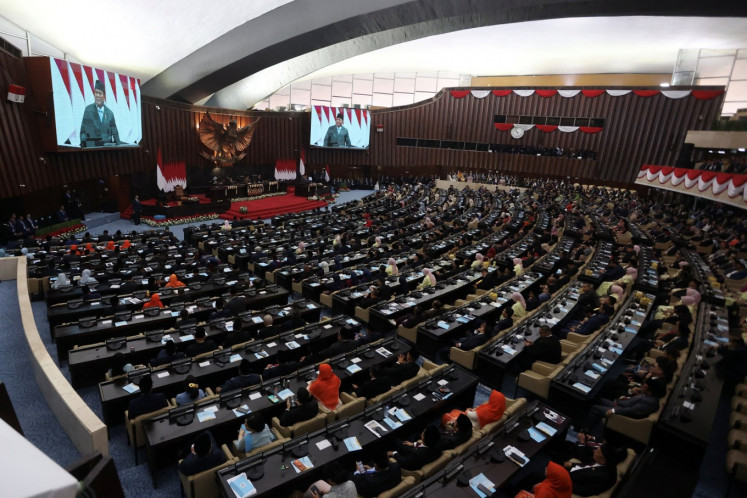
Indonesia's House of Representatives held a discussion on Thursday regarding potential modifications to the country's fiscal deficit limit. The debate emerged as President Prabowo Subianto's administration has faced scrutiny due to making significant campaign promises and setting an ambitious 8% economic growth target. The country's fiscal deficit is currently capped at 3 percent of GDP, and its public debt is limited to 60 percent, rules that have been followed since the law's enactment in 2003.
Introduced as part of Indonesia's response to the Asian Financial Crisis in the late 1990s, these limits have helped build investor confidence in the nation's fiscal responsibility.
However, the spending limits have become a point of contention following President Subianto's appointment in October 2024. His administration's 2025 budget deficit was the highest in over two decades, excluding the pandemic. During a financial committee hearing, a succession of economists expressed concerns about the potential impact of removing these restrictions on achieving the nation's welfare goals.
Committee head Mukhamad Misbakhun stated that the annual deficit cap has been treated with a level of reverence akin to that of the constitution itself. Misbakhun, whose party is part of Prabowo's coalition, argued that the current growth target necessitates expansion, questioning the feasibility of meeting it while adhering to the 3 percent deficit limit.
Mohamad Hekal, deputy head of the committee and a member of Prabowo's party, concurred that the fiscal deficit limit should be a subject of discussion. He contended that such constraints could impede Indonesia's efforts to attain its welfare objectives. However, Harris Turino, a lawmaker from the only political party not aligned with Prabowo's coalition, supported retaining the deficit ceiling.
Turino maintained that while self-discipline was essential, external market discipline would eventually occur if the limit remained unenforced.
Deputy Finance Minister Juda Agung affirmed the government's commitment to maintaining the fiscal deficit below the 3 percent threshold to safeguard fiscal credibility. The economists present at the hearing proposed alternative measures to ensure fiscal discipline if the deficit limits were to be lifted. Chaikal Nuryakin, a University of Indonesia economist, suggested implementing an average deficit limit over a specified period, such as five or 10 years, which would provide flexibility while maintaining fiscal prudence.
Lawmaker Harris acknowledged the likelihood of the House's deliberations extending beyond the current session, which concludes in November.
The discussion unfolded following President Subianto's surprise reshuffle of the finance ministry leadership.
Written by urgent.news from The Jakarta Post's reporting — not their text. Machine-written — may contain errors; check the original before relying on it.