Dubai's new 80km motorway can cut congestion and boost road safety, experts say
Dubai's multi-billion dirham plan for a new 12-lane motorway linked to Abu Dhabi and Sharjah is primed to ease the strain on the emirate's road network, boost safety and prepare for future demand, transport experts have said. The 80km road - announced on Wednesday - between Al Faya Road in Abu Dhabi and Al Shanouf Road in Sharjah is intended to cut congestion, improve travel times and boost…
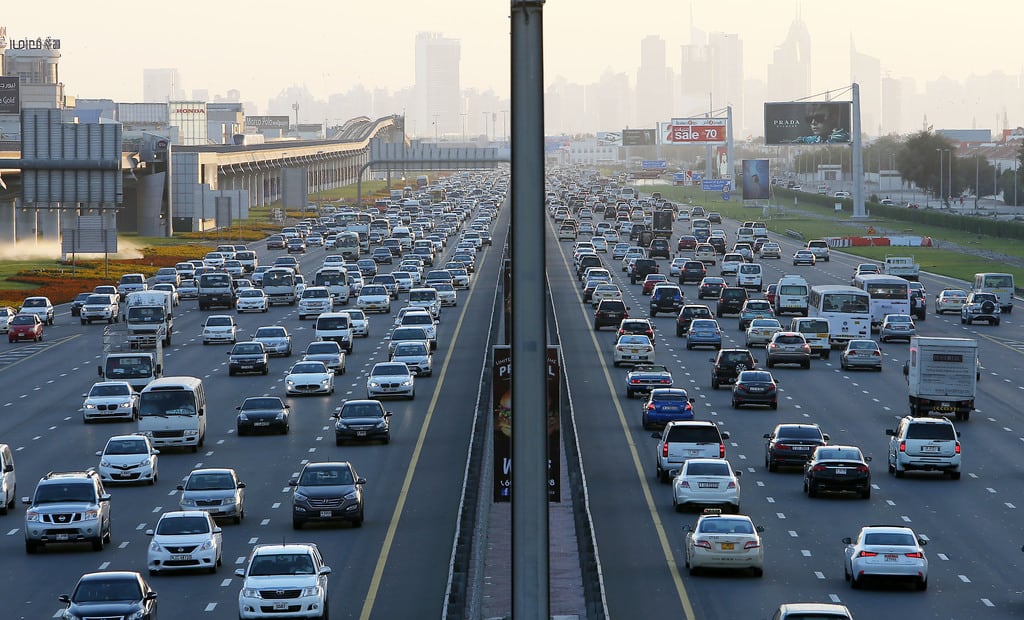
Dubai's ambitious plan to construct an 80km, 12-lane motorway, connecting Abu Dhabi and Sharjah, promises to alleviate congestion, enhance safety, and accommodate future demand, according to transport experts. The new route, set to link Al Faya Road in Abu Dhabi with Al Shanouf Road in Sharjah, aims to distribute traffic more evenly across the city's road network, reducing strain on existing routes like Sheikh Zayed Road and Sheikh Mohamed bin Zayed Road.
Joseph Salem, a consultant with Arthur D Little Middle East, explained that this fourth corridor will provide a balanced alternative to the current three major roads, enabling Dubai to "build capacity ahead of demand" – a crucial strategy for any growing metropolis.
However, Elisabetta Cherchi, a professor of civil and urban engineering at New York University Abu Dhabi, cautioned that the motorway's value hinges on sufficient demand along the corridor to support both the railway and metro systems. She acknowledged that while new roads may be necessary due to the challenges of fully competing with highways, they should ideally be complemented by demand-management strategies, such as road pricing and flexible working hours.
The motorway's strategic location at Al Maktoum International Airport and Etihad Rail promises seamless integration with Dubai's existing transportation infrastructure. This integration is vital as Al Maktoum serves as the anchor for Dubai's future growth ring, encompassing aviation, logistics, and residential/commercial districts. By aligning road, rail, airport, and port systems, the project will help realize Dubai's vision outlined in its 2040 masterplan.
With a projected capacity of accommodating up to 24,000 vehicles per hour in both directions, the motorway will feature 17 tunnels, 72 bridges, and 45 storm-water drainage culverts. Phase one of the project, expected to cost Dh3.5 billion, will span from Al Shanouf Road to the Dubai – Al Ain Road, while phase two will connect the Dubai – Al Ain Road to Al Faya Road in Abu Dhabi. Despite the considerable engineering challenges, Salem affirmed Dubai's proven capability to deliver large-scale, complex projects on time.
However, safety concerns have been raised by Thomas Edelmann, founder and managing director of Road-Safety UAE. While the increased road surface may initially reduce congestion and travel times, Edelmann pointed out that Dubai's reliance on road transport remains high, with 92% of residents using it daily. He suggested that without complementary measures like road pricing and off-peak freight scheduling, new road capacity could inadvertently encourage more travel, potentially exacerbating congestion in the long run.
Written by urgent.news from The National UAE's reporting — not their text. Machine-written — may contain errors; check the original before relying on it.
This story
This is one outlet's version. Read the fullest account.
- Dubai's new 80km motorway can cut congestion and boost road safety, experts say thenationalnews.com