Copper mine supply risks first decline since 2017: Sprott
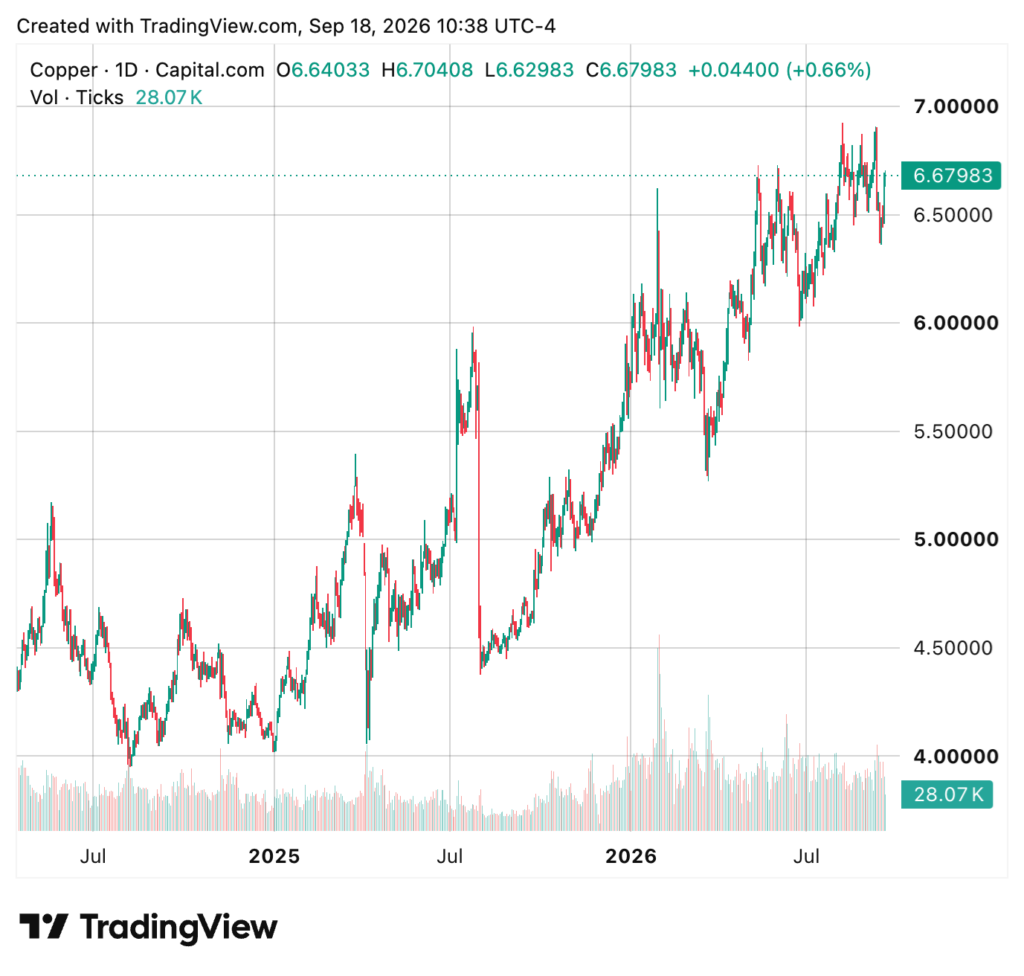
Copper mine supply risks are on the decline for the first time since 2017, according to a new report by Sprott Asset Management. Despite record-high prices, global mined copper production could fall this year due to disruptions, declining grades, and weak output from Chile, the world's largest copper producer. Disruptions at Freeport-McMoRan's Grasberg mine in Indonesia and Ivanhoe Mines' Kamoa-Kakula complex in the Democratic Republic of Congo removed an estimated 600,000 tonnes of expected 2026 production, equivalent to about 2.5% of annual global mine supply.
Higher prices have improved project economics, but they cannot quickly replenish the discovery pipeline, as copper projects take around 17.5 years to move from discovery to production. The issue extends to both public and private-sector producers, with Chile's state miner Codelco cutting its 2026 production forecast and Antofagasta and Lundin Mining also reducing their 2026 output projections.
While copper prices have surged by 47% in the past year, Chile's production has only increased by 15%, highlighting the challenge of turning higher prices into additional tonnes. Tariffs have caused a build-up of refined copper in U.S. warehouses, leaving less available elsewhere. Despite this, refined copper production and apparent use have both risen slightly, resulting in a small surplus of 131,000 tonnes.
Written by urgent.news from Mining.com's reporting — not their text. Machine-written — may contain errors; check the original before relying on it.