British Steel plan lacks credibility, MPs say
A committee report says the government has not set out how British Steel will become profitable.
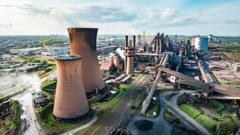
Members of Parliament (MPs) have criticized the British government for lacking a credible plan for the future of British Steel. A report by the Public Accounts Committee (PAC) stated that the Department for Business, Innovation, Science and Trade (DBIST) has not outlined how British Steel, which operates from its main plant in Scunthorpe and other sites in Teeside, would become profitable. MPs expressed concerns that steel tariffs could drive firms out of business or force them to relocate abroad.
The 26-page report, published on Friday, highlighted that the government was unable to provide clear estimates of the overall cost of nationalisation. Initial projections had estimated costs reaching £642 million by June 30th, but later adjustments revealed the figure to be £555 million. In April 2021, the government enacted an emergency bill to take control of British Steel, prompted by reports that the owner, Jingye, intended to switch off two blast furnaces in Scunthorpe.
The Steel Industry (Nationalisation) Bill was subsequently enacted in July, placing the company under public ownership.
The government released its steel strategy in March of this year, which aimed to make 50% of the steel used in the UK domestically produced. This strategy endorsed electric arc furnaces as the future of British steelmaking, a transition that has led to job losses at steelworks such as Port Talbot. However, the report expressed concerns that the 50% target and the steel strategy remain vague about the timeline for achieving this goal.
The report also raised concerns that the new tariff regime, introduced to boost British Steel production and usage, could cause smaller businesses to go bankrupt. In July, Britain reduced the tariff-free quota level for steel importers by 51%, and doubled import taxes for steel above certain levels from 25% to 50%. Yet, businesses indicated that some essential steels would still be affected by the tariffs, but they could not be sourced from the UK.
The PAC emphasized the need for a formal route for steel companies to voice their concerns about the new tariff regime. The DBIST spokesperson reassured that taxpayer value for money would remain a central consideration in assessing the future of the steel site. The spokesperson also pledged support for the communities reliant on British Steel through the government's steel strategy to build a sustainable, competitive, and decarbonised steel sector for the future.
Written by urgent.news from BBC Business's reporting — not their text. Machine-written — may contain errors; check the original before relying on it.