Åpner dansk CO₂-lager
EU får sitt første fullskala CO₂-lager når kong Frederik X fredag åpner Greensand-prosjektet i…
Ineos Energy has opened a large CO₂ storage facility in Øygarden on the Vestlandet coast of Norway, marking the first such facility of its size in the entire European Union, according to a statement. Ineos Chief Executive Sir Jim Ratcliffe stated that Europe cannot achieve net-zero emissions by closing factories and exporting jobs, emphasizing the need for solutions that allow industry to remain competitive while reducing emissions.
Ratcliffe highlighted that the technology is now operational and in operation, not just a pilot project or ambition. The Danish government had anticipated nearly three million tons of CO₂ to be stored annually by 2030, but the actual amount will be significantly less, reported Denmark Radio.
The Danes' facility in Esbjerg is smaller than Norway's Northern Lights project and will initially store 400,000 tons of CO₂ annually, with expansion plans to reach 4-8 million tons per year. Meanwhile, Norway's Northern Lights project is set to store 1.5 million tons per year in its first phase, with expansion to 5 million tons annually.
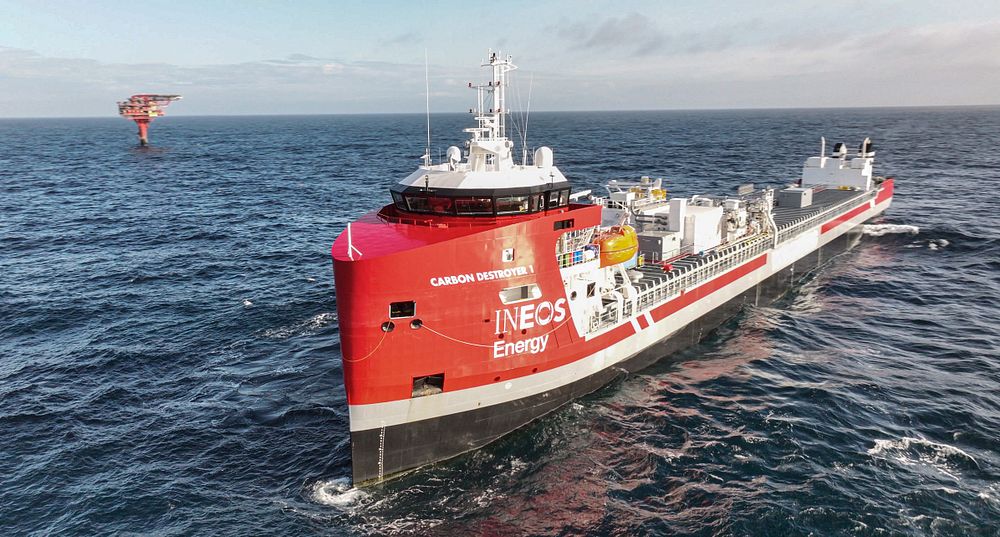
The Norwegian project is being developed by Equinor, TotalEnergies, and Shell, storing CO₂ from Danish biogas plants. CO₂ is cooled and transported via tanker trucks to a CO₂ terminal in Esbjerg, loaded onto the ship Carbon Destroyer 1, and injected into the decommissioned oil reservoir Nini Vest, located 250 kilometers off the coast.
EU Commissioner for Energy and Housing Dan Jørgensen hailed the facility as a significant milestone for Europe, noting that it demonstrates CO₂ storage's practicality and the transition from demonstration to commercialization. The world is watching Europe's progress towards meeting the Paris Agreement climate goals, as the planet has currently warmed by 2.6 degrees, with the best-case scenario aiming to limit warming to 1.8 degrees.
A recent UN report emphasized the urgency of limiting warming to 1.5 degrees to avoid the worst impacts of climate change.
Written by urgent.news from E24 Norway's reporting — not their text. Machine-written — may contain errors; check the original before relying on it.