Why AI Localization Still Needs Human Strategy
Discover why purely AI-driven global campaigns fail. Barbara Nekrasova shares a 4-step cross-border audit to align AI scaling with local psychology.
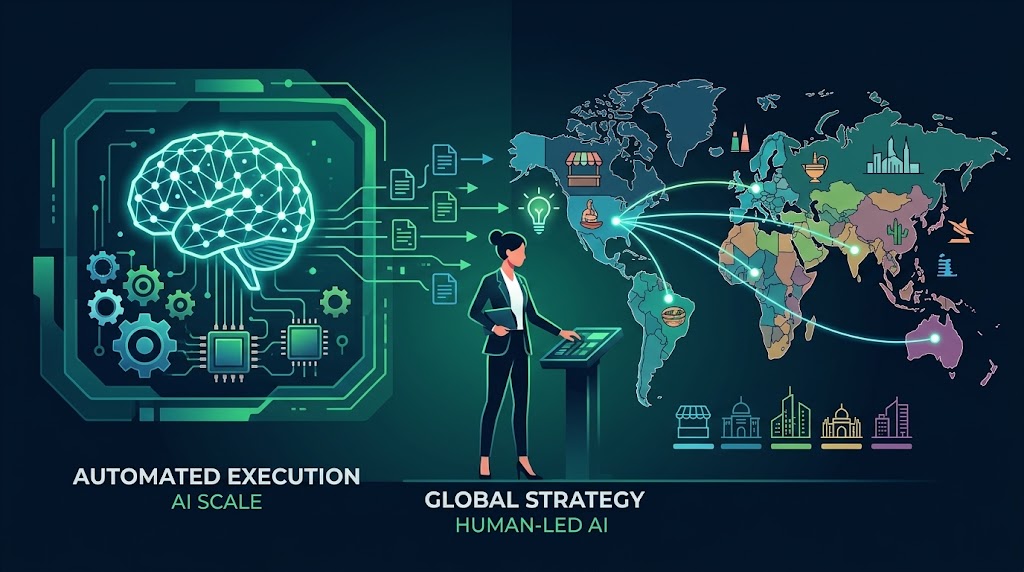
Human-led strategic alignment is essential when scaling international marketing campaigns with generative AI. Marketing teams often make costly mistakes by confusing algorithmic speed with cultural comprehension. While AI tools can quickly generate ad variants, localized landing pages, and email sequences across multiple continents, automating execution without human oversight can lead to significant waste.
The $100 million illusion refers to the failures of direct translation in global marketing, exemplified by HSBC's $10 million rebranding disaster. AI translation tools, such as DeepL or GPT-driven workflows, often fail to capture the nuanced cultural dynamics that affect regional buying behaviors. To avoid these mistakes, a strict boundary must be established between AI data processing and human strategists responsible for cultural psychology and final brand alignment.
Erste Advertising, for example, follows a four-step cross-border campaign audit that includes a cultural psychology test, local friction and technical mechanics verification, a generic AI noise filter, and a human oversight protocol. By leveraging AI for execution and human expertise for strategy, marketers can protect their international ad spend from algorithmic blind spots and build deeper, culturally authentic trust with foreign audiences.
Written by urgent.news from HackerNoon's reporting — not their text. Machine-written — may contain errors; check the original before relying on it.