What Will It Take for Colombia to Regain US Drug Certification?
Colombia will have to demonstrate through concrete results that it is meeting its commitments in the fight against drugs if it wants to regain U.S. certification. Washington decided to keep the country on the list of nations that have “demonstrably failed” to meet their counternarcotics obligations, despite acknowledging the promises made by the new government […]
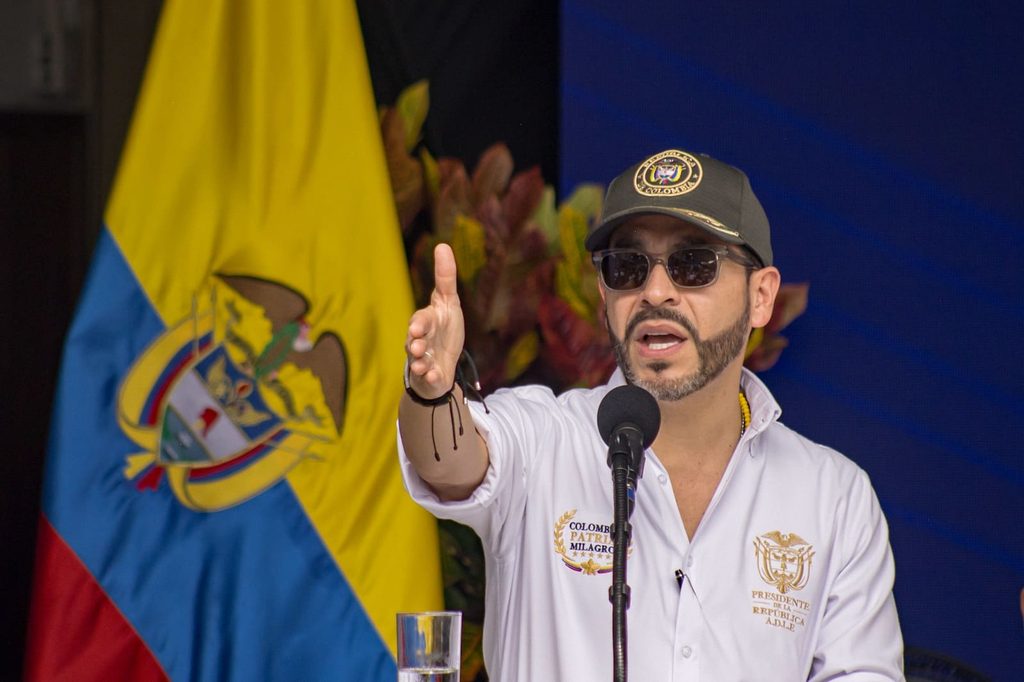
Colombia has been given a 12-month window to show tangible improvements in its fight against drugs in order to regain its U.S. certification. Washington removed the country from the list of nations deemed to have "demonstrably failed" to meet their counternarcotics obligations last year, due to a rise in coca cultivation and doubts about the effectiveness of Colombia's counterdrug policy.
Despite President Abelardo de la Espriella's recent inauguration, his efforts have yet to translate into significant changes that would reverse the decision. To regain its certification, Colombia must demonstrate progress in several key areas. First, the U.S. has identified the acceleration of coca crop eradication as a primary condition.
Donald Trump specifically highlighted the need for Colombia to make progress in eliminating these plantations within the next year. However, the process is not merely about uprooting the plants; it involves ensuring that the affected areas do not revert to coca cultivation. This necessitates a combination of eradication efforts with sustainable economic alternatives for rural communities dependent on illicit crops.
Without viable legal income sources, farmers may revert to growing coca, making substitution efforts short-lived. Additionally, the safety of communities and the personnel involved in eradication operations is crucial to maintaining the results. The second front requires addressing the structures linked to drug trafficking and "narcoterrorism."
Alongside eradication, this objective was included by Trump as a factor that could lead to a reassessment of Colombia's classification. The challenge extends beyond just capturing drug traffickers; it involves disrupting the networks that coordinate production, finance operations, control routes, and facilitate the movement of cocaine to international markets.
Authorities will need to enhance intelligence capabilities, improve cooperation between security and judicial agencies, and investigate criminal finances to weaken these organizations' ability to reorganize after arrests. U.S. cooperation remains relevant, encompassing intelligence sharing, international trafficking operations, and the prosecution of those responsible.
Colombia's inclusion in this category also reflects the quality of its institutional response to the drug trade and its cooperation in combating it. The removal of Venezuela from this category, as announced by President Trump, marks a significant step. For the fiscal year 2027, which begins in October 2026, Colombia is now in the same category as Afghanistan, Myanmar, and Bolivia.
These countries are considered to have "demonstrably failed" to make substantial efforts towards meeting their international counternarcotics commitments. However, being on this list is not solely determined by the scale of coca production or drug transit. It also emphasizes the institutional response to drug trafficking organizations and the effectiveness of cooperation to combat them.
The decision to remove Venezuela from this list suggests that the U.S. does not consider Venezuela a territory for drug production or transit. The distinction lies in the fact that the assessment of counternarcotics efforts and the identification of territories involved in drug trafficking are separate evaluations. Washington determines that a country has demonstrated demonstrable failure based on the efforts made over the previous 12 months.
U.S. President Donald Trump expressed his willingness to reconsider Colombia's situation if the country makes progress in the next year, particularly in coca eradication and dismantling narcoterrorist networks. Acknowledging de la Espriella's promises opens the door for a review, but it does not mean that decertification will be lifted immediately.
The government must convert its commitments into verifiable results. Reducing coca cultivation, conducting operations against narcoterrorist networks, and addressing the support structures for drug trafficking will all play critical roles in helping Colombia regain its U.S. certification.
Written by urgent.news from Colombia One's reporting — not their text. Machine-written — may contain errors; check the original before relying on it.