West's inaction gives Houthis the upper hand, emboldens Iran
THE Houthi capture of ground overlooking the Bab el-Mandeb Strait has dealt Saudi Arabia its gravest setback in Yemen in years, exposing intelligence failures, the collapse of Yemeni allies and the limits of United States protection.
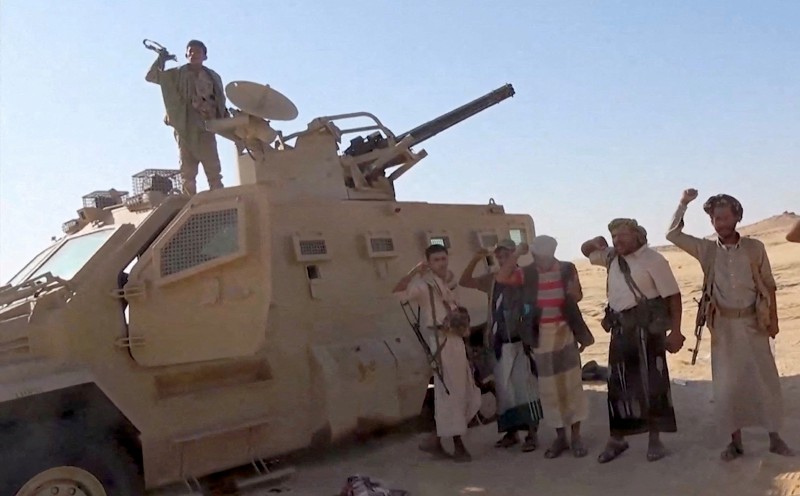
The recent Houthi capture of ground overlooking the Bab el-Mandeb Strait has put Saudi Arabia in its most precarious position in Yemen in recent years, highlighting intelligence shortcomings, fractured Yemeni alliances, and the limitations of U.S. protection. A Houthi push along the Red Sea coast and the seizure of islands at the strait's mouth, a crucial corridor for global oil shipments, has left the kingdom searching for allies as Iran and its supporters extend their influence.
Senior Western, regional, and Yemeni officials report that the Houthi triumph reflects deep splits among anti-Houthi Yemeni factions, a new Saudi-led command structure, limited Saudi air support, and underestimation of Houthi preparations. A diplomat disclosed that the Houthis amassed around 100,000 fighters, vastly outmatching their opponents, saying, "Everyone, including the Saudis, missed this build-up and miscalculated the Houthis' intentions."
Neil Quilliam, a fellow at London's Chatham House think tank, termed the offensive a major intelligence failure, stating, "They just weren't picking up the signal. They just weren't seeing the signs." The fall of Saudi-backed forces has given the Houthis not only more territory but also a substantial amount of US- and Saudi-supplied military equipment abandoned during their retreat.
Yemeni government forces were described as "a house of cards" that didn't put up a fight, according to Abdulkhaleq Abdallah, a political analyst in the UAE. The setback has also shown how limited international support for a counteroffensive might be, with both the U.S. and European countries unwilling to offer direct military backing.
This leaves Iran-backed fighters in a position to threaten Saudi oil exports and Red Sea shipping. Two regional sources suggested that Riyadh was hoping Egypt could play a role in Red Sea operations, reminiscent of Cairo's intervention in 2015 to secure Bab el-Mandeb. However, there was no confirmation on Cairo's willingness to cooperate.
The Houthi gains also appear to be used to press for broader political concessions. A Gulf official stated that Saudi Arabia now faces a limited set of choices: either allowing the Houthis to consolidate their gains or mounting a larger military response, both of which could lead to attacks deeper inside the kingdom. Controlling territory around Bab el-Mandeb, which lies between Yemen, Djibouti, and Eritrea, could enhance the Houthis' regional reach, bringing the Horn of Africa closer to their logistical and smuggling networks.
Coupled with Iran's control over the Strait of Hormuz, another vital trade route for global energy supplies, this foothold gives Tehran and its allies influence over two crucial maritime choke points. The Houthi offensive demonstrated a blind spot in Saudi and U.S. strategy: while Washington and its allies focused on containing Iran directly, Tehran expanded the battlefield by launching offensives from Iraq to the Red Sea, leveraging energy assets, shipping routes, and proxies as tools of pressure.
The broader implications of the Houthi breakthrough lie in the resurgence of Iran's regional influence, following major setbacks to its allies in Gaza, Syria, and Lebanon. Some political analysts argue that the more significant loss is not the battlefield reversal but Washington's failure to come to its ally's aid, which has emboldened adversaries, weakened Riyadh's leverage, and raised doubts about the reliability of U.S. security guarantees.
Yemeni political analyst Farea Al-Muslimi described Washington's refusal to help defend Saudi territory as "the biggest dismissing of the Saudi-American arrangement" in decades. "The Americans are saying no," he said. "That kind of understanding in the relationship between Riyadh and Washington has never been tested more than now."
Yemen's long history of defeating foreign powers, from Egypt in the 1960s to the Soviets and, more recently, the U.S. and Saudi Arabia, suggests that Riyadh's search for partners may yield only limited results. Al-Muslimi said, "Yemen is the Vietnam and Afghanistan of every power dragged into it." The Saudis failed in Yemen, the Americans failed in Yemen, he said, adding, "The Egyptians failed in Yemen."
Written by urgent.news from New Straits Times's reporting — not their text. Machine-written — may contain errors; check the original before relying on it.