UCT student joins global AI, open education conversation
UCT post-graduate student Nico Pampier is contributing to international discussions on AI, open education and the future of higher education through her work with a UNESCO network.
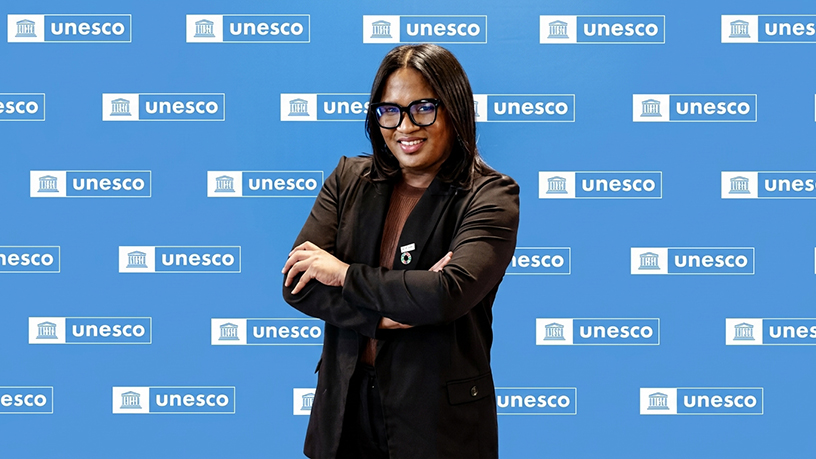
Nico Pampier, a post-graduate student at the University of Cape Town studying educational technology, is collaborating with UNESCO to help shape global conversations surrounding artificial intelligence, open education, and the future of higher education. Pampier serves as a student coordinator in an international fellowship associated with UNESCO's UNITWIN Network on Open Education, which unites six partner universities, including UCT, through UNESCO chairs focused on open education and AI.
This fellowship offers a forum for students to engage in discussions regarding AI, assessment, education policy, and the evolving role of universities within society.
Pampier was recommended by Associate Professor Glenda Cox, the chair of Open Education for Social Justice, to join this fellowship. Prior to her role, Pampier had worked with Cox as a research assistant on the Digital Open Textbooks for Development project, an institutional initiative based at UCT's Centre for Innovation in Teaching and Learning.
Her responsibilities include organizing monthly meetings with 26 student fellows from South Africa, Brazil, Mexico, Morocco, Tunisia, and Uruguay. Pampier emphasizes the need to remember the ultimate purpose of education and the significance of involving students and communities in decisions about the future of higher education.
She is particularly interested in the emerging research concerning the relationship between students and AI. While some studies suggest AI can enhance productivity and provide academic support, there are also concerns about students' reliance on AI and potential social and emotional dependencies. Pampier emphasizes that these complexities underscore the importance of universities engaging students directly as AI continues to reshape education.
In 2024, Pampier participated in UNESCO's Transforming Knowledge for Africa's Future forum in Addis Ababa, advocating for the inclusion of African indigenous knowledge and increased student involvement. Over the next two years, she will continue to engage in UNESCO forums focused on digital learning, open education, and AI skills, contributing to discussions about the future of higher education.
Pampier's advice to other young people is that there is no fixed path to success. "Education isn't just about receiving knowledge," she says. "We are researchers, innovators, and future leaders who have a role in shaping how education evolves."
Written by urgent.news from ITWeb's reporting — not their text. Machine-written — may contain errors; check the original before relying on it.