Tariffs, rare earths and Iran: What could make or break the Trump-Xi summit on Sept 24
BEIJING, Sept 17 — Trade frictions between the world’s top two economies are set to take centre stage next w...
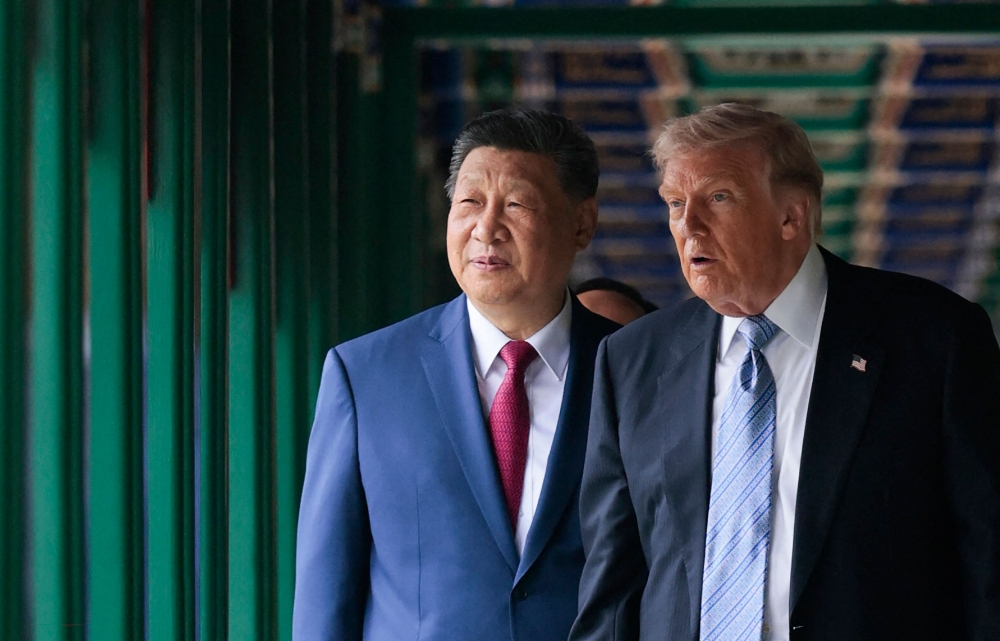
The upcoming summit between US President Donald Trump and Chinese President Xi Jinping on September 24 at the White House is expected to focus heavily on trade disagreements between the two nations. Since 2018, tariffs have been a significant obstacle in the China-US relationship, with the US imposing a base tariff rate of 145% on Chinese goods, matched by China's 125% response. Currently, the effective tariff rate for imports from China stands at 22.8%, the highest among all major US trading partners.
Trade between the two economies remained active despite the tariffs, with total imports and exports hitting $400.8 billion (RM1.69 trillion) from January to August 2025, a 5.4% increase from the same period in 2025. However, Chinese exports accounted for 75% of that trade, creating a significant imbalance. Beijing's massive trade surplus has been a point of contention for Washington, and a similar situation exists with the European Union, further exacerbating tensions.
At the summit, Trump aims to discuss "almost everything" with Xi, with tariffs being the primary agenda item. Dan Wang, a director at Eurasia Group's China team, stated that Chinese President Xi would not attend if there were no deliverables on tariffs or a trade truce. Both sides are reportedly working on a tariff reduction framework covering $30 billion (RM126.6 billion) worth of products from each side, a goal agreed upon during Xi's meeting with Trump in Beijing in May.
China's leverage lies in its control over rare earths, critical minerals used in various high-tech products. Beijing previously pressured the US to back off from its high tariffs by imposing strict controls on rare earth exports. China's supply chains are flexible, and the nation's massive export boom has not been significantly impacted by tariffs so far.
China's diplomatic influence is also prominent, with President Xi recently meeting leaders such as Russian President Vladimir Putin and Indian Prime Minister Narendra Modi.
Trump's main objective in the summit is to secure Chinese guarantees for purchasing US agricultural goods, particularly soybeans, in the face of rising oil prices due to renewed fighting in the US war with Iran. The meeting will also provide Trump with an opportunity to demonstrate his diplomatic skills during a high-stakes engagement at the White House, marking Xi's first visit to the US capital in 11 years.
However, several other contentious issues could potentially derail the agreement, such as China's economic and diplomatic support for Iran, ongoing technological competition, particularly in the AI sector, and accusations of stolen US technological capabilities by China.
Written by urgent.news from Malay Mail's reporting — not their text. Machine-written — may contain errors; check the original before relying on it.