South Africa's reading challenge puts the educational value of AI under scrutiny
South Africa’s reading challenges have sharpened the debate about how artificial intelligence could support learning in schools.
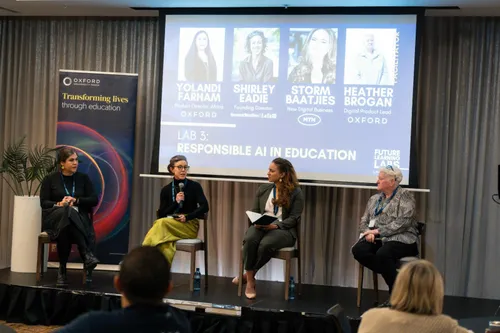
In South Africa, a reading challenge is raising questions about the potential of artificial intelligence (AI) in education. According to the Funda Uphumelele National Survey, by the end of Grade 3, 15% of learners cannot read a single word. This statistic, highlighted by the 2030 Reading Panel in 2026, underscores the urgent need to explore how AI could assist teachers in understanding student struggles and improving learning outcomes.
During the Future Learning Labs in Cape Town and Johannesburg, educators, publishing experts, and researchers examined the role of digital tools in supporting teaching and learning. Key topics included the identification of learning gaps, the selection of appropriate support, and the assessment of independent learner capabilities. Heather Brogan, Oxford University Press South Africa's digital product manager, emphasized the importance of understanding the specific challenges learners face before implementing technology.
To ensure responsible AI use in education, Brogan proposed starting with an understanding of the learners and teachers involved. Schools should identify the difficulties they aim to address, consider whether specific tools can help, and assess the effectiveness of those tools. For instance, after a task is completed, learners could be asked to explain their reasoning and the evidence they used, providing teachers with deeper insights into their understanding.
Assessment plays a crucial role in this process. Reading comprehension and literacy assessments should help educators determine the next steps in teaching. When a child struggles with specific skills, targeted support can be provided to address those gaps. This approach is particularly relevant in early grades, where many children are still developing foundational reading skills.
The integration of AI in classrooms also requires careful consideration of responsibilities. Schools must decide on the suitability of AI content, the role of teachers, and the procedures for addressing any issues that arise. Transparency about AI use, such as when and how to disclose its involvement, is essential. Teachers should guide students in evaluating AI-generated answers, identifying incomplete explanations, and formulating further questions to deepen their learning.
By focusing on understanding learners' needs and implementing AI responsibly, schools can leverage technology to enhance teaching and learning. This approach ensures that AI serves as a supportive tool, guiding teachers and learners toward improved educational outcomes.
Written by urgent.news from IOL's reporting — not their text. Machine-written — may contain errors; check the original before relying on it.