See the dazzling images that won Astronomy Photographer of the Year
Stunning pictures of nebulae, stars, the moon and more took top prizes in this year's astrophotography competition, organised by the Royal Observatory in London
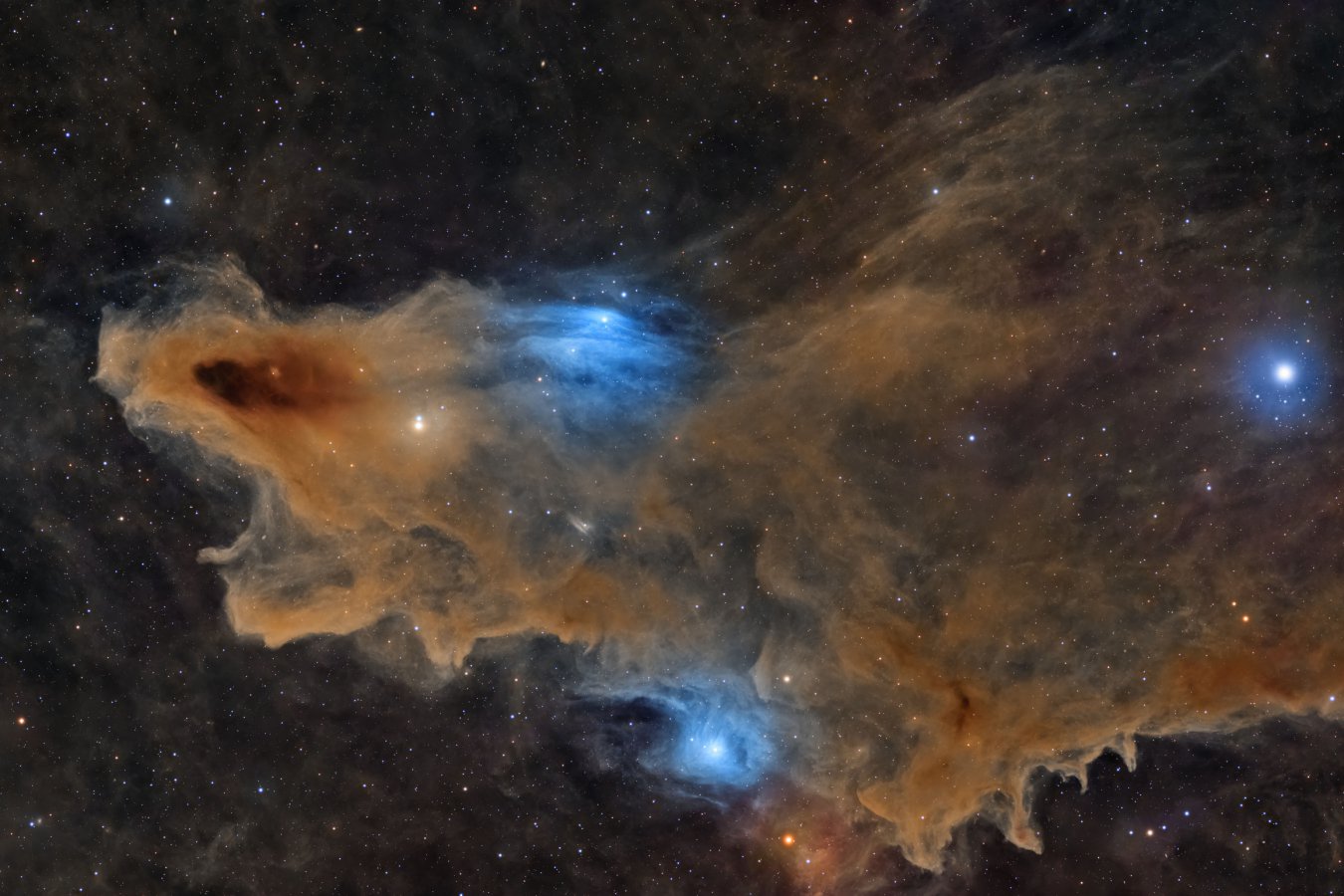
The Royal Observatory in Greenwich, London, recently announced the winners of the 2026 Astronomy Photographer of the Year competition. This international contest showcases the breathtaking diversity of the cosmos, captured from various locations on Earth. The overall winner, titled "The Quiet Predator," was taken by Ali Alobaidly from Kuwait.
This image depicts a dense nebula known as the Shark nebula, located 650 light years away in the constellation Cepheus. The nebula, shrouded in darkness, contains a few bright stars that illuminate its surroundings in blue hues. Alobaidly dedicated over 28 hours of observation to create this stunning image.
Another notable competitor in the competition was Kfir Simon from Israel, who came in second place with his photograph titled "Beyond the Wormhole." This image might seem to depict a cosmic anomaly, but it actually captures the center of the Helix nebula, situated 650 light years away in the constellation Aquarius. While the nebula appears to emerge from a hole in space-time, it is actually the aftermath of a star that once expelled its outer layers, thousands of years ago. Distant galaxies can be seen shining through the dust and gas surrounding the nebula.
In the Our Moon category, Petr Horalek from the Czech Republic took home the prize with his photograph titled "Venusian Pearl on the Moon." Horalek captured this rare event, known as an occultation, as Venus passed in front of the crescent moon during the day. The photograph was taken in the Czech Republic, where the moon obscured Venus just as it slipped behind the moon's crescent.
Australia's Peter Ward won the Our Sun section with a unique photograph titled "Anatomy of the Chromosphere." Unlike a conventional image, Ward's photograph combines two different wavelengths of light to reveal the structure of the sun's chromosphere. The red portion of the image captures emission from hydrogen along the sun's edges, while the lilac portion represents emission from calcium.
Together, these wavelengths provide insight into the chromosphere, the layer of the sun just above its visible surface but below its corona.
Written by urgent.news from New Scientist's reporting — not their text. Machine-written — may contain errors; check the original before relying on it.