Putin-Kritiker: Michail Chodorkowski im Interview: „Fast die gesamte russische Elite ist gegen den Krieg“
Der ehemalige russische Oligarch erklärt, was die russische Parlamentswahl verrät, wie er Putins mentalen Zustand einschätzt und was für ihn der „grundlegende Denkfehler“ des Westens ist.
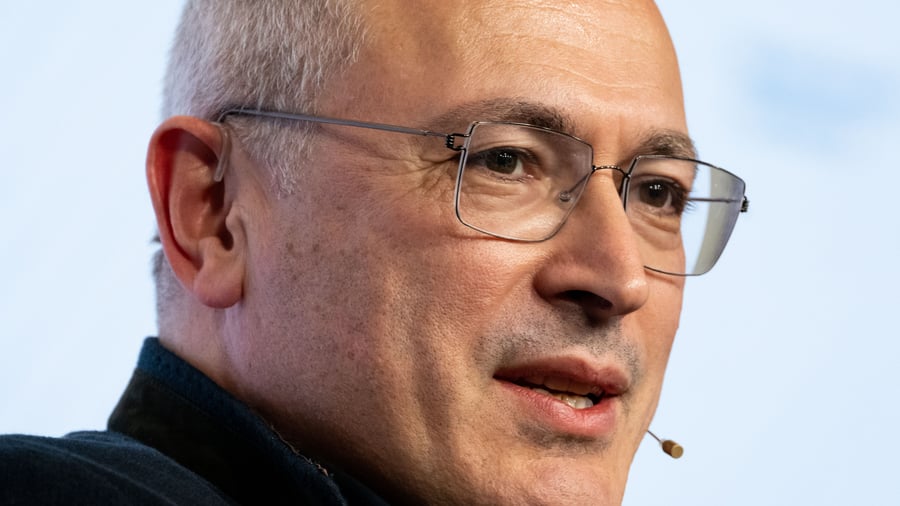
Michail Chodorkowski, a prominent Russian oligarch living in London exile, remains one of the most vocal critics of Russian President Vladimir Putin. Ahead of the Duma election on September 18-20, Chodorkowski spoke to the Handelsblatt about Russia's war in Ukraine and Putin's strategy towards the West. Chodorkowski does not rule out the possibility of an economic collapse in Russia, stating that as long as China continues to supply Russia, the situation could deteriorate and Putin could continue the war.
Putin waits for the Europeans to stop supporting Kiev. The West makes the "fundamental mistake" of believing that Putin seeks an exit from the war. Chodorkowski believes Putin has succeeded in turning the war into a "war of all Russians." However, the Russian society is not prepared to accept this war as a personal matter. History shows that Russians cannot tolerate an unsuccessful war for more than two years.
Putin has done everything to prevent the ticking clock from starting. But since Ukrainian attacks on Russian oil refineries and commodity warehouses began this year, the countdown is ticking. What happens if the war continues into 2027? As Ukrainian attacks on Russian oil refineries and commodity warehouses increased the approval for the war by seven percentage points in February, Putin's personal approval ratings have dropped.
If military activities continue after 2027, Putin's approval ratings will likely drop even further. Will this force Putin to end the war? For now, Putin seems willing to pay a high political price, but the balance of power is shifting towards the security forces who maintain order in society. However, the military-backed rule may not be comfortable for Putin.
It remains to be seen how long he will be willing to pay this price. According to reports, Putin reportedly said that if he lost the war, he would be executed. Who fears him? Almost the entire Russian elite is against the war, but as long as there is no major battlefield defeat, the President does not have to fear this elite too much.
What can we learn from the parliamentary election? The sentiment can already be seen before the election. For example, the anti-war party Jabloko was initially allowed to contest the elections because they were only expected to receive one or two percent of the votes. However, their approval ratings skyrocketed within two weeks, reaching ten percent, and could have risen to 20 or 25 percent.
This was primarily due to protest voters. What did Putin do? For a democratic society, 25 percent of protest voters would not be a critical mass. But for a dictatorship, it is a very strong signal, and they were afraid that it would become public. Hence, Jabloko is not allowed to contest the election. Can the Russian opposition reach ordinary Russians with their anti-war positions?
Based on our social media channels, the reach of all opposition media is estimated to be around ten million people per day. In an extreme situation, such as the uprising of the Wagner Group, this could rise to up to 30 million. This is a significant anti-war lobby. How much of the Russian population is affected by anti-war positions?
Currently, we estimate that 15 percent of the population is anti-war. Adding the "Z" or Turbo-Patriots, who oppose the war from the other side, brings this number to around 15 percent. The remaining 70 percent are politically inactive and make their decisions on a whim. International observers expect a mobilization after the election.
What do you expect? I am absolutely sure that Putin needs a mobilization, but it does not have to be announced; it will simply happen. To allow for rotations, Putin would need an additional 300,000 soldiers. Due to the higher requirements of warfare, he needs not just anyone, but educated people. This would most likely include the middle class in large cities.
Would their protests accelerate the end of the war? If Putin were pragmatic, he would stop the war as soon as possible. However, considering his psychological state, it seems that many of his recent decisions have not been based on pragmatism. It appears that Putin's recent decisions have been driven by factors other than pragmatism.
What should or can the West do when dealing with a person who is not particularly rational? Even with regard to the recent drone strikes and sabotage acts? If we put ourselves in Putin's shoes, he might think that Ukraine is tired, and so is the West. In Germany, there will be a government change if not today, then tomorrow. And the new government will stop supporting Ukraine.
The same will happen in France next year. So, Putin might think that he just needs to endure a little longer before everything becomes clear. Every time the EU discusses a new aid package for Ukraine, it struggles to find a solution.
Written by urgent.news from Handelsblatt's reporting — not their text. Machine-written — may contain errors; check the original before relying on it.