Publicly funded, privately controlled: The multi-million-cedi Astroturf exposé
The Agogo Sports and Cultural Complex (T) and Hohoe Sports Stadium in the Volta region The One Constituency, One Astroturf programme that began in 2017 as one of President Nana Akufo-Addo’s administration’s most celebrated sports infrastructure initiative was welcomed across Ghana as a transformative investment in youth development and community sports. Nearly a decade later, however, […]
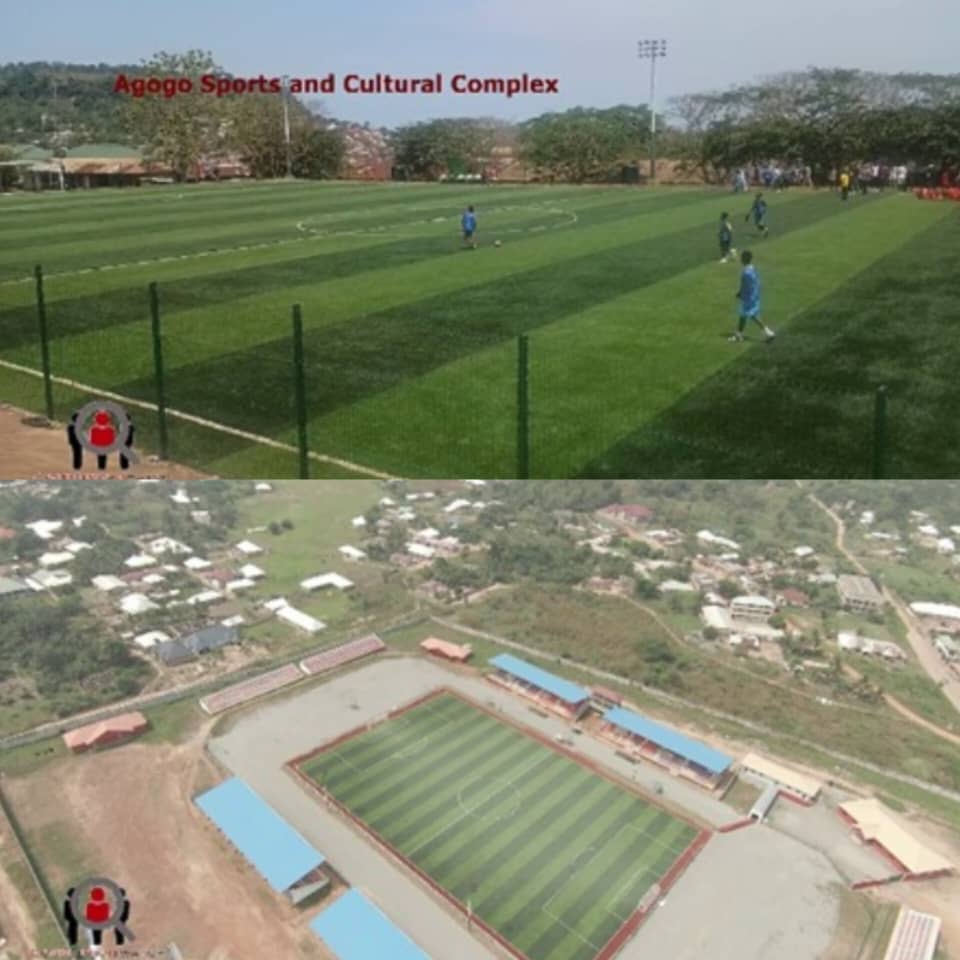
The Agogo Sports and Cultural Complex and the Hohoe Sports Stadium, both publicly funded but privately controlled, have been the subject of a Corruption Watch investigation. These projects, initiated in 2017 as part of President Akufo-Addo's sports infrastructure initiative, have come under scrutiny due to ownership disputes, procurement irregularities, privatization of stadium lands, abuse of office, and conflicts of interest.
Two senior officials from President Akufo-Addo's administration, former Energy Minister John Peter Amewu and former Ghana Gas Communications Director Ernest Owusu-Bempah, are at the center of ownership disputes for the Hohoe and Agogo sports facilities, respectively. Both projects, valued at over GHS17 million, were constructed using public funds.
The investigation, part of Corruption Watch's nationwide series starting in February 2025, examined 169 Astroturf and sports infrastructure projects with estimated public investments exceeding GHS1 billion. The focus of this edition is on three key anti-corruption issues: procurement irregularities, abuse of office, and conflict of interest.
In the case of the Agogo Sports and Cultural Complex, funded entirely by Ghana Gas, Corruption Watch found that the contract was awarded directly to Wembley Sports Construction Company Limited without competitive bidding. Wembley was already selected, mobilized, and commenced work before the Hohoe Municipal Assembly sought approval from the Public Procurement Authority (PPA) to deviate from the competitive procurement process.
Experts on procurement, Kobina Ata-Bedu and David Ofosu-Dorte, questioned the legality of the procurement process. They explained that under Ghana's Public Procurement Act, competitive tendering is the default method and requires prior approval from the PPA when deviating from it. Both experts also pointed out that the Assembly should have prepared the bill of quantities, not an individual like former Minister Amewu.
Wembley's own account contradicted the Assembly's official position, further raising questions about the transparency and legality of the procurement process.
Written by urgent.news from Adom Online's reporting — not their text. Machine-written — may contain errors; check the original before relying on it.