Negeri Sembilan MB endorses exco statement on ruler
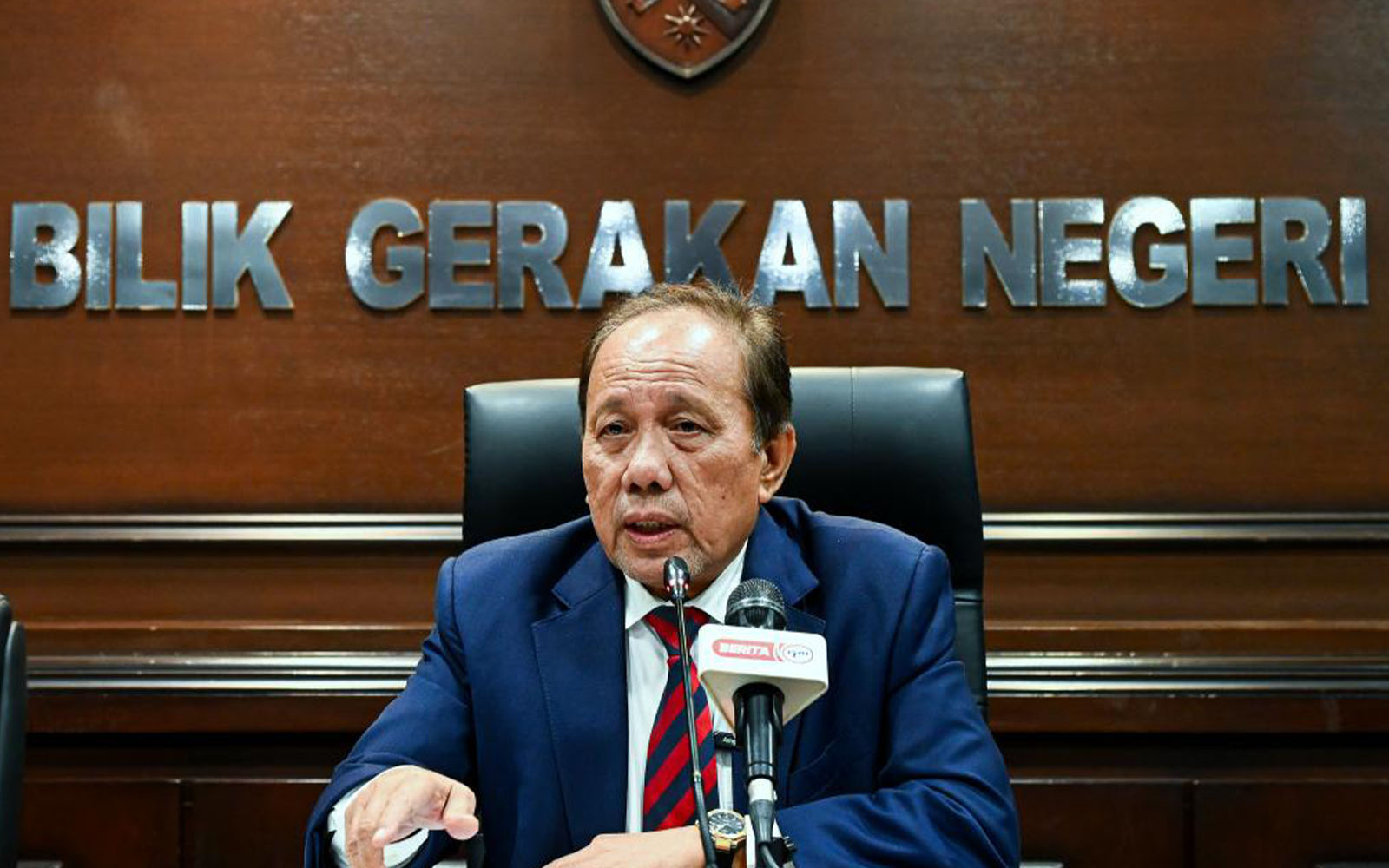
Menteri besar says the state secretary has been asked to proceed with gazetting the proclamation on Tuanku Muhriz Tuanku Munawir’s removal.
The ongoing situation in Negeri Sembilan merits attention from every Malaysian who values a constitutional government, the rule of law, and the preservation of state institutions. This is not due to any personal affiliations or party allegiances, but rather from a fundamental concern about the collision of political action, customary authority, and constitutional power.
The central question revolves around the boundaries of authority, where they lie, and who has the power to determine what the Constitution allows when disagreements arise over these boundaries. This issue transcends Negeri Sembilan and delves into the very essence of constitutional governance in Malaysia.
At the heart of the present dispute is a proclamation concerning Tuanku Muhriz's position as Yang di-Pertuan Besar of Negeri Sembilan. Menteri Besar Datuk Ismail Lasim claims he signed an instrument against his will and under duress, filing a police report and asserting that the document did not adhere to the procedures outlined in Article 10 of Negeri Sembilan's State Constitution of 1959. These matters are presently under investigation and subject to contention, necessitating a careful legal approach.
Following a special session, the Dewan Keadilan dan Undang has concluded that the attempt to remove Tuanku Muhriz contravenes both adat and the State Constitution, maintaining that the contemplated investigation under Article 10(1) has not been conducted and that Tuanku Muhriz remains the rightful Yang di-Pertuan Besar. These viewpoints form part of the evolving constitutional debate.
Rather than reducing the controversy to a question of loyalty to particular individuals or factions, the core issue pertains to constitutional authority. In a constitutional system, power must have a constitutional basis. Every constitutional institution derives its legitimacy from law, convention, adat where constitutionally recognized, or the Constitution itself.
While a Menteri Besar holds specific powers and responsibilities, so do the Undang, and the Yang di-Pertuan Besar occupies a unique constitutional position. The Dewan Keadilan dan Undang, likewise, possesses functions within Negeri Sembilan's distinctive constitutional framework. However, none of these entities operates without constitutional framework.
The Menteri Besar recently clarified that a proclamation alone does not confer constitutional authority; thus, involvement in a process mentioned in Article 10 cannot be interpreted as granting the Menteri Besar unilateral power to determine the continued tenure of the Yang di-Pertuan Besar. This principle is worth considering independent of the individuals involved.
A document cannot autonomously generate a constitutional power that does not exist. Moreover, constitutional requirements should not be treated as mere technicalities to be addressed following the fulfillment of a political objective.
Compliance with procedural requirements corresponding to constitutional mandates is not optional. If an investigation, consultation, proclamation, quorum, or any other constitutional prerequisite is mandated, the pertinent question becomes whether such conditions have genuinely been satisfied. This is why the current dispute must be examined against the explicit wording, structure, and intent of the Negeri Sembilan Constitution — not the political preferences of those involved.
Negeri Sembilan exhibits unique constitutional characteristics that should not be conflated with those of other Malaysian states. Its institutions were shaped by a distinct interplay between monarchy, the Undang, the luak, and Adat Perpatih, which have subsequently been constitutionally articulated. Consequently, the Constitution must be comprehended in conjunction with this historical context.
However, acknowledging adat does not imply the absence of constitutionalism; rather, it underscores the importance of differentiating between customary legitimacy and constitutional authority. Both warrant respect, and neither should be leveraged to invalidate the other. This principle is crucial in disputes involving the Yang di-Pertuan Besar and the Undang, as they concern institutions predating contemporary party politics and should not be manipulated as tools for transient political advantage.
The National Archives acknowledges the Laws of the Constitution of Negeri Sembilan as a constitutional instrument originating from 1959. The present question pertains to the lawful exercise of powers delineated within that constitutional framework. Legitimacy extends beyond mere legal provisions; it necessitates constitutional morality, encompassing restraint in power exercise, fidelity to institutions, respect for lawful processes, good faith, and an understanding that influence does not equate to constitutional authority.
While political actors may exploit ambiguity to their advantage, the true measure of constitutional governance lies in the willingness to refrain from actions not constitutionally warranted, even when seemingly politically feasible. The true test of constitutional governance emerges when an actor opts not to proceed merely because a course appears politically viable, but instead, questions whether it aligns with constitutional propriety.
Written by urgent.news from Malay Mail's reporting — not their text. Machine-written — may contain errors; check the original before relying on it.
This story
This is one outlet's version. Read the fullest account.
- Negeri Sembilan: The constitution must prevail — Syed Hamid Albar malaymail.com
- Negeri Sembilan MB endorses exco statement on ruler freemalaysiatoday.com